Yemen Offensive Targets Houthis Near Bab al-Mandab
Intelligence Summary
Yemen's internationally recognized government has begun Operation Yemen Dawn, a major offensive intended to retake territory held by the Houthis. Rashad al-Alimi, chairman of the Presidential Leadership Council, announced the operation on October 4 after concluding that efforts at de-escalation had been exhausted. Government forces subsequently said they had retaken the port city of Mocha and the Dhubab district, near the Bab al-Mandab Strait, while also opening an offensive toward Sanaa.
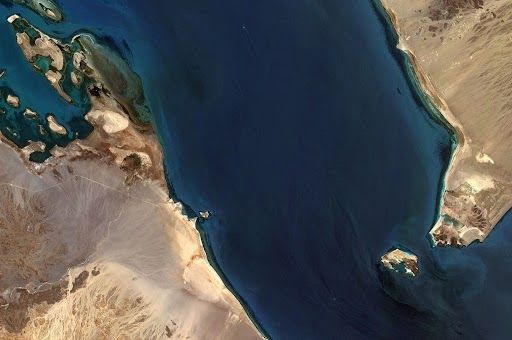
The offensive follows a rapid Houthi advance in September along Yemen's Red Sea coast. The Houthis captured Mocha, Dhubab, and Perim Island, gaining positions overlooking or adjacent to Bab al-Mandab, the waterway linking the Red Sea and Gulf of Aden. The group said international shipping would not be threatened, but stated it would continue targeting Saudi vessels. The government and Saudi-led coalition now characterize retaking the area as necessary to restore control over the waterway. Coalition spokesman Turki al-Maliki said 100 fighter aircraft were supporting government ground forces and that the coalition had destroyed hundreds of Houthi targets.
The fighting is occurring alongside escalation between Saudi Arabia and the Houthis. The Houthis claimed ballistic-missile and drone strikes against Saudi Aramco facilities in Riyadh and Khurais in response to Saudi-led air operations. Satellite imagery reviewed by BBC Verify showed smoke at the Riyadh refinery and Khurais processing facility, though the precise damage and responsibility were not established. Houthi forces also reportedly cut a key mountain road between Taiz and Aden, complicating government logistics and contributing to the isolation of Taiz.
The renewed war has already imposed substantial civilian costs. Yemen's government health ministry reported at least 959 deaths and 5,000 injuries since August 6, while the United Nations said that 197,000 people had been displaced. The conflict resumed after an informal ceasefire began to unravel in July, following Houthi maritime restrictions and attacks on Saudi-linked infrastructure.

Why It Matters
The battle for Mocha, Dhubab, and nearby positions has significance beyond local territorial control because Houthi gains along the Red Sea coast gives them leverage near Bab al-Mandab. The strait is a key route for global energy supplies, and Saudi Arabia had increasingly relied on Red Sea export routes after the closure of the Strait of Hormuz disrupted its alternatives. A government recapture of coastal positions could reduce the Houthis' ability to threaten or politically exploit that maritime chokepoint. However, initial government claims of territorial gains do not by themselves establish that the waterway is secure or that Houthi military capacity in western Yemen has been substantially degraded.
The offensive also returns Saudi Arabia to a more direct and costly confrontation with the Houthis. Saudi air support may improve the government's ability to contest exposed Houthi positions and interdict supply routes, but the claimed Aramco attacks demonstrate that the Houthis retain the capacity to impose risk on Saudi economic infrastructure. Smoke visible at two Aramco-related sites reinforces the operational and economic stakes for Riyadh even though the scale of the damage remains unclear. This dynamic may constrain Saudi escalation. Greater military pressure on the Houthis could be accompanied by increased attempts to strike Saudi oil facilities.
The government's operational problem is that the campaign combines a coastal counteroffensive with pressure on multiple inland fronts. Houthi control over the Taiz-Aden supply route, if sustained, would complicate reinforcement and resupply of government-held areas while reducing the government's freedom to concentrate forces on Bab al-Mandab. Airpower can support advances and strike fixed targets, but it can not resolve the government's logistical vulnerabilities or translate disputed tactical gains into lasting control. The durability of the reported recapture of Mocha and Dhubab is therefore a more useful indicator than initial announcements of progress.
The conflict also increases the likelihood that maritime and energy disruptions will remain connected to the wider regional confrontation. The Houthis' coastal offensive had already reduced Saudi Arabia's ability to use the Red Sea as an alternative export corridor, while their attacks on Saudi infrastructure raised the economic cost of the counteroffensive. For policymakers and commercial actors, the key uncertainty is whether the fighting remains concentrated in Yemen or leads to sustained threats to Saudi oil infrastructure and transport routes through Bab al-Mandab. Civilian displacement and casualties will likely rise if the operation develops into prolonged urban and territorial fighting rather than a short counteroffensive.
Stay Informed. Stay Ahead.