China-Russia Alliance Deepens at SCO Summit, Challenging Western Order
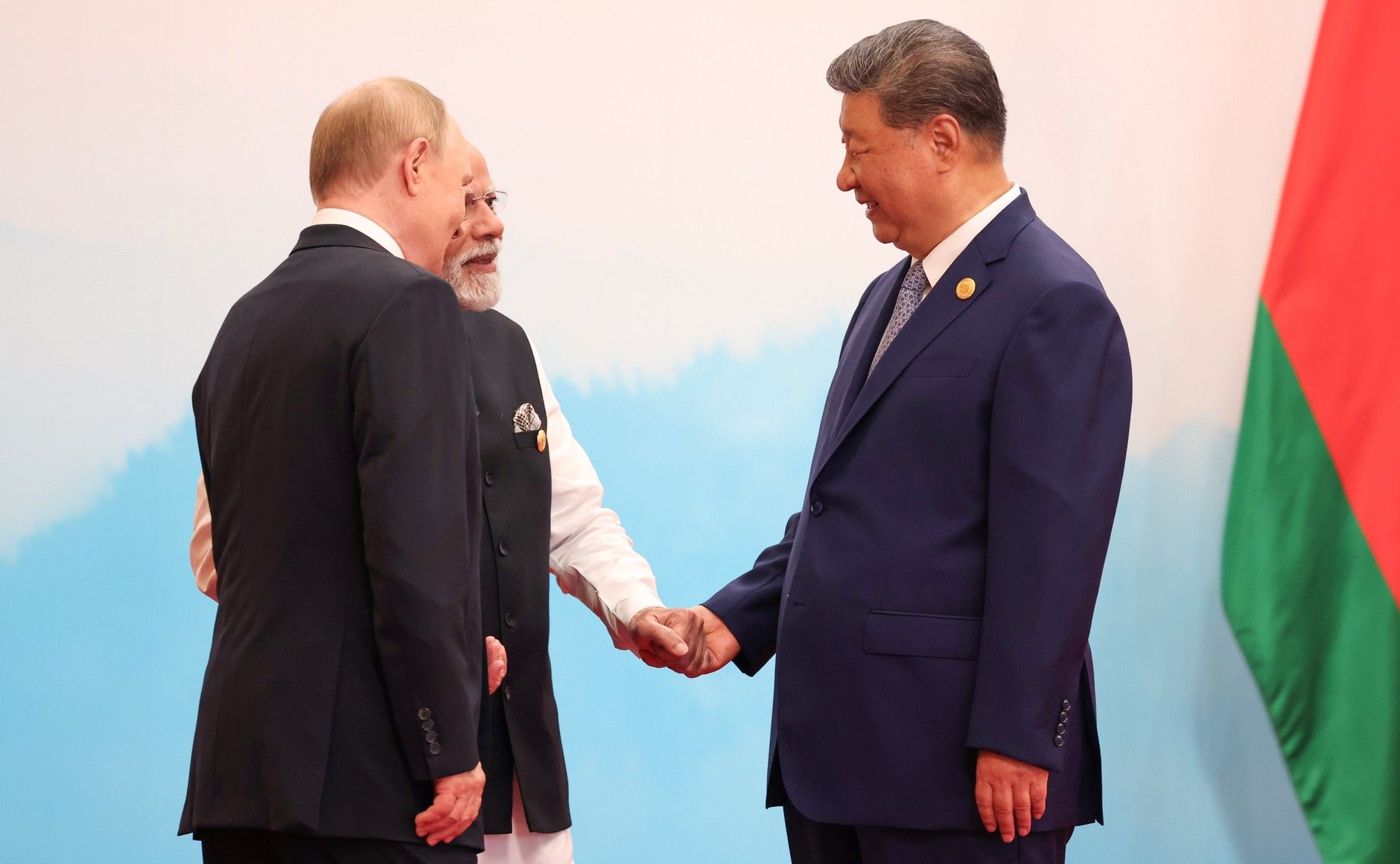
Photo: Kremlin.ru
Intelligence Summary
On September 2, 2025, Chinese President Xi Jinping hosted Russian President Vladimir Putin in Beijing, where both leaders emphasized that their bilateral relationship had reached an unprecedented level. The meeting followed the Shanghai Cooperation Organization (SCO) summit in Tianjin, where Xi and Putin, joined by Indian Prime Minister Narendra Modi and other leaders, presented a vision for a new global order that would challenge Western dominance.
During talks in the Great Hall of the People, Xi and Putin reportedly signed approximately 20 cooperation agreements involving various fields. Russian news agencies revealed plans to increase gas exports to China, with projections of 106 billion cubic meters annually once all projects are completed, though this remains below pre-war export levels to the European Union. China’s foreign ministry also announced a one-year trial of visa-free travel for Russian citizens with passports beginning September 15, 2025.
The SCO summit in Tianjin brought together leaders from more than 20 countries, including India, Iran, Pakistan, and Turkey. Xi Jinping proposed establishing an SCO development bank and committed significant financial support, including $280 million in grants and $1.4 billion in loans to SCO members. Xi also introduced and outlined a new Global Governance Initiative, signaling Beijing’s intent to create a parallel governance system outside of Western-led institutions.
The SCO summit’s final declaration notably omitted any mention of Russia’s war in Ukraine. Instead, the declaration condemned US tariffs, Israeli strikes on Iran, and violence in Gaza, while calling for a ceasefire there. Indian Prime Minister Narendra Modi used the summit to reaffirm India’s strategic partnership with Russia, despite US pressure to reduce energy imports from Moscow. Modi and Putin held bilateral talks, with both leaders describing their relationship as one of long-standing trust and cooperation.
The summit also featured trilateral talks between Xi, Putin, and Mongolian President Ukhnaagiin Khurelsukh, where the three leaders emphasized regional solidarity. Mongolia, despite being a member of the International Criminal Court, has previously declined to enforce the ICC’s arrest warrant against Putin.
The SCO summit and subsequent meetings are being followed by preparations for China’s largest-ever military parade, marking the 80th anniversary of Japan’s surrender and the end of World War II. Leaders from Russia, North Korea, Iran, and other states were invited. North Korean leader Kim Jong Un traveled to Beijing by armored train, marking his first visit to China since 2019. The parade is expected to showcase advanced Chinese military capabilities, including intercontinental missiles, long-range strike systems, and drone formations. The parade will also serve as a symbolic display of unity between the three powers.
Putin used the SCO platform to reiterate his claim that the Ukraine war was provoked by Western-backed events in 2014 and NATO expansion. He argued that Western efforts to draw Ukraine into NATO were a key driver of the conflict and praised diplomatic efforts by China and India as potential facilitators of peace.
Overall, the SCO summit and subsequent bilateral meetings in Beijing underscored the deepening China-Russia partnership, the growing role of the SCO as a platform for alternative governance, and the symbolic alignment of countries opposed to Western dominance.
Why it Matters
The intensifying alignment between China and Russia, reinforced through the SCO summit and bilateral agreements, represents a significant challenge to the US-led international order. By framing their partnership as a counterweight to Western dominance, Beijing and Moscow are attempting to institutionalize a distributed power system that reduces reliance on Western financial, security, and governance structures. The call for a creation of an SCO development bank and the announcement of billions in grants and loans mark a shift from symbolic declarations to tangible financial mechanisms that could rival Western institutions such as the IMF and World Bank.
The SCO summit was not only a diplomatic gathering but also a strategic precursor to China’s largest-ever military parade, where Xi, Putin, and Kim Jong Un are expected to stand together. This visual alignment of three nuclear-armed states, all in opposition to Western policies, sends a powerful deterrence signal. It demonstrates that the emerging bloc is not only about economic cooperation but also about military power projection.
Energy security was another critical aspect of the SCO summit. Russia’s pivot to China as a primary energy market reflects the long-term consequences of Western sanctions. This shift underscores Moscow’s determination to reorient its energy flows eastward. For China, securing discounted Russian energy supplies strengthens its resilience against potential Western economic pressure. This energy realignment also reinforces the SCO’s role as a platform for coordinating resource flows across Eurasia.
Diplomatically, the SCO summit highlighted the growing solidarity of the Global South in rejecting Western unilateralism. The omission of Ukraine from the summit’s final declaration, while condemning US tariffs and Israeli actions, illustrates how Beijing and Moscow are shaping narratives that resonate with many non-Western states.
Despite India’s border disputes with China and strategic ties with the United States, New Delhi’s willingness to engage with both Xi and Putin at the SCO summit signals its intent to maintain strategic autonomy. Modi’s reaffirmation of India’s partnership with Russia, despite US pressure, demonstrates that Washington cannot easily isolate Moscow. This triangular dynamic between China, Russia, and India complicates Western strategic objectives in the region.
The SCO’s collective economic output and expanding trade networks provide the bloc with a platform for intelligence sharing, counterterrorism coordination, and potentially cyber cooperation outside of Western frameworks. This could evolve into a parallel security architecture that challenges NATO’s influence in Eurasia.
The symbolic burial of the “old world order” at Tianjin, as described by Russian and Chinese leaders, reflects a broader narrative shift. By invoking past Western interventions in Yugoslavia, Iraq, and Libya, Beijing and Moscow are appealing to historical grievances in the Global South. This narrative, combined with financial incentives and military displays, strengthens their ability to attract partners who feel marginalized by Western institutions.
The SCO summit centered around the creation of an alternative framework that challenges the current Western-led international order. This new framework combines economic incentives, energy realignment, military deterrence, and diplomatic solidarity. If sustained, this could weaken the centrality of Western institutions in international affairs and accelerate the transition to a multipolar world where Eurasian powers set the agenda.
Key Actors
- China
- Russia
- India
- Shanghai Cooperation Organization (SCO)