
China and Russia Expand Military Patrols in East Asia
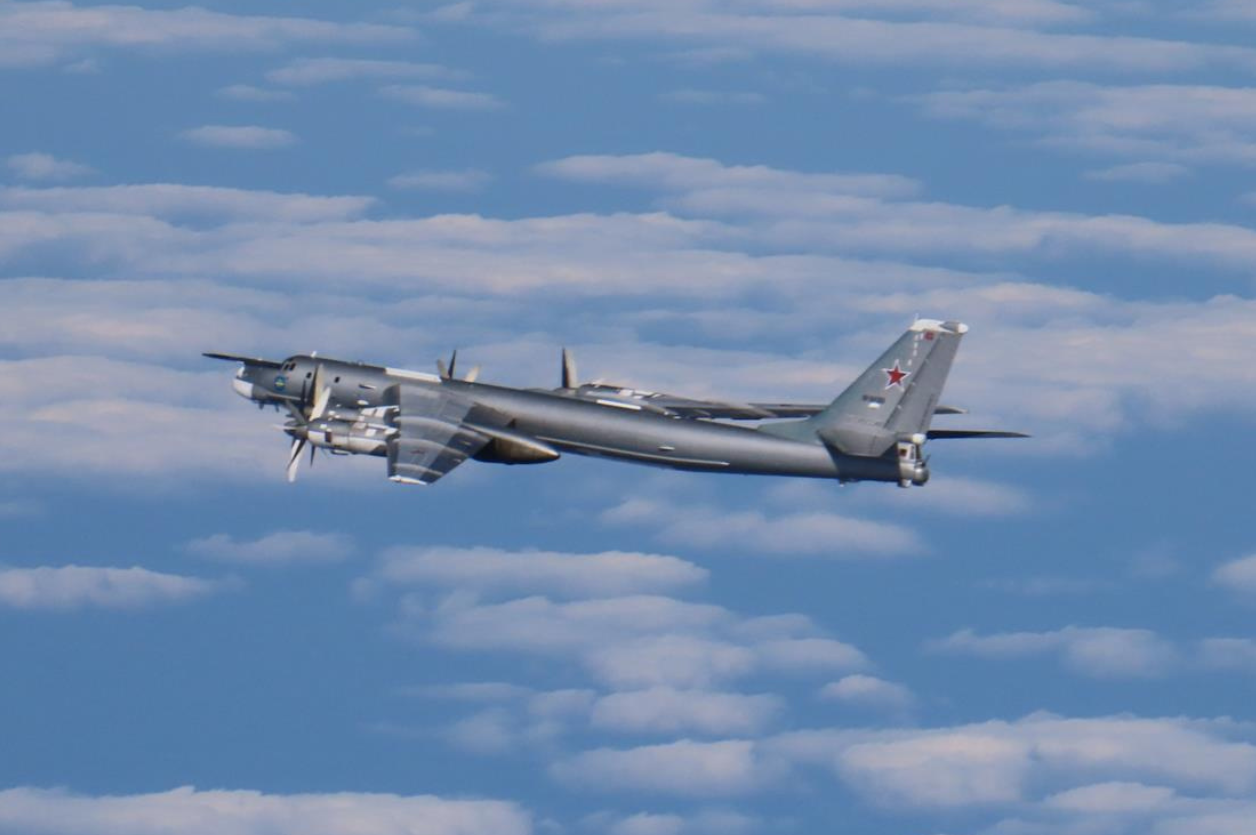
Photo credit: Japan Ministry of Defense
Intelligence Summary
On December 9, 2025, South Korea and Japan both scrambled to launch fighter aircraft in response to a joint air patrol conducted by Russian and Chinese military forces over the East China Sea and the western Pacific. According to South Korea’s Joint Chiefs of Staff, seven Russian and two Chinese aircraft entered the Korea Air Defense Identification Zone (KADIZ) at approximately 10 a.m. local time, remaining for about one hour before departing. The aircraft included Russian Tu-95 bombers and A-50 early warning planes, as well as Chinese H-6 bombers and J-16 fighter jets.
South Korea’s military stated that the aircraft did not violate its sovereign airspace but entered the broader KADIZ, which is a self-declared zone requiring foreign aircraft to identify themselves for security monitoring. The South Korean Air Force deployed fighter jets to take tactical measures in preparation for any emergencies and later lodged formal diplomatic protests with the Chinese and Russian defense attachés in Seoul. Lee Kwang-suk, Director General of the International Policy Bureau at South Korea’s Ministry of National Defense, emphasized that Seoul would continue to respond actively to foreign aircraft activities in compliance with international law.
Japan also deployed its own fighter jets after detecting the same joint patrol near its airspace. Japanese Defense Minister Shinjiro Koizumi reported that two Russian nuclear-capable Tu-95 bombers flew from the Sea of Japan through the Tsushima Strait, where they met two Chinese bombers capable of carrying long-range missiles. The combined formation, which included additional Chinese J-16 fighters, flew around Japan between Okinawa’s main island and Miyako Island before heading into the Pacific. Koizumi described the repeated joint flights as a clear demonstration of force directed at Japan, raising serious national security concerns.
The Chinese Ministry of National Defense confirmed that the operation was part of an annual cooperation plan with Russia and identified it as the tenth joint strategic air patrol between the two countries. The Russian Ministry of Defense also confirmed the exercise, stating that the patrol lasted eight hours and that foreign fighter jets followed the formation at certain stages. Both governments characterized the mission as a routine measure to address regional challenges and maintain stability.
Russian and Chinese aircraft have entered the KADIZ several times without prior notification during similar joint air operations since 2019. South Korea scrambled jets in November 2024 when five Chinese and six Russian aircraft entered the same zone, and similar incidents occurred twice each in 2022 and 2023. The December 2025 patrol also came shortly after Japan accused Chinese fighter jets of locking fire-control radar on Japanese aircraft in two separate incidents over international waters near Okinawa.
In addition to the air patrol, Japan’s Ministry of Defense reported monitoring the Chinese aircraft carrier Liaoning and its support vessels operating near Okinawa since December 5, 2025. The ministry observed dozens of takeoffs and landings from the carrier, marking the first confirmed fighter jet operations by a Chinese carrier in waters between Okinawa’s main island and Minami-Daitojima.
China and Russia have expanded their defense cooperation since Moscow’s 2022 invasion of Ukraine, with both countries maintaining close ties to North Korea, a shared adversary of Seoul and Tokyo. Russia does not recognize South Korea’s KADIZ, describing it as a unilateral construct without legal standing under international law. The December 2025 joint patrol thus reinforced a pattern of coordinated Sino-Russian military activity in East Asia, combining air and naval maneuvers that test regional air defense readiness and signal strategic alignment between Beijing and Moscow.
Why it Matters
The December 2025 joint air patrol by Russia and China represents coordinated military signaling within East Asia’s contested security environment. The operation demonstrated the growing operational integration between the Russian and Chinese militaries, which have increasingly used joint exercises to project power and test the response capabilities of U.S.-aligned states such as Japan and South Korea. The inclusion of nuclear-capable bombers and long-range missile platforms in the patrol reinforced the deterrence dimension of the exercise, suggesting that both Moscow and Beijing are seeking to normalize high-intensity strategic operations near allied airspace.
For South Korea, the repeated incursions into the KADIZ highlight the vulnerability of its air defense posture. Although the aircraft did not breach sovereign airspace, the frequency and scale of these operations compel Seoul to maintain a high state of readiness, diverting resources and increasing the risk of miscalculation. The diplomatic protests lodged by Seoul indicate a desire to assert legal and procedural norms, but the lack of recognition of the KADIZ by Russia and China limits the effectiveness of such measures.
Japan faces a parallel challenge. The proximity of the joint patrol to Okinawa and the concurrent operations of the Chinese aircraft carrier Liaoning suggest a deliberate effort to test Japan’s maritime and aerial surveillance systems. The radar-lock incidents reported days earlier further indicate a pattern of coercive signaling designed to erode Japan’s deterrence confidence. Tokyo’s rapid deployment of fighter jets and public statements by Defense Minister Koizumi reflect a strategic shift toward more assertive defense posturing, consistent with Japan’s recent defense budget increases and expanded security cooperation with the United States.
The broader strategic significance lies in the consolidation of the militaries of Russia and China, which are operated with increasing regularity in the Indo-Pacific. The December 2025 patrol was the tenth such joint operation, signaling institutionalized coordination rather than ad hoc cooperation. This pattern complicates U.S. and allied defense planning, as it introduces multi-vector threats that span both the East China Sea and the western Pacific. The presence of nuclear-capable bombers in these exercises also blurs the line between conventional and strategic deterrence, raising the stakes for any potential confrontation.
From a geopolitical perspective, these developments reinforce the perception of an emerging bipolar order in which China and Russia coordinate to challenge U.S.-led security architectures in Asia. The timing of the patrol, amid heightened global tensions over Ukraine and Taiwan, suggests that both powers are leveraging regional exercises to demonstrate resilience against Western pressure. The use of international airspace and the creation of “annual cooperation plans” provide legal cover for actions that nonetheless carry coercive intent.
Analysts believe that the incident could result in an enhanced relationship between Japan and South Korea, leading to joint air defense cooperation and new mechanisms for crisis communication between the nations. The repeated pattern of unannounced entries into the KADIZ and near Japanese airspace increases the probability of accidental escalation, particularly if radar locks or close intercepts occur. The integration of naval and air operations, as seen with the Liaoning’s concurrent deployment, also points to an increasing Chinese capacity for multi-domain operations in the western Pacific.
Ultimately, these events illustrate how East Asia has become a central theater for military exercises that analysts believe serve both as deterrence demonstrations and as instruments of political messaging. Sino-Russian coordination continues to intensify, and Japan and South Korea are responding defensively. Together, these trends signal a new period of strategic tension that will shape alliance behavior, defense spending, and crisis management.
Key Actors
- China
- Russian Federation
- South Korea
- Japan
Stay Informed. Stay Ahead.