China–U.S. Economic Confrontation Deepens
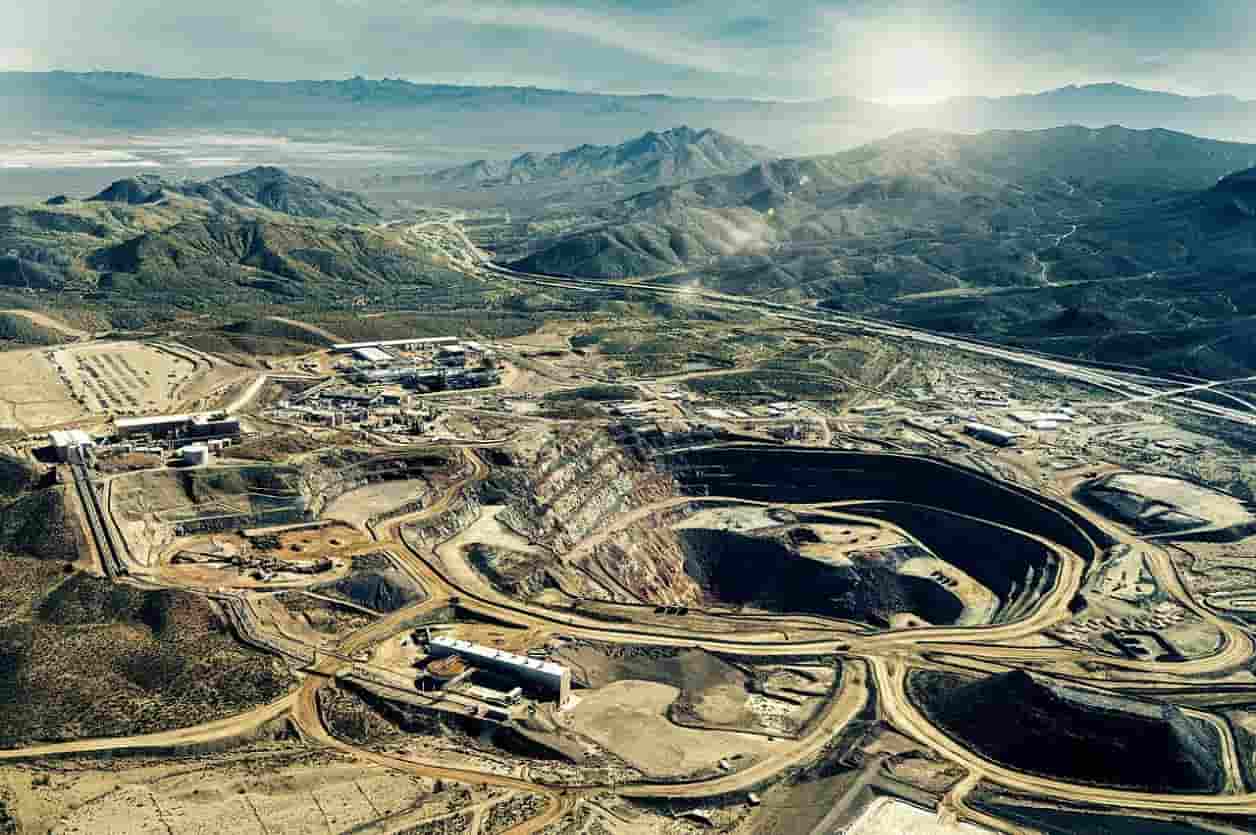
Photo credit: Tmy350/Wikimedia Commons.
Intelligence Summary
On June 22, 2026, China’s Ministry of Commerce announced new export controls targeting ten United States-based companies, including rare earth producers MP Materials and USA Rare Earth, as well as several defense and aerospace contractors such as Aveox, Oshkosh Defense, Ball Aerospace, L3Harris Maritime Services, IMSAR, Red Cat Holdings, Teal Drones, and Jaia Robotics. The order prohibits Chinese firms from exporting dual-use goods, items with civilian and military applications, to these entities and requires that any ongoing transactions be halted immediately. The restrictions also extend globally, barring foreign institutions and individuals from transferring Chinese-origin dual-use materials to the listed companies.
Simultaneously, China’s Ministry of Finance issued a procurement ban on 46 U.S. companies, including major defense contractors such as Lockheed Martin, Boeing Defense, General Atomics, General Dynamics, Raytheon Missiles & Defense, and the Javelin Joint Venture between Lockheed Martin and Raytheon. The ban applies to all Chinese government agencies and state-owned enterprises, though U.S.-funded joint ventures registered in China are exempt.
Beijing’s actions came two weeks after the U.S. Department of Defense expanded its list of “Chinese military companies” operating in the United States, adding approximately 80 Chinese firms and subsidiaries, including Alibaba, Baidu, BYD, and Nio, under Section 1260H of the National Defense Authorization Act. The Pentagon’s designation does not automatically impose sanctions but restricts access to U.S. capital markets and government contracts, citing concerns over military-civil fusion and potential links to the People’s Liberation Army.
China’s Ministry of Commerce stated that the export controls were enacted to safeguard national security and fulfill international non-proliferation obligations. The Ministry of Finance described the procurement ban as a necessary measure to protect China’s economic and defense interests. Analysts in Beijing and Singapore characterized the move as a retaliatory but largely symbolic response to Washington’s blacklist, noting that many of the affected U.S. companies had already diversified supply chains away from China or begun de-risking operations.
The inclusion of MP Materials and USA Rare Earth highlights Beijing’s willingness to leverage its dominance in the global rare earth supply chain, which is critical for advanced defense systems, electric vehicles, and renewable energy technologies. MP Materials, financially supported by the Pentagon, operates the Mountain Pass mine in California, the only large-scale rare earth mine in the United States. The restrictions could complicate U.S. efforts to secure domestic rare earth production and reduce dependence on Chinese processing capacity.
The timing of the sanctions followed a May 2026 summit between U.S. President Donald Trump and Chinese President Xi Jinping in Beijing, where both leaders pledged to stabilize relations and extend a trade truce. Despite these assurances, the latest measures indicate that the underlying strategic rivalry remains unresolved. U.S. Secretary of State Marco Rubio confirmed that a proposed $14 billion arms package to Taiwan was still under review, a point of contention that continues to inflame Beijing’s security concerns .
Trade experts such as Henry Gao of Singapore Management University suggested that China’s actions were designed to build leverage ahead of Xi’s planned visit to the United States in September 2026. Others warned that the reciprocal sanctions could mark the beginning of a new escalation cycle in the U.S.–China trade and technology confrontation.
Parallel to these developments, policy analysts have emphasized that the U.S.–China competition extends beyond trade and into the global race for artificial intelligence dominance. The United States currently leads in frontier AI innovation, with companies such as Nvidia, Microsoft, and Google commanding most of the global cloud and computing infrastructure, while China focuses on embedding AI into its Belt and Road and Digital Silk Road initiatives to expand influence across Asia, Africa, and Latin America. The U.S. government has responded with export promotion programs and industrial policy measures, including the CHIPS and Science Act and the American AI Exports Program, to counter China’s diffusion strategy.
Why it Matters
The June 2026 sanctions exchange underscores the deepening structural confrontation between the United States and China, where economic, technological, and security dimensions are intertwined. Beijing’s decision to target U.S. defense and rare earth firms represents a calculated escalation that weaponizes supply chain dependencies in critical materials essential for advanced military and energy technologies. By restricting exports of dual-use goods and banning procurement from major U.S. defense contractors, China is signaling its readiness to use economic instruments as tools of strategic deterrence.
The inclusion of MP Materials and USA Rare Earth is particularly significant because it strikes at the heart of U.S. efforts to rebuild domestic rare earth capacity. These materials are indispensable for precision-guided munitions, radar systems, and electric propulsion technologies. By limiting access to Chinese-origin inputs, Beijing is testing Washington’s ability to sustain defense production without reliance on Chinese processing. This move also highlights the fragility of global supply chains that remain dependent on Chinese refining and magnet manufacturing.
From a strategic perspective, the sanctions exchange reflects a shift from tariff-based trade disputes to targeted technological containment. The Pentagon’s expansion of its “Chinese military companies” list was intended to constrain China’s access to U.S. capital and defense-related technologies. Beijing’s countermeasures, though limited in immediate economic impact, serve as a warning that China can retaliate in sectors where it retains structural leverage. The reciprocal nature of these actions suggests that both sides are preparing for a prolonged period of managed confrontation rather than outright decoupling.
The timing of the measures, following the Trump–Xi summit and preceding Xi’s planned U.S. visit, indicates that both governments are using sanctions as bargaining tools within a broader negotiation framework. Beijing’s actions may be designed to strengthen its negotiating position while demonstrating domestic resolve. For Washington, the Pentagon’s blacklist reinforces a narrative of technological security and military preparedness. The interplay between these measures reveals how economic statecraft has become a central instrument of competition.
The broader implications extend into the global AI and technology race. As described in the policy analysis, China’s strategy of embedding AI within its Digital Silk Road infrastructure aims to export governance models and technological standards aligned with its political system. The United States, while maintaining a lead in innovation, risks losing influence if it fails to promote adoption of its AI ecosystem abroad. The competition is therefore not only about who builds the most advanced systems but also about who defines the global architecture of digital governance.
In the long term, the escalation of export controls and procurement bans could fragment global technology markets into competing blocs. This bifurcation would complicate multinational operations, increase costs, and reduce interoperability across defense and industrial systems. The rare earth restrictions, in particular, could accelerate diversification efforts in Australia, Canada, and Africa, but such transitions will take years to materialize.
Ultimately, the June 2026 developments illustrate how economic measures have become instruments of strategic deterrence in the U.S.–China rivalry. The confrontation now spans trade, technology, and ideology, with both sides leveraging their respective strengths to shape the emerging global order.
Stay Informed. Stay Ahead.