Escalation Across Fronts Raises Stakes in Middle East War
Intelligence Summary
The regional conflict between Israel and Iran expanded into a multi-front confrontation involving Lebanon, Gaza, and Yemen. Israeli forces launched extensive air and ground operations across southern Lebanon and Beirut, following Hezbollah’s rocket attacks on Israel that were conducted in response to the joint United States–Israeli war on Iran, By April 5, Israeli strikes had killed at least 14 people across Lebanon, including a family of six in the south and four civilians in Beirut’s Jnah neighborhood, located near Rafik Hariri University Hospital, the country’s largest public medical facility. The Lebanese Ministry of Public Health reported 39 wounded in that strike, which occurred roughly 100 meters from the hospital.
The Israeli military stated that it had begun targeting Hezbollah infrastructure in Beirut’s southern suburbs and threatened to strike the Masnaa border crossing with Syria, a key trade route for both countries. Lebanese and Syrian officials confirmed that the crossing was closed following the threat, with Syria’s General Authority for Borders and Customs emphasizing that the site was used exclusively for civilian purposes. Lebanese President Joseph Aoun publicly called for negotiations with Israel to prevent further destruction, warning that southern Lebanon risked devastation comparable to Gaza.
Subsequent reports indicated that Israeli operations intensified, with at least 36 additional deaths and 209 injuries recorded across Lebanon on April 6, most of them civilians. Strikes extended beyond Hezbollah-controlled areas, hitting the Christian town of Ain Saadeh east of Beirut, where Pierre Moawad, a local political official opposed to Hezbollah, and his wife were killed. The World Health Organization verified 92 attacks on health facilities, vehicles, and personnel across Lebanon, and the Lebanese Health Ministry reported that 57 paramedics had been killed since the start of the war.
Israeli ground forces have advanced deep into southern Lebanon, destroying bridges and transport routes in the Jabal Amel region to isolate the area south of the Litani River. Humanitarian organizations estimated that up to 150,000 people were cut off from aid, while total displacement across Lebanon exceeded one million. The Lebanese Health Ministry reported 1,461 deaths and more than 4,000 injuries since the conflict began.
Hezbollah claimed to have fired a cruise missile at an Israeli warship 68 nautical miles off the Lebanese coast, asserting a direct hit, though the Israeli military denied awareness of the incident. In retaliation, Israel struck residential areas near Rafik Hariri University Hospital, killing four people and wounding 39. Hezbollah also launched rocket barrages on Israeli settlements in Hurfeish, Shlomi, and Nahariya, and targeted Israeli military vehicles near the Fatima Gate border crossing.
Parallel to the Lebanese front, Israeli forces continued heavy bombardment of Gaza. On April 6, at least 10 Palestinians were killed and several wounded near a school sheltering displaced civilians in the Maghazi refugee camp, an area previously designated by Israel as a safe zone. The Gaza Health Ministry reported that Israeli attacks had killed at least 723 Palestinians and wounded nearly 2,000 since a ceasefire agreement in October 2025.
The regional escalation widened further when Yemen’s Houthi movement formally joined the conflict on March 28, coordinating with Iran and Hezbollah to launch cruise missiles and drones at Israeli military and infrastructure targets. The Houthis’ involvement triggered fears among Yemeni civilians of renewed Israeli airstrikes, economic collapse, and humanitarian deterioration. Residents in Sanaa reported concerns about fuel shortages, inflation, and potential displacement, while economic analysts warned that renewed hostilities could disrupt maritime trade through the Bab al-Mandeb Strait, a critical global shipping route.
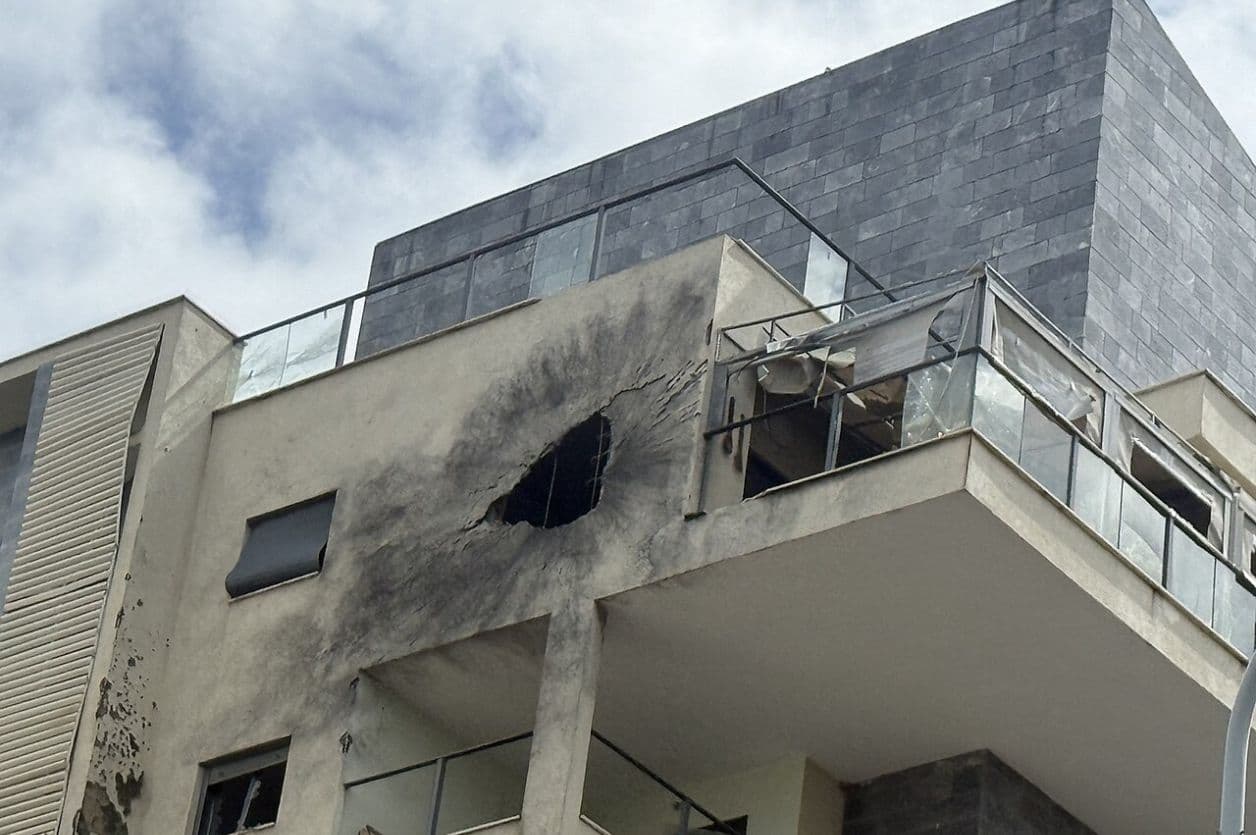
Simultaneously, Iran intensified its direct attacks on Israel and Gulf states. On April 5, Iranian ballistic missiles struck a residential building in Haifa, killing four civilians and injuring four others. Additional Iranian drone and missile attacks targeted energy infrastructure in Kuwait, Bahrain, and the United Arab Emirates, causing fires and severe damage to petrochemical and power facilities. These strikes were described by Iranian officials as retaliation against Gulf states accused of hosting U.S. forces involved in attacks on Iran.
The conflict has evolved into a multi-theater confrontation linking the Levant, the Gulf, and the Red Sea. Civilian casualties across Lebanon, Gaza, and Israel exceeded several thousand, while regional infrastructure damage and displacement reached levels not seen since the 2006 Lebanon War.
Why it Matters
The regional escalation demonstrates the transformation of the U.S.–Israeli conflict with Iran into a multi-front proxy war that now spans the eastern Mediterranean and the Arabian Peninsula. The synchronized participation of Hezbollah and the Houthis alongside Iran marks a significant operational alignment among Tehran’s regional partners, signaling a coordinated deterrence strategy designed to stretch Israeli and U.S. military resources across multiple theaters. The use of cruise missiles and drones from Yemen and Lebanon illustrates the diffusion of Iranian weapons technology and the increasing integration of proxy capabilities into Iran’s broader strategic deterrence framework.
For Israel, the expansion of hostilities into Lebanon and Gaza represents both a tactical and strategic challenge. The destruction of bridges and transport routes south of the Litani River indicates an intent to create a buffer zone, but it also risks long-term occupation and humanitarian backlash. The reported targeting of civilian areas, including Christian towns and medical facilities, has drawn international scrutiny and could erode Israel’s diplomatic standing, particularly as the World Health Organization and Lebanese authorities document repeated attacks on health infrastructure.
The humanitarian consequences are severe. Over one million Lebanese have been displaced, and the deliberate isolation of southern Lebanon has created conditions for famine and disease outbreaks. In Gaza, the continued bombardment of designated safe zones undermines the credibility of ceasefire arrangements and complicates international mediation efforts. The cumulative civilian toll across Lebanon and Gaza is likely to intensify calls for war crimes investigations and could trigger renewed debates within the United Nations regarding proportionality and the laws of armed conflict.
Iran’s direct missile strikes on Haifa and its attacks on Gulf energy infrastructure demonstrate its capacity to project power beyond its borders despite sustained U.S. and Israeli bombardment. The targeting of petrochemical and power facilities in Kuwait, Bahrain, and the UAE underscores Tehran’s willingness to impose economic costs on states perceived as complicit in the war effort. These attacks also highlight the vulnerability of Gulf energy infrastructure and the potential for sustained disruption of global energy markets.
The Houthis’ entry into the conflict adds a maritime dimension with global implications. Any escalation around the Bab al-Mandeb Strait could threaten one of the world’s most critical shipping lanes, affecting energy flows to Europe and Asia. The fear among Yemeni civilians of renewed Israeli airstrikes and economic collapse reflects the broader regional instability that accompanies the conflict.
Strategically, the conflict has exposed the limits of Israel’s multi-layered air defense system. Reports of Iranian missiles penetrating Israeli defenses and causing civilian casualties in Haifa suggest that interceptor stockpiles and radar systems are under strain. This degradation of defensive capacity could embolden Iran and its allies to sustain pressure through attrition.
Diplomatically, the escalation complicates efforts by external powers to mediate. Lebanon’s President Aoun’s call for negotiations underscores the domestic pressure on regional governments to seek de-escalation, yet the scale of destruction and the multiplicity of actors involved make a ceasefire difficult to enforce. The conflict’s expansion into multiple sovereign territories also raises questions about the applicability of collective defense obligations and the potential for broader great power involvement, particularly if attacks on Gulf infrastructure continue.
Overall, the regionalization of the Israel–Iran confrontation has transformed a bilateral conflict into a systemic crisis affecting energy security, humanitarian stability, and the balance of power across West Asia. The combination of direct state-to-state attacks, proxy warfare, and civilian targeting indicates a breakdown of deterrence and a shift toward totalized regional conflict with global economic and security repercussions.
Stay Informed. Stay Ahead.