
Iran Conflict Accelerates Nuclear Power and Advanced Weapons
Intelligence Summary
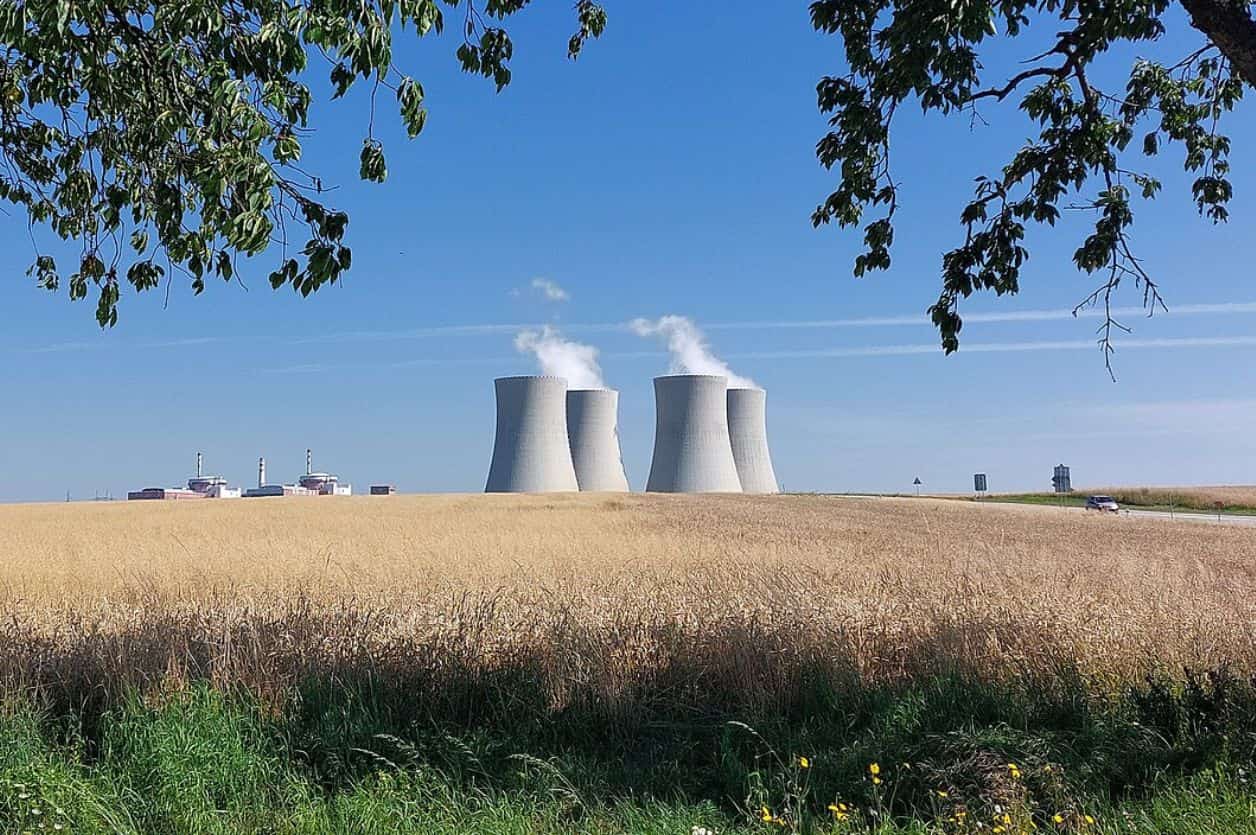
The global energy and security landscape in early April 2026 was marked by a convergence of nuclear energy expansion, advanced weapons testing, and intelligence operations shaped by the ongoing U.S.-Israel-Iran conflict. The war’s disruption of oil supplies through the Strait of Hormuz intensified the urgency for alternative energy sources, prompting renewed attention to nuclear power as a stable, low‑carbon option.
In Europe, the conflict exposed the region’s continued vulnerability to external energy shocks despite earlier diversification efforts following the start of the conflict in Ukraine. European Commission President Ursula von der Leyen described the bloc’s earlier retreat from nuclear energy as a strategic error, and Brussels began considering new funding mechanisms to accelerate deployment of Small Modular Reactors (SMRs) by the early 2030s. German Chancellor Friedrich Merz acknowledged that the nuclear phase‑out was irreversible but a serious mistake, while Bavarian Premier Markus Söder announced plans to construct SMRs in his state. Industry advocates such as Henry Preston of the World Nuclear Association argued that nuclear energy remains uniquely capable of providing clean, secure, and scalable electricity, while environmental groups including the European Environmental Bureau criticized SMRs as costly and unproven.
Technical experts highlighted that SMRs, typically producing under 300 megawatts, could complement renewables by providing consistent baseload power for industrial sectors requiring steady heat and electricity. Malwina Qvist of the Clean Air Task Force emphasized that Germany’s heavy reliance on coal and gas for non‑renewable generation results in sixteen times higher carbon emissions than France, where nuclear provides roughly two‑thirds of electricity. However, critics such as M. V. Ramana of the University of British Columbia warned that SMRs’ costs per unit of power exceed those of large reactors and that safety and waste‑management challenges remain unresolved.
In India, Prime Minister Narendra Modi announced that the Prototype Fast Breeder Reactor (PFBR) at Kalpakkam, Tamil Nadu, had achieved criticality on April 7, 2026, marking a major milestone in the country’s three‑stage nuclear program. The 500‑megawatt reactor, designed and built domestically, can produce more fissile material than it consumes, advancing India’s goal of long‑term nuclear self‑reliance and eventual use of thorium fuel. Once operational, India will become only the second nation after Russia to operate a commercial fast breeder reactor. Modi described the event as a decisive step toward expanding nuclear capacity from eight to one hundred gigawatts by 2047.
The Iran conflict also accelerated private‑sector investment in nuclear innovation. Jay Yu, founder of Nano Nuclear Energy, stated that institutional capital was flowing into next‑generation designs such as the KRONOS MMR microreactor, which recently became the first commercial‑ready microreactor to submit a construction permit to the U.S. Nuclear Regulatory Commission. The company’s partnership with the University of Illinois to build a campus‑based reactor underscored the technology’s compact and secure design.
Parallel to the energy developments, the United States intensified its pursuit of advanced military technologies. On March 26, 2026, the U.S. Army and Navy jointly tested a common hypersonic missile at Cape Canaveral Space Force Station, Florida, achieving speeds above Mach 5. The Department of War described the system as capable of striking heavily defended, time‑sensitive targets with minimal warning. The test formed part of a broader Pentagon initiative identifying six critical technology areas, including scaled hypersonics, artificial intelligence, and directed energy, to maintain battlefield superiority.
China simultaneously unveiled a handheld electromagnetic coil gun capable of firing up to 2,000 rounds per minute, designed for covert or non‑lethal operations. The weapon’s silent, flash‑free operation and adjustable power output were presented as advantages for law enforcement and urban combat. Chinese media reported that the device represents a miniaturization of larger electromagnetic systems previously tested by the People’s Liberation Army Navy University of Engineering.
In the operational theater, U.S. forces faced mounting aircraft losses during Operation Epic Fury. The Defense Innovation Unit announced a program to develop open‑architecture software capable of integrating real‑time intelligence and terrain data to prevent further mishaps. The Air Force had lost seven aircraft in just over a month, including three F‑15E Strike Eagles and a KC‑130 tanker.
Intelligence operations also played a decisive role. CIA Director John Ratcliffe confirmed that a deception campaign using human assets and advanced surveillance technologies enabled the rescue of a downed U.S. airman in Iran. The operation demonstrated the integration of covert intelligence with battlefield recovery missions. President Donald Trump later vowed to identify the source of a media leak that had revealed the existence of a second missing airman, arguing that the disclosure endangered the mission. Defense Secretary Pete Hegseth and General Dan Caine detailed that the rescue involved penetration into Iranian airspace and that an A‑10 Warthog was lost during the operation.
Finally, the humanitarian dimension of the conflict was underscored by verified reports from the World Health Organization confirming at least 20 attacks on Iranian medical facilities, including the Tofigh Daru pharmaceutical plant and the Pasteur Institute in Tehran. Iranian officials claimed that the destruction of pharmaceutical production lines had crippled domestic medicine supplies, while Israel asserted that the targeted facilities were supplying chemicals for weapons research. Independent verification remained unavailable.
Why it Matters
The convergence of nuclear energy expansion, advanced weapons testing, and intelligence operations during the Iran conflict illustrates a broader transformation in global strategic competition. The renewed European and Indian focus on nuclear power reflects how energy security has become inseparable from national defense and technological sovereignty. Europe’s reconsideration of nuclear energy, including potential deployment of SMRs, signals a shift away from dependence on volatile fossil‑fuel markets and toward domestically controlled, low‑carbon baseload generation. This transition, however, also exposes internal divisions between industrial advocates and environmental groups, revealing the political complexity of balancing climate goals with strategic autonomy.
India’s successful activation of the Kalpakkam Fast Breeder Reactor demonstrates the emergence of new nuclear powers capable of designing and operating advanced reactors without external assistance. The project strengthens India’s long‑term energy independence and positions it as a potential exporter of nuclear technology to developing nations. It also underscores the strategic value of thorium‑based fuel cycles, which could reduce reliance on imported uranium and align with India’s broader ambition to become a global clean‑energy leader.
The Iran conflict’s disruption of oil flows through the Strait of Hormuz has accelerated global investment in nuclear and alternative energy systems. Private‑sector initiatives such as Nano Nuclear Energy’s microreactor program highlight how geopolitical instability can catalyze technological innovation. The U.S. Nuclear Regulatory Commission’s engagement with microreactor licensing suggests a regulatory environment increasingly aligned with national‑security imperatives to secure domestic energy production.
Simultaneously, the U.S. hypersonic missile test and China’s electromagnetic‑weapon development reveal an intensifying arms race in next‑generation technologies. Hypersonic systems capable of exceeding Mach 5 compress decision‑making timelines and challenge existing missile‑defense architectures, potentially destabilizing deterrence frameworks. China’s portable coil gun, while currently limited to non‑lethal applications, demonstrates the miniaturization of electromagnetic launch systems that could eventually alter urban warfare and crowd‑control tactics. Together, these developments indicate that both major powers are pursuing technological asymmetry to offset conventional vulnerabilities.
The Pentagon’s software initiative to integrate real‑time data across aircraft platforms reflects lessons learned from operational losses in Iran. The absence of a unified situational‑awareness system exposed U.S. forces to friendly‑fire and coordination failures, emphasizing the need for digital interoperability in modern warfare. The Defense Innovation Unit’s “Open Mission Engine” program represents a shift toward modular, software‑defined command systems that can adapt across diverse airframes, aligning with broader Department of Defense efforts to modernize legacy fleets.
The CIA’s deception campaign and subsequent rescue of a downed airman highlight the fusion of intelligence and military operations in contested environments. The public acknowledgment of such missions by senior officials demonstrates a deliberate effort to project operational competence and deterrence capability. However, the administration’s threat to prosecute media outlets over leaks raises concerns about transparency and the balance between national security and press freedom.
The verified attacks on Iranian medical infrastructure underscore the humanitarian and legal dimensions of modern conflict. The World Health Organization’s confirmation of strikes on hospitals and pharmaceutical plants introduces potential violations of international humanitarian law. The competing narratives from Iran and Israel illustrate how information warfare accompanies kinetic operations, with each side seeking to frame legitimacy under the laws of armed conflict.
Collectively, these developments reveal a world in which energy policy, technological innovation, and military strategy are increasingly intertwined. The drive for nuclear self‑reliance in Europe and Asia parallels the race for hypersonic and electromagnetic weapons, while intelligence operations and cyber‑enabled deception shape outcomes on the battlefield. The Iran war has thus become a catalyst and a testing ground for the next phase of global power competition, where control over energy, information, and advanced technology defines strategic advantage.
Stay Informed. Stay Ahead.