Ebola Spreads to Uganda as WHO Raises Global Alert
Intelligence Summary
The World Health Organization designated the Ebola outbreak affecting the Democratic Republic of the Congo and Uganda as a public health emergency of international concern, reflecting cross-border transmission risk and uncertainty about the outbreak’s true scale. The outbreak originated in the Democratic Republic of the Congo’s northeastern Ituri province and involves the Bundibugyo strain of Ebola, a rare variant first identified in Uganda in 2007. The Bundibugyo strain had no approved vaccine or specific treatment in the information provided, increasing reliance on non-pharmaceutical containment measures.
Africa’s Centres for Disease Control and Prevention reported the outbreak was first reported in Ituri province on a Friday near the borders with Uganda and South Sudan. As of the initial updates cited, Africa CDC figures included 88 deaths and 336 suspected cases, while another update cited at least 100 deaths and more than 390 suspected cases. WHO data cited separately indicated at least eight laboratory-confirmed cases, 246 suspected cases, and 80 suspected deaths in Ituri province. The outbreak began in Mongwalu, described as a busy mining area, and subsequent travel by infected individuals to seek care elsewhere contributed to spread across locations. Health zones referenced as affected in Ituri included Rwampara, Mongwalu, and Bunia.
The suspected initial case was identified as a nurse who presented with Ebola-like symptoms in Bunia, Ituri’s capital, on April 24, with the nurse later dying on April 27 at the Bunia Evangelical Medical Centre. Local accounts described a funeral proceeding with physical contact with the body and without Ebola-safe burial measures, with expert concern that unsafe burials could accelerate transmission. A local health official in Rwampara described an average of five deaths daily over a three-day period and prioritized establishing an emergency Ebola treatment centre.
Uganda recorded two laboratory-confirmed cases linked to travelers arriving from the Democratic Republic of the Congo, including one death in Kampala, and Uganda’s imported cases were described as being treated in intensive care units. Cases linked to the outbreak were also described as reaching Kinshasa, the Democratic Republic of the Congo’s capital, elevating regional risk assessments. WHO assessed neighboring countries as high risk for further spread due to population mobility, trade and travel linkages, and epidemiological uncertainty, while advising against border closures or trade restrictions. WHO guidance emphasized activating emergency management systems, strengthening cross-border screening, immediate isolation of confirmed cases, daily monitoring of contacts, and advising exposed individuals to avoid international travel for 21 days.
The United States Centers for Disease Control and Prevention assessed the risk to the United States as relatively low while outlining measures including monitoring travelers from affected areas, potential entry restrictions for non-US passport holders who had been in Uganda, DR Congo, or South Sudan within 21 days, airline-linked contact tracing, and increased testing capacity and hospital readiness. A Level Four US travel advisory warned against travel to the Democratic Republic of the Congo. Separately, sources cited indicated at least six Americans were exposed in the Democratic Republic of the Congo, with one believed symptomatic and three described as having high-risk contact, alongside CDC support for the safe withdrawal of a small number of Americans to quarantine, including an unconfirmed possibility of transfer to a US military base in Germany.
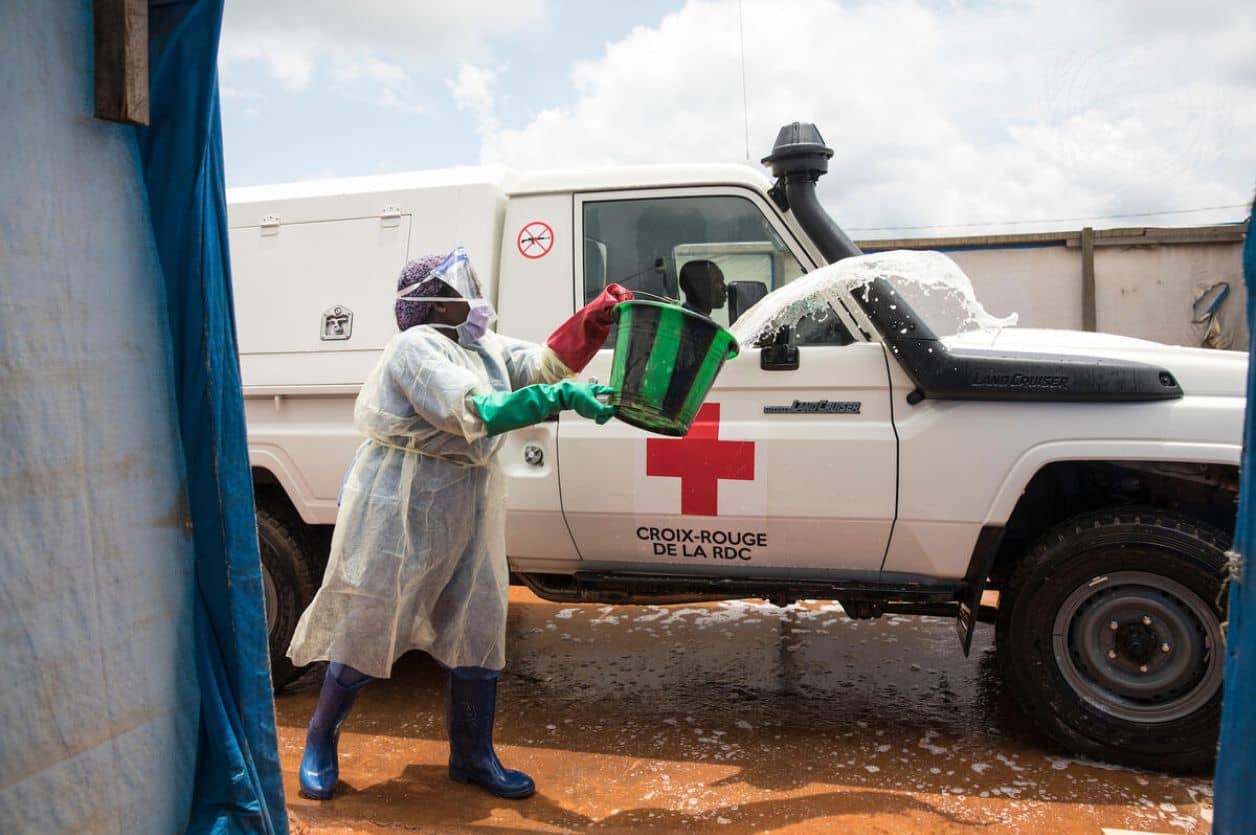
Operational constraints were linked to insecurity and conflict in eastern Democratic Republic of the Congo, including armed group violence in Ituri and broader humanitarian pressures that could complicate containment. WHO highlighted uncertainties in case counts and geographic spread, and noted limited understanding of epidemiological links among known or suspected cases. Community mistrust and misinformation were described as risks, including claims that major powers might exploit the situation for research, while Red Cross volunteers were described conducting door-to-door outreach, supporting contact tracing, and countering misinformation.
Why it Matters
The emergency designation elevates the outbreak from a national crisis to an international coordination problem. Cross-border cases in Uganda and indications of spread to Kinshasa create a multi-node transmission risk that can outpace localized containment. This matters because the response must synchronize surveillance, case isolation, and contact tracing across jurisdictions with different capacities and political constraints.
The Bundibugyo strain’s lack of an approved vaccine or targeted treatment in the available information shifts the strategic center of gravity to public health operations. That increases the importance of infection prevention and control inside health facilities, safe burials, and rapid diagnostics. It also raises the consequences of any breakdown in hospital protocols, especially when unusual clusters among medical workers suggest systemic gaps. In such conditions, even small delays in isolation and contact tracing can compound quickly.
The outbreak’s geography intensifies the challenge. Ituri’s mining economy and population mobility create persistent movement corridors that can undermine perimeter-based containment. The same mobility that supports livelihoods also accelerates disease diffusion into trading hubs and urban centers. The emergency guidance against border closures reflects a trade-off: formal restrictions can push movement into informal crossings, reducing visibility and weakening epidemiological control.
Security conditions in eastern Democratic Republic of the Congo add a hard constraint that is geopolitical as well as humanitarian. Armed group violence and contested territory can limit access for health teams, disrupt supply chains for protective equipment and diagnostics, and reduce the credibility of public messaging. Where state authority is fragmented, health measures can be interpreted through conflict narratives, increasing resistance and non-compliance. The described mistrust, including claims about external exploitation by major powers, signals an information environment where rumor can become an operational threat.
International risk management is already visible through travel advisories, traveler monitoring, and potential entry restrictions tied to recent presence in affected countries. These measures matter because they can reduce importation risk while also affecting mobility, commerce, and diplomatic relations. The emphasis on airline contact tracing and hospital readiness indicates that the outbreak is being treated as a systems test for global health security, not only a regional emergency.
The exposure of US citizens and discussion of evacuation to quarantine, including an unconfirmed military-base option, highlights how health crises can intersect with defense infrastructure and contingency planning. Even when the overall risk is assessed as low, governments may use military logistics for rapid movement and controlled isolation. That can become politically sensitive in host nations and can feed local narratives about foreign involvement, especially in environments already shaped by conflict and suspicion.
Finally, the outbreak underscores how public health emergencies can become strategic stressors during broader instability. The combination of high lethality, uncertain surveillance coverage, and constrained access creates a scenario where international assistance must be both technically effective and politically calibrated. Success depends on trust-building, consistent cross-border coordination, and protection of healthcare workers. Failure would increase mortality and deepen regional instability by disrupting mining activity, trade flows, and governance legitimacy in already fragile areas.
Stay Informed. Stay Ahead.