
El Mencho Killed in Mexico Raid as CJNG Retaliation Spreads Nationwide
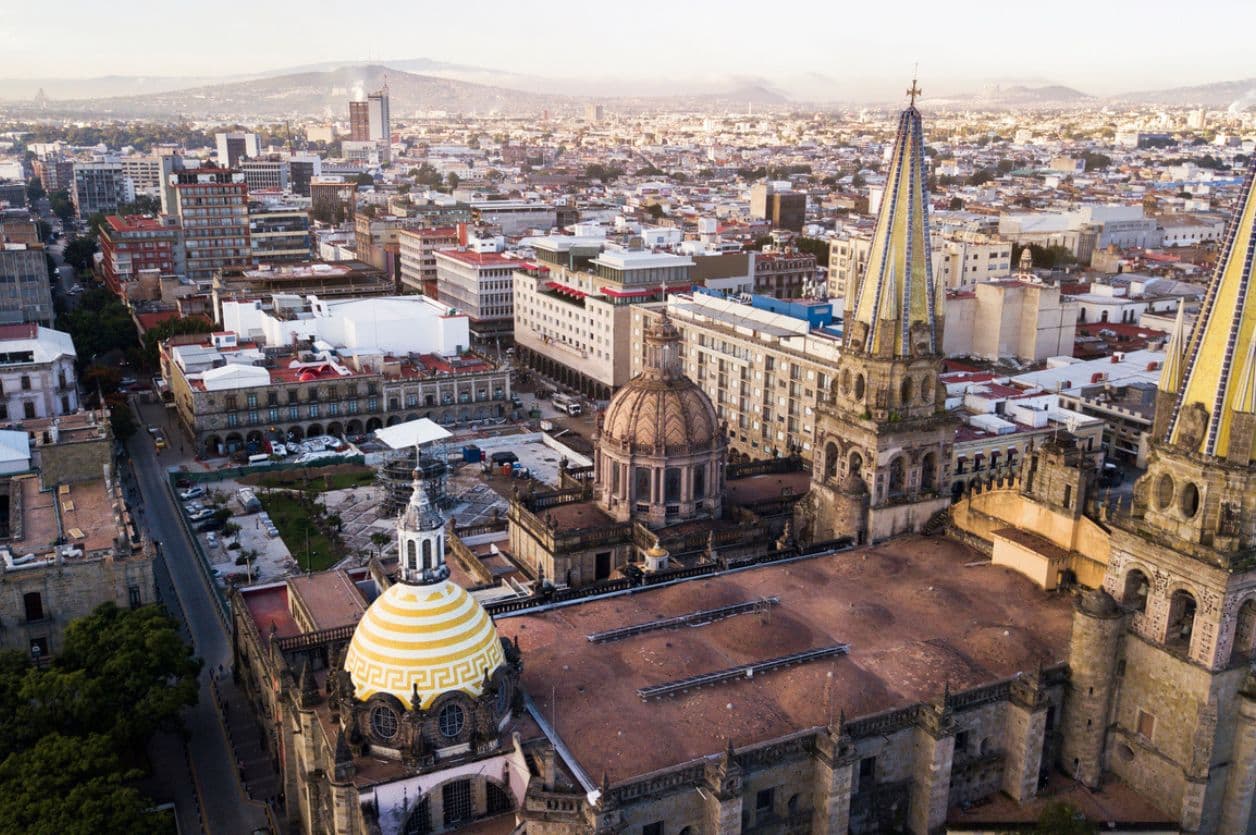
Guadalajara, Photo Credit: iStockPhoto.com/MattGush
Intelligence Summary
Mexico’s Secretariat of National Defence announced that Nemesio Ruben Oseguera Cervantes, a 59-year-old known as El Mencho and identified as the leader of the Jalisco New Generation Cartel (CJNG), was killed during a security operation in Tapalpa, Jalisco. He died after being wounded in clashes with soldiers and being transported to Mexico City on Sunday, February 22, 2026. Mexican authorities described the raid as planned and executed by Mexican special forces, with aircraft from the Mexican Air Force and deployments by the National Guard supporting the operation. Mexico’s Defense Secretary Ricardo Trevilla later described a multi-year intelligence effort culminating in the operation, including tracking an associate linked to one of Oseguera Cervantes’s girlfriends, who traveled to Tapalpa on Friday, February 20. This enabled authorities to establish a ground cordon and launch the operation early Sunday with support that included six helicopters and air force overwatch.
Multiple accounts stated that United States intelligence contributed to the operation. On February 23, 2026, White House Press Secretary Karoline Leavitt posted on X that the United States provided intelligence support to Mexican authorities for the operation and characterized El Mencho as a top target for both governments and a leading fentanyl trafficker into the United States. Leavitt also stated that President Donald Trump had designated CJNG as a Foreign Terrorist Organization the prior year and said that, in addition to El Mencho’s death, three cartel members were killed, three wounded, and two arrested.
The killing triggered widespread retaliatory violence attributed to CJNG, including vehicles set on fire, roadblocks, and attacks on security forces across multiple states. Reported affected states included Jalisco, Colima, Michoacan, Nayarit, Guanajuato, and Tamaulipas, with additional reporting indicating impacts across around 20 of Mexico’s 32 states. In Jalisco’s capital Guadalajara, accounts described empty streets and significant disruption, including a public transport suspension ordered by Jalisco Governor Pablo Lemus Navarro and school cancellations in several states. Violence and disruption also affected Puerto Vallarta, a major tourist destination on the Jalisco coast, with reports that tourists were trapped due to unrest and that smoke was visible over the city.
Casualty and enforcement figures varied across reports as official updates evolved. Mexico’s Security Minister Omar Garcia Harfuch stated that 25 National Guard members were killed in six attacks in Jalisco, and he also reported 30 criminal suspects killed in Jalisco, four others killed in Michoacan, and additional deaths including a prison guard, a prosecutor’s office agent, and an unidentified woman, alongside 70 arrests across seven states. In a later update, Harfuch said at least 74 people were killed in the operation, including 25 security forces, suspected cartel members, and others. Other accounts cited 62 killed following the raid and subsequent violence, while also repeating the 25 National Guard deaths and 70 arrests.
Authorities reported seizures of armoured vehicles and weapons, including rocket launchers, during the operation. Mexico announced additional troop deployments, with Trevilla stating that 2,500 troops would reinforce roughly 7,000 already stationed in Jalisco, while other reports framed the combined deployment as exceeding 10,000. President Claudia Sheinbaum Pardo publicly praised security forces and urged calm, stating that activities were proceeding normally in most of the country and later saying that more than 250 roadblocks across 20 states had been cleared.
The United States and Canada issued travel and shelter-in-place warnings tied to the unrest and security operations, with the U.S. State Department advising Americans in multiple states to shelter in place and noting roadblocks affecting airline operations. Canada advised citizens to keep a low profile and cited shootouts and explosions in Jalisco, Guerrero, and Michoacan, including a specific warning for Puerto Vallarta. Airlines including United, American, Air Canada, and others canceled flights to Puerto Vallarta and Guadalajara, and one Atlanta-to-Guadalajara flight was diverted to Austin. Southwest Airlines reported turning back four flights and planning repatriation flights once conditions normalized.
U.S. Deputy Secretary of State Christopher Landau publicly welcomed the operation on social media. U.S. President Donald Trump called on Mexico to step up action against cartels and had previously indicated willingness to conduct unilateral strikes inside Mexico, which Sheinbaum has pushed back against. Reports also highlighted U.S. fentanyl seizure figures: since October 2024, U.S. Customs and Border Patrol seized 9,200 lb (4,182 kg) of fentanyl, with 96 percent intercepted at the U.S. southwest border with Mexico.
Why it Matters
This episode matters because it operationalizes a more overt U.S. role in Mexico’s internal security fight, shifting the bilateral relationship from pressure and rhetoric toward acknowledged intelligence-enabled targeting. The White House confirmation by Press Secretary Karoline Leavitt that the United States provided intelligence support, combined with Mexico’s own statements that U.S. information was complementary or very important, creates a clearer public record of cross-border security cooperation than is typical for sensitive counter-cartel operations. This is a concrete example of how intelligence sharing can be politically double-edged: it can improve operational effectiveness, but it also increases expectations for results and can intensify sovereignty disputes when violence spikes afterward.
The scale and geographic spread of retaliation underscores that cartel “decapitation” can generate immediate national-level instability, not just localized violence. Multiple accounts described impacts across more than half a dozen states and, with attacks extending beyond roadblocks and vehicle burnings to include assaults on banks, petrol stations, and shops. The reported casualties, including Harfuch’s figures of 25 National Guard killed and later at least 74 total deaths, indicate that the state faced coordinated, lethal counteraction rather than sporadic unrest. This matters strategically because it tests Mexico’s capacity to sustain security operations across multiple fronts while maintaining public order, especially when the government is simultaneously trying to frame the situation as returning to normality.
The disruption to aviation and tourism highlights how cartel violence can rapidly become an economic and reputational shock with international spillovers. The U.S. and Canada shelter-in-place advisories, flight cancellations by multiple carriers, diversions, and the reported trapping of tourists in Puerto Vallarta show how quickly a security crisis can affect cross-border mobility and commercial confidence. The fact that Guadalajara is a host city for the forthcoming FIFA World Cup, and that sports events were postponed, adds a reputational risk that can drive additional security measures and international scrutiny.
At the international level, the U.S. designation of CJNG as a Foreign Terrorist Organization is significant because it frames cartel violence in national security terms that can justify expanded tools and potentially more assertive cross-border postures. This intersects with President Trump’s stated willingness to conduct unilateral strikes inside Mexico and his call for Mexico to step up, which increases the risk of bilateral friction if U.S. domestic political demands for visible action rise after high-profile violence.
Finally, the data shows how the fentanyl issue functions as the central strategic driver linking U.S. domestic security priorities to Mexico’s internal conflict. The U.S. framing of El Mencho as a leading fentanyl trafficker, combined with the CBP seizure data showing 96 percent of seized fentanyl intercepted at the southwest border since October 2024, reinforces why Washington is incentivized to deepen intelligence involvement. At the same time, commentary from former DEA official Mike Vigil that success requires targeting logistics, money laundering, and armed wings, and his critique that U.S. policy does little on demand reduction and weapons flows, points to a structural mismatch between tactical wins and strategic outcomes. For analysts, the key implication is that even a high-value target removal can be followed by fragmentation, succession struggles, and sustained violence, which may increase near-term instability even if it degrades centralized cartel leadership.
Key Actors
Key Actors
- Mexico
- United States
- CJNG
- Canada
- Jalisco state government
Stay Informed. Stay Ahead.