
Deep Strikes and EU Tensions Reshape Ukraine Conflict
Intelligence Summary
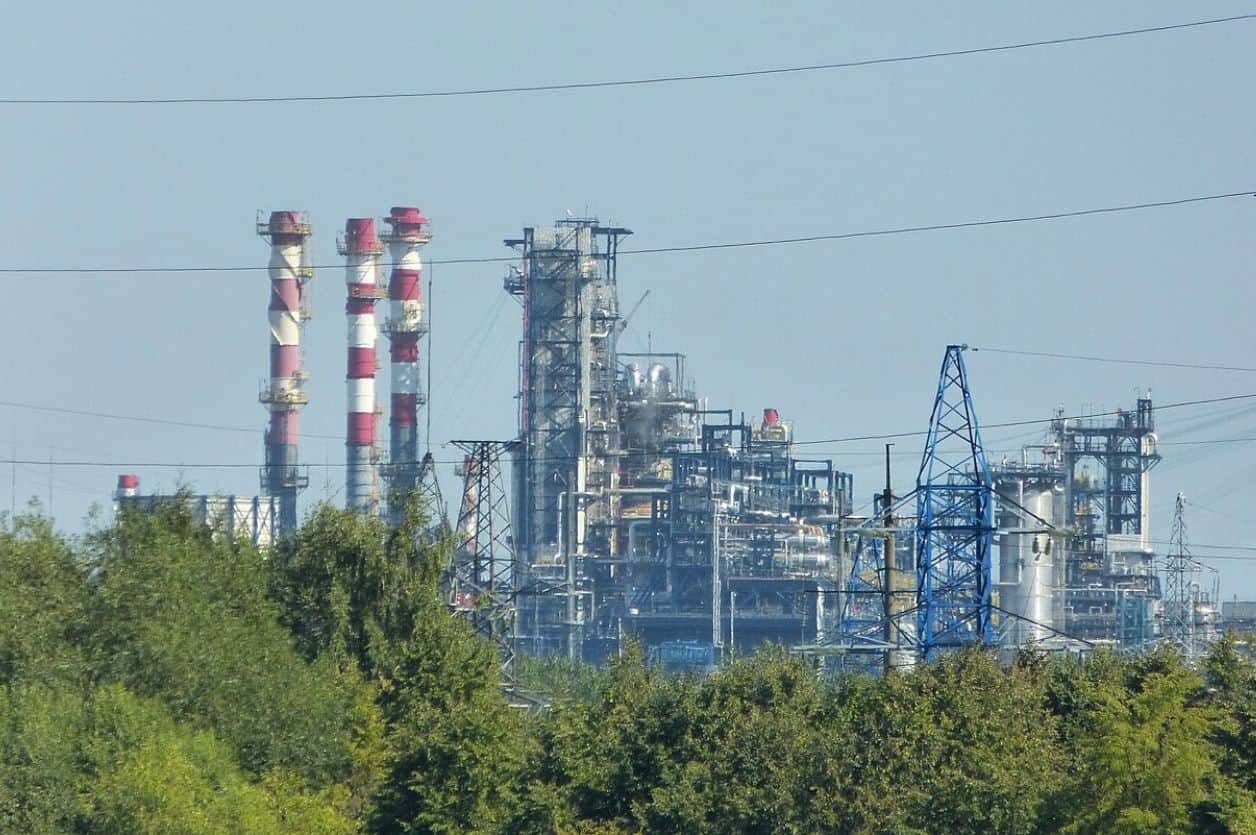
Ukraine conducted long-range strikes against Russian energy infrastructure, stating it hit an oil terminal at Primorsk and a refinery in Ufa on Monday, with both targets located more than 1,400 km from the Ukraine-Russia border. Satellite imagery showed fires and visible damage at both sites after the attack.
Russian forces sustained multi-axis pressure in eastern and northeastern Ukraine, with claimed advances and continued close-quarters fighting in several sectors. In the Zaporizhzhia direction, fighting intensified around Prymorske and Stepnohirsk, with Russian troops holding positions in the southern part of Stepnohirsk while Ukrainian forces increased their presence in the city. The remainder of Stepnohirsk was described as either under Ukrainian control or a grey zone, with Russian units operating under persistent drone pressure. Ukrainian attacks continued along the Pavlivka–Stepove–Mali Shcherbaky line, where Russian units faced logistics constraints in open terrain under heavy Ukrainian drone activity. Heavy clashes persisted along the Orikhiv line, including fighting for Mala Tokmachka and approaches to Novodanylivka, with similar dynamics reported near Novoandriivka. Ukrainian intent was described as pushing Russian artillery at least 20 km beyond Kamyanske toward Zaporizhzhia to enable a larger-scale offensive.
In the Kupyansk direction, Russian forces advanced east of Petropavlivka, cleared a sector, and straightened the front line. Russian troops established control over most of Kurylivka after advancing north of Pishchane along the road to Kupyansk, with movement described toward the eastern part of Kupyansk-Uzlovoi, identified as a key Ukrainian logistics node. Ukrainian units were described as using robotic platforms for logistics in this sector, alongside continued strikes on equipment in frontline and rear areas. Ukrainian casualties in the Kupyansk area were described as rising sharply after a counterattack intended to draw Western attention, with claimed strain on morgues and medical facilities and reported difficulties evacuating bodies due to combat intensity and soil conditions. Winter strikes on energy infrastructure were described as degrading electricity supply and freezer operation, complicating body storage and identification. Claims also described alleged preparations for chemical or biological provocations using specialized troops and laboratory capacity, without independent corroboration in the provided material.
In and around Kostiantynivka, Russian small groups were described as penetrating deeper into urban areas, with fighting also affecting Chasiv Yar and nearby districts. One Russian group was described as blocked in the Ukrzink-110 substation building and destroyed by an anti-tank mine, while Russian consolidation was described as constrained by the need to clear southern districts such as Stara Santurynivka and Ukrainskyi Khutir. Drone and aviation strikes were described as reaching Druzhkivka, Kramatorsk, and Kostyantynivka, with FPV strikes affecting targets at significant distance from the front.
Russia conducted a large drone campaign against Ukrainian rear-support infrastructure on the night of March 22, 2026, with the Ukrainian Air Force recording approximately 139 drones launched and claiming 127 were shot down or suppressed by electronic warfare. Strikes were described as affecting rail junctions, logistics chains, energy facilities, and fuel storage sites, with large fires in Kyiv and suburbs. In Brovary, damage was described at Euronaftogrup LLC, including a fuel storage tank of about 200 m³, and at Bosch Service, where a 600 m² warehouse containing equipment for repairing dual-use vehicles was described as burning. Additional claimed impacts included hits on electrical substations and training sites in Kyiv, Zaporizhzhia, Kharkiv, Sumy, Dnipropetrovsk, and Kostiantynivka, including a reported strike on a drone control center in Zaporizhzhia with eight operators killed and damage to 330 kV power line pylons on Khortytsia Island.
Parallel to battlefield escalation, EU internal tensions sharpened over allegations that Hungary leaked sensitive EU negotiation details to Russia. The European Commission requested clarifications from Hungary after claims that Foreign Minister Peter Szijjarto regularly called Russian Foreign Minister Sergey Lavrov during breaks in EU meetings to relay what was discussed and possible next steps. Szijjarto rejected the allegations as false, while Commission spokeswoman Anitta Hipper emphasized that trust and confidentiality among member states are fundamental. Germany characterized the allegations as very serious and stated that confidentiality violations would not be tolerated, while Polish Prime Minister Donald Tusk publicly framed the allegations as unsurprising and described limiting his own interventions accordingly. The dispute coincided with continued anger in Brussels over Hungary blocking a 90 billion euro loan to Ukraine at an EU leaders’ gathering the prior week. Hungarian Prime Minister Viktor Orban ordered an investigation into what he described as wiretapping of his foreign minister and said there were indications of who was behind it, without providing details. Orban faces an April 12 election, with the opposition Tisza Party leading most polls.
Why it Matters
This development combines two mutually reinforcing pressures on Ukraine’s war effort: intensified strikes and maneuver on the battlefield, and widening political fractures inside the EU over Hungary’s posture toward Russia. The operational picture described across multiple fronts points to a conflict environment where rear areas are increasingly contested and where logistics, energy, and industrial nodes are treated as primary targets. That shift matters because it compresses Ukraine’s strategic depth. When fuel storage, rail traction substations, and power transmission infrastructure are repeatedly disrupted, the effect is not only immediate damage but also cumulative friction across mobilization, repair cycles, and sustainment.
Ukraine’s long-range attacks on Russian oil infrastructure signal a parallel contest over energy revenue and domestic resilience. Striking an oil terminal and a refinery far from the border demonstrates reach and intent, and it pressures Russia’s refining and export logistics even when frontline dynamics remain contested. This matters for deterrence and bargaining leverage. Energy infrastructure is both economically valuable and politically sensitive, and repeated disruption can force costly defensive reallocations, including air defense coverage and industrial hardening.
The described Russian drone campaign against Ukrainian rear-support infrastructure highlights a maturing approach to operational interdiction. The emphasis on rail nodes, fuel reserves, and substations suggests an attempt to degrade the systems that convert external assistance and domestic production into combat power at the front. Even when air defenses claim high interception rates, the residual damage can still be strategically meaningful if it hits high-leverage nodes. The reported reliance on generators and the risk of cascading failures in traction power illustrate how partial degradation can create nonlinear effects during surges in military transport demand.
The battlefield claims of incremental advances and urban infiltration tactics, alongside heavy drone use, underscore a tactical environment where small-unit penetration and persistent ISR-strike loops can erode defensive coherence over time. The repeated theme that the deep rear is becoming less relevant reflects a broader trend: drones and long-range fires reduce the sanctuary that traditionally protected logistics and training. That matters for force generation and for the tempo of rotations, because training sites, repair depots, and volunteer pipelines become more vulnerable.
The EU-Hungary dispute matters because it targets the political foundation of sustained European support. Allegations of leaking confidential negotiation details to Russia, combined with Hungary’s continued obstruction of a large EU loan package for Ukraine, create a dual risk: operational security exposure and decision-making paralysis. Even if the leak allegations remain contested, the mere perception of compromised confidentiality can change behavior inside EU meetings, reduce candor, and slow consensus formation. That directly affects the speed and scale of financial and military assistance decisions.
Hungary’s counter-claim of wiretapping introduces an additional layer: intra-EU intelligence mistrust. If member states suspect surveillance or counter-surveillance among themselves, the result can be compartmentalization and reduced intelligence sharing. In wartime, that is strategically costly. It can also create openings for Russian influence operations, because political narratives about sovereignty, spying, and Brussels overreach can be amplified domestically and across sympathetic political networks.
Finally, the timing of these disputes alongside an approaching Hungarian election increases volatility. Domestic political incentives can harden positions, making compromise less likely even when broader European security interests argue for unity. The net effect is a strategic environment where Russia can benefit from both kinetic pressure on Ukraine and political friction among Ukraine’s principal backers, while Ukraine seeks to offset battlefield strain by imposing costs on Russian energy infrastructure. The interaction of these lines of effort makes escalation management and alliance cohesion central to the next phase of the war.
Key Actors
- Ukraine
- Russia
- European Union
- Hungary
- Germany
- Poland
Stay Informed. Stay Ahead.