Europe, Asia Rebuild Defense Networks
Intelligence Summary
A series of recent diplomatic and military initiatives across Europe and Asia signaled a significant reconfiguration of alliance structures and security cooperation frameworks. On July 13, Ukraine and nine European countries including Denmark, France, Germany, Italy, the Netherlands, Norway, Spain, Sweden, and the United Kingdom announced the formation of a new integrated ballistic missile defense coalition designed to protect Europe from growing missile threats. The coalition, launched during the Paris summit of the “Coalition of the Willing,” aims to develop a shared defensive architecture that complements existing national systems. Ukrainian President Volodymyr Zelenskyy described anti-ballistic defense as his country’s top priority and presented Ukraine’s Anti-Ballistic Program to partner nations, emphasizing the need for coordinated defense production and technology sharing.
French President Emmanuel Macron confirmed that a multinational force for Ukraine would conduct regional military exercises in neighboring countries in the coming months to test deployment plans. Macron stated that the force would be fully deployed only if a ceasefire between Ukraine and Russia were achieved, but the exercises would demonstrate readiness and credibility. The Paris summit, attended by at least 25 heads of state, also reaffirmed transatlantic unity and discussed air and missile defense cooperation. Macron underscored Europe’s willingness to defend freedom and the rule of law, even at significant cost.
Simultaneously, the United Kingdom and the European Union announced new joint cyber sanctions targeting Russian state-linked networks and individuals accused of orchestrating cyberattacks and hybrid operations across Europe. The UK government attributed a failed December 2025 cyberattack on Poland’s energy grid to Russia’s Federal Security Service (FSB), stating that the attack could have left 500,000 people without electricity during winter. The sanctions targeted 24 individuals and entities, marking a continued escalation in the cyber dimension of the Russia-West confrontation.
In Asia, Japan advanced a major intelligence reform initiative. Legislation passed in May 2026 established the country’s first centralized intelligence agency since World War II, creating a National Intelligence Council and a National Intelligence Bureau to replace the existing Cabinet Intelligence and Research Office. Prime Minister Sanae Takaichi described the reform as a step toward strengthening Japan’s espionage and counterintelligence capabilities amid growing threats from China, Russia, and North Korea. The new structure aims to improve coordination among agencies and reduce bureaucratic fragmentation. Western allies, including the United States, Germany, and Australia, have been advising Tokyo on the agency’s design. The reform accompanies Japan’s broader defense expansion, including a record $58 billion defense budget and plans to develop a drone and laser shield for its southwestern region.
Parallel to Japan’s intelligence overhaul, India and Japan held their eighth Defence Policy Dialogue in Tokyo on July 13, 2026, led by India’s Defence Secretary Rajesh Kumar Singh and Japan’s Vice Minister of Defence for International Affairs Kano Koji. The two sides discussed deepening cooperation in defense industrial collaboration, cyber security, space, and maritime technology. Both reaffirmed their commitment to a free and open Indo-Pacific and reviewed progress under the India-Japan Special Strategic and Global Partnership. The meeting followed Prime Minister Takaichi’s visit to India earlier in July and set the stage for upcoming ministerial exchanges, including a 2+2 dialogue later in the year.
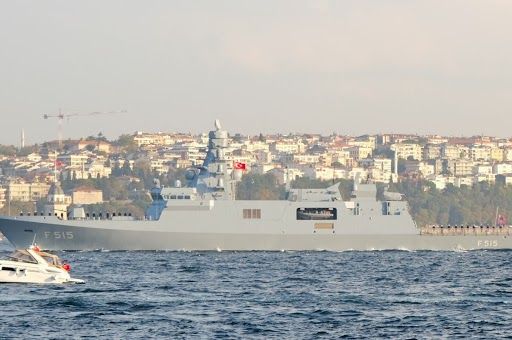
In the Middle East, Turkey expanded its military footprint along the Syrian coast. On July 13, the Turkish National Defense Ministry announced that Turkish warships visited Syria’s Latakia Port for the first time since the start of the Syrian civil war. Admiral Ercüment Tatlıoğlu, commander of the Turkish Naval Forces, was aboard the TCG Istanbul frigate during the visit. Reports indicated that Turkish forces had recently moved into two former Syrian military installations in the Tartus countryside, fortifying them with reconnaissance and possible signals-intelligence equipment. The move aligns with Ankara’s broader strategy to secure influence over Eastern Mediterranean maritime boundaries and gas exploration zones, potentially heightening tensions with Russia and Israel, both of which maintain interests in the same coastal region.
Meanwhile, in Northeast Asia, South Korea and Mongolia declared a “Golden Era” of bilateral relations following President Lee Jae-myung’s state visit to Ulaanbaatar from July 9 to 11, 2026. The two countries signed 21 cooperation agreements, including a Comprehensive Economic Partnership Agreement (CEPA) that effectively functions as a free trade pact. The deal eliminates tariffs of 2 to 5 percent on Mongolian mineral exports such as copper and molybdenum and reduces tariffs on South Korean industrial goods. The partnership also includes cooperation in clean energy, digital technology, and defense-related manufacturing. Mongolia’s President Khurelsukh Ukhnaa and Prime Minister Uchral Nyam-Osor emphasized the strategic importance of South Korean investment for Mongolia’s diversification and regional stability. Both sides highlighted Mongolia’s potential role as a mediator in inter-Korean dialogue, given its neutral diplomatic position and established ties with Pyongyang.
Why it Matters
The developments across Europe, Asia, and the Middle East collectively illustrate a global trend toward regionalized security architectures and diversified alliance networks. The European ballistic missile defense coalition represents a major step toward strategic autonomy within NATO’s framework. By integrating Ukraine into a defensive network with nine European states, the coalition institutionalizes Kyiv’s role in continental security and signals a long-term Western commitment to countering Russian missile threats. The initiative also reflects Europe’s recognition that deterrence now requires layered, multinational defense systems capable of addressing conventional and hybrid threats.
The UK-EU cyber sanctions demonstrate the growing fusion of digital and kinetic domains in modern conflict. By directly attributing cyberattacks to Russia’s FSB and sanctioning associated networks, Western governments are institutionalizing cyber deterrence as a component of collective defense. This approach punishes state-linked actors and also seeks to disrupt the financial and logistical infrastructure supporting hybrid warfare.
Japan’s creation of a centralized intelligence agency marks a historic shift in its postwar security posture. The reform enhances Tokyo’s ability to conduct independent intelligence operations and reduces reliance on U.S. intelligence sharing. It also positions Japan as a more proactive security actor in the Indo-Pacific, capable of contributing to regional intelligence fusion with partners like India and Australia. The move complements Japan’s defense industrial expansion and its willingness to export lethal weapons, signaling a decisive break from its pacifist legacy.
The India-Japan defense dialogue reinforces the Indo-Pacific’s emerging security architecture, where bilateral and minilateral partnerships supplement broader frameworks like the Quad. The focus on defense industrial collaboration and cyber security indicates a shift from joint exercises toward co-development of technologies and shared situational awareness. This deepening cooperation enhances deterrence against coercive behavior in the region and strengthens the “rules-based order” both countries advocate.
Turkey’s naval expansion into Latakia and Tartus underscores Ankara’s ambition to project power beyond its borders and secure a foothold in the Eastern Mediterranean energy theater. By establishing a presence along Syria’s coast, Turkey gains leverage over maritime routes and gas exploration zones contested with Greece, Cyprus, and Israel. However, this move risks friction with Russia, which maintains military bases in the same area, and could complicate Ankara’s balancing act between Moscow and NATO.
The South Korea–Mongolia partnership highlights how middle powers are diversifying alliances to secure critical minerals and supply chains amid global competition. The CEPA agreement strengthens South Korea’s access to essential resources for its semiconductor and defense industries while supporting Mongolia’s economic diversification. The partnership also carries diplomatic weight, as Mongolia’s neutral stance and dialogue with North Korea could make it a valuable intermediary in regional security discussions.
Taken together, these developments reveal a multipolar pattern of alliance formation driven by technological interdependence, energy security, and strategic deterrence. Europe’s missile defense coalition, Japan’s intelligence centralization, and Asia’s expanding bilateral partnerships all point toward a world where regional blocs increasingly assume responsibility for their own defense and intelligence ecosystems. This diffusion of security responsibilities may enhance resilience but also risks fragmentation if coordination among allies falters.
Stay Informed. Stay Ahead.