
FCAS Fighter Jet Program Collapses Amid Defense Divisions
Intelligence Summary
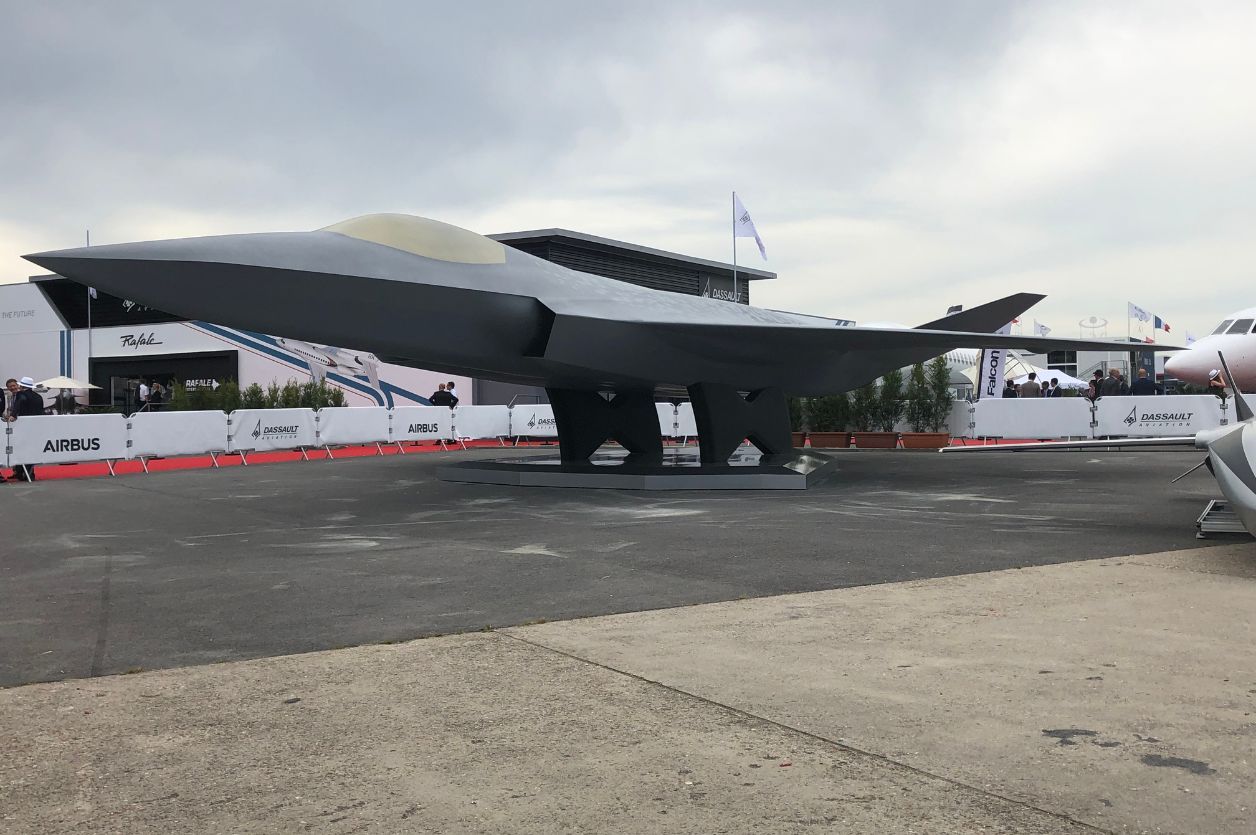
France and Germany have formally terminated their joint Future Combat Air System (FCAS) program, a sixth-generation fighter jet initiative that had been central to European defense integration efforts since its launch in 2017. The project, valued at approximately 116 billion US dollars, was intended to replace France’s Rafale and the Eurofighter aircraft used by Germany, Spain, and the United Kingdom by around 2040. The French presidency confirmed the decision on June 8, 2026, citing irreconcilable disputes between Dassault Aviation and Airbus over leadership and control of the program. The German government concluded that further pressure on the companies would not resolve the impasse, while the French government stated it would continue to pursue other European defense ventures consistent with national security interests.
The FCAS collapse represents a major setback for European Union defense cooperation, which had been promoted as a means to reduce reliance on the United States amid growing uncertainty about Washington’s commitment to NATO. French President Emmanuel Macron and German Chancellor Friedrich Merz had discussed the project’s difficulties the previous week, but their efforts failed to salvage the partnership. The breakdown comes as US President Donald Trump has repeatedly questioned the US defense guarantee to NATO allies, criticized European defense spending, and expressed disapproval of European positions on the US-Israeli war with Iran. Trump’s statements, including threats to use military force to seize Greenland from Denmark, have heightened European concerns about the reliability of the transatlantic alliance.
Simultaneously, European leaders have sought to maintain unity on the Ukraine conflict. On June 8, 2026, British Prime Minister Keir Starmer hosted Ukrainian President Volodymyr Zelenskyy, Chancellor Merz, and President Macron in London for talks on support for Kyiv and potential ceasefire negotiations with Russia. The three European leaders, known collectively as the E3, endorsed Zelenskyy’s proposal for direct dialogue with Russian President Vladimir Putin, with participation from both the United States and European partners. Putin rejected the offer, stating that no meeting would occur until a peace framework was agreed. During the meeting, Zelenskyy requested additional missiles for air defense systems to protect Ukraine’s energy infrastructure ahead of winter.
The same day, a Russian drone struck a storage facility for spent nuclear fuel near the Chernobyl exclusion zone, damaging a container building but causing no radiation release or casualties). The International Atomic Energy Agency confirmed stable radiation levels and announced plans to inspect the site. Ukrainian officials described the attack as part of Russia’s ongoing campaign of nuclear intimidation.
Regional tensions further escalated when NATO aircraft shot down a drone that entered Latvian airspace from Russia on June 8, 2026. The Latvian military reported that French jets operating from Siauliai Air Base in Lithuania destroyed the unmanned aircraft over an uninhabited area near the village of Berzgale, approximately 30 kilometers from the Russian border. Latvian Defense Minister Raivis Melnis confirmed that no injuries or property damage occurred. The Latvian military attributed the incursion to Russian electronic warfare interference, which may have diverted the drone from its intended path.
A similar incident occurred in Moldova, where authorities reported that a drone, likely of Ukrainian origin, crashed in Orhei District north of Chisinau. Moldovan officials blamed Russia for the spillover, arguing that Moscow’s war against Ukraine was responsible for such incidents regardless of the drone’s origin. These events followed a series of drone incursions across NATO’s eastern flank, including explosions in Romania’s Constanta port and previous crashes in Estonia and Finland.
In parallel, NATO announced the creation of Task Force X-Arctic, an experimental unit designed to test unmanned systems in Arctic conditions. The initiative, launched from La Spezia, Italy, will operate through 2026 and aims to enhance multi-domain situational awareness across the North Atlantic and High North. Admiral Pierre Vandier stated that the project would help define future operational standards and maintain NATO’s technological edge in the Arctic. The announcement coincided with the BALTOPS 26 exercises involving 6,000 personnel from 15 NATO countries, led for the first time by Allied Joint Force Command Brunssum in the Netherlands. Russian officials, including President Vladimir Putin and Foreign Ministry spokeswoman Maria Zakharova, condemned NATO’s Arctic buildup as provocative and accused the alliance of fabricating threats to justify militarization.
Why it Matters
The termination of the Franco-German FCAS program underscores the fragility of European defense integration at a time when transatlantic cohesion is under strain. The project’s collapse deprives the European Union of its most ambitious attempt to develop a shared defense-industrial base capable of strategic autonomy. The inability of Dassault and Airbus to reconcile leadership disputes reflects deeper structural divisions between national defense industries and political priorities. For France, the decision to continue pursuing independent or alternative European projects signals a preference for maintaining sovereign control over advanced military technology. For Germany, the outcome highlights the limits of industrial cooperation when national procurement interests diverge.
This breakdown occurs amid growing uncertainty about the United States’ commitment to NATO. President Trump’s repeated questioning of Article 5 obligations and his confrontational rhetoric toward European allies have accelerated calls within Europe for greater self-reliance. However, the FCAS failure demonstrates that political will alone cannot overcome entrenched industrial rivalries. The result is a weakened European defense posture at a moment when Russia’s war in Ukraine continues to test NATO’s deterrence credibility.
The E3 meeting in London illustrates Europe’s attempt to maintain diplomatic leadership on Ukraine while balancing military support and de-escalation efforts. The endorsement of direct dialogue between Zelenskyy and Putin, despite Moscow’s rejection, reflects a pragmatic recognition that the conflict’s continuation risks further destabilizing Europe’s security environment. The Russian drone strike near Chernobyl and the subsequent IAEA involvement highlight the persistent nuclear safety risks associated with the war, reinforcing the urgency of diplomatic engagement.
The drone incidents in Latvia and Moldova reveal the growing permeability of NATO’s eastern borders and the operational complexity introduced by electronic warfare. The attribution of the Latvian incursion to Russian interference suggests that hybrid tactics are increasingly blurring the line between intentional aggression and collateral spillover. These events have political consequences, as seen in Latvia’s recent government change following public pressure over security management. The incidents also test NATO’s readiness to respond proportionally to ambiguous threats without escalating into direct confrontation with Russia.
NATO’s establishment of Task Force X-Arctic and the concurrent BALTOPS 26 exercises demonstrate the alliance’s strategic shift toward technological innovation and northern deterrence. The Arctic initiative serves both as a response to perceived Russian militarization and as a testing ground for integrating unmanned systems into multi-domain operations. However, Moscow’s denunciation of the project as a provocation underscores the risk of an emerging Arctic arms race. The region’s growing militarization could complicate existing security architectures and increase the likelihood of miscalculation in contested spaces.
Collectively, these developments reveal a European security landscape characterized by fragmentation, technological competition, and strategic uncertainty. The FCAS collapse weakens the EU’s defense-industrial coherence, while NATO’s northern expansion and eastern vigilance reflect a reactive posture to external pressures. The combination of industrial disunity, alliance anxiety, and hybrid warfare incidents suggests that Europe’s defense environment is entering a period of heightened volatility. Without renewed coordination mechanisms and trust-building measures, within the EU and across NATO, the continent risks strategic incoherence at a time of escalating global competition.
Stay Informed. Stay Ahead.