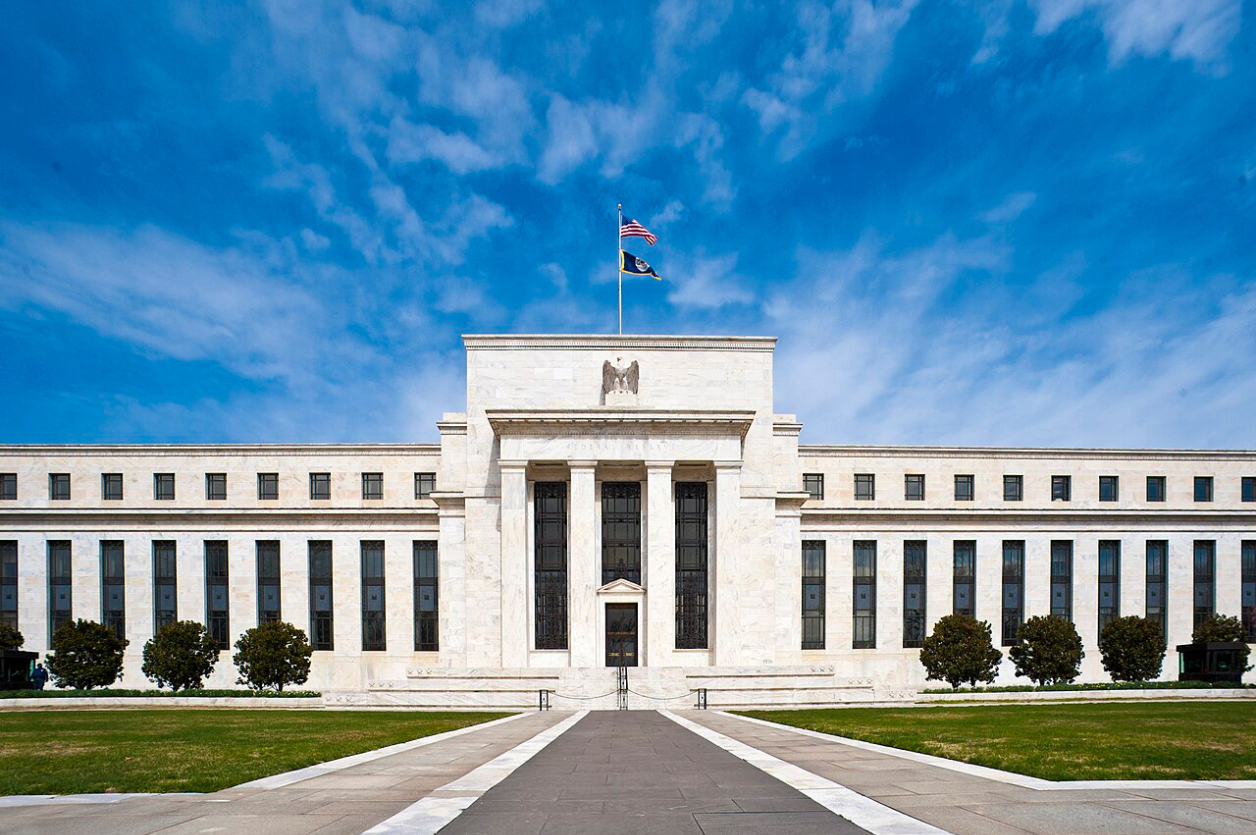
The United States Department of Justice opened a criminal investigation into Federal Reserve Chair Jerome Powell, marking an unprecedented confrontation between the executive branch and the central bank. Powell disclosed on January 11, 2026, that the Department of Justice had served the Federal Reserve with grand jury subpoenas related to his June 2025 testimony before the Senate Banking Committee concerning a $2.5 billion renovation of the Fed’s headquarters in Washington, D.C. The Justice Department’s action included threats of criminal indictment, which Powell described as a pretext to exert political pressure to lower interest rates more rapidly than its economic assessments justified.
The renovation project, which includes modernization and safety upgrades to the Eccles Building and adjacent facilities, has been criticized by President Donald Trump for cost overruns, with the administration claiming the project could reach $3.1 billion compared to the Fed’s $2.5 billion estimate. Powell defended the project as necessary for long-term efficiency and safety, and denied allegations of luxury expenditures such as rooftop terraces and premium materials. The investigation followed a referral by Republican Congresswoman Anna Paulina Luna, who accused Powell of perjury and false statements regarding the project’s costs.
Powell, who was appointed by Trump in 2017 and whose term as chair ends in May 2026, publicly stated that the probe was not about the renovation, but about the administration’s attempt to influence monetary policy. He emphasized that the Federal Reserve must continue to set interest rates based on economic evidence rather than political intimidation. Trump denied knowledge of the investigation but reiterated his criticism of Powell’s performance, stating that interest rates were too high and that Powell was not effective in his role.
The confrontation intensified an already strained relationship between Trump and Powell, which had been marked by repeated presidential demands for aggressive rate cuts to stimulate growth and offset the economic effects of new tariffs. Trump’s administration had previously attempted to remove Federal Reserve Governor Lisa Cook over unrelated allegations, a case pending before the Supreme Court. The president also signaled plans to replace Powell with a loyalist, with names such as Kevin Hassett, Kevin Warsh, Christopher Waller, and Rick Rieder reportedly under consideration.
The Justice Department’s move drew bipartisan concern in Congress. Republican Senator Thom Tillis, a member of the Senate Banking Committee, announced he would block any new Federal Reserve nominations until the legal matter was resolved, citing threats to both the Fed’s and the Justice Department’s independence. Democratic Senator Elizabeth Warren accused the administration of attempting a corrupt takeover of the Federal Reserve.
Financial markets reacted with volatility. Gold prices surged to record highs above $4,600 per ounce, and silver rose more than 7 percent, reflecting investor flight to safe assets amid uncertainty. The U.S. dollar fell by its largest margin in three weeks, while stock futures dipped modestly. Despite Powell’s warnings, major U.S. stock indices remained relatively stable, suggesting investors were still assessing the long-term implications.
Former Federal Reserve Chair Janet Yellen described the probe as extremely chilling and warned that it could undermine market confidence in U.S. institutions. Analysts and economists noted that the Fed’s independence has historically been a cornerstone of global financial stability, and any erosion of that autonomy could have far-reaching effects on inflation control, debt management, and the credibility of the U.S. dollar as the world’s reserve currency.