
Gaza's Power Transfer Tests a Fragile Peace
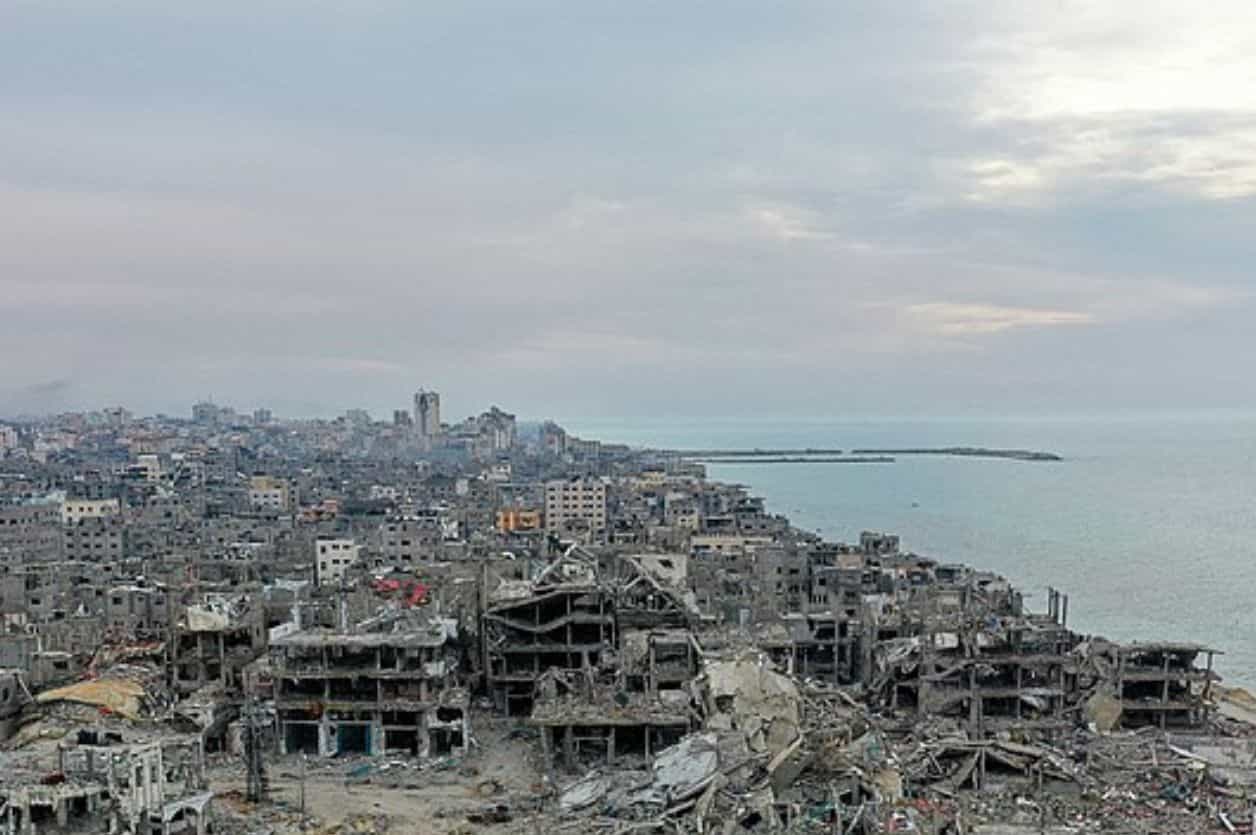
civilian administration. Photo credit: Abedallah Alhaj / UNRWA via Wikimedia Commons (CC BY-SA 3.0 IGO), cropped
Intelligence Summary
On July 6, 2026, Hamas announced the dissolution of the governing body that had administered the Gaza Strip for nearly two decades, marking a major political shift in the territory’s administration. The announcement was made by Ismail al-Thawabta, head of Hamas’s Government Media Office, during a press conference at Al-Aqsa Hospital in Deir el-Balah. He confirmed that Mohammed al-Farra, head of the Government Emergency Committee, had submitted his resignation and that the committee was being dissolved to facilitate the transfer of authority to the National Committee for the Administration of Gaza (NCAG).
The NCAG, a technocratic body backed by the United Nations and established under a United States-brokered ceasefire agreement, is intended to oversee Gaza’s civilian administration and reconstruction. The committee is chaired by Ali Shaath, a Gaza-born engineer and former Palestinian Authority official, and operates under the supervision of the UN and the US-created Board of Peace for Gaza. The Board of Peace, led by US President Donald Trump, has been tasked with overseeing the implementation of the ceasefire and ensuring that all weapons in Gaza are brought under the control of the NCAG.
Hamas officials described the move as a demonstration of their commitment to the ceasefire and Gaza’s reconstruction, while emphasizing that the group was stepping back from civilian governance but not relinquishing its political or military role. Hamas spokesperson Hazem Qassem stated that the decision was intended to remove any pretext for continued Israeli military operations in Gaza and to facilitate the administrative transition. The NCAG leadership confirmed its readiness to assume responsibilities once resources and access were secured, though Israeli authorities have reportedly blocked the committee’s entry into Gaza for months.
Israel dismissed the Hamas announcement as insignificant, arguing that Hamas members remained in place and that the move did not represent a genuine transfer of power. Israeli officials have continued to insist on Hamas’s full disarmament as a precondition for any lasting peace arrangement. Nine months after the ceasefire took effect on October 10, 2025, negotiations remain stalled over the second phase of the agreement, which includes Hamas’s disarmament and the reconstruction of Gaza.
Despite the ceasefire, Israeli airstrikes have continued almost daily. On July 6, 2026, Israeli strikes killed at least five people in Gaza, including three in Khan Younis and two in Gaza City. The Israeli military stated that it targeted Hamas and Palestinian Islamic Jihad operatives, while Gaza’s Health Ministry reported that 73,098 Palestinians had been killed since the start of the war, with women and children comprising about half of the casualties.
Simultaneously, Israeli military operations extended beyond Gaza into Lebanon. On July 6, 2026, an Israeli drone strike in Nabatieh al-Fawqa, southern Lebanon, killed four civilians, including a school principal, her mother, a domestic worker, and a Syrian refugee. The attack occurred despite a ceasefire agreement in Lebanon that began on June 21, 2026, as part of a broader US-Iran accord to end the regional conflict. Lebanese authorities reported that Israeli attacks since March had killed at least 4,300 people and displaced over one million, with 640,000 returning home after the ceasefire.
Israeli Army Chief Eyal Zamir, speaking from Beaufort Castle in southern Lebanon, stated that Israel could launch a rapid offensive to seize additional Lebanese territory, citing the presence of Hezbollah infrastructure in the area. Prime Minister Benjamin Netanyahu denied reports that the United States was pressuring Israel to limit its operations, asserting that Israel retained full operational freedom. The Israeli military has postponed its planned withdrawal from two small “pilot zones” in Lebanon, indicating that the ceasefire terms remain only partially implemented.
Why it Matters
The dissolution of Hamas’s governing body in Gaza represents a pivotal moment in the region’s political realignment, signaling both internal recalibration within Palestinian politics and external maneuvering by major powers. The move reflects a calculated attempt by Hamas to reposition itself within a new diplomatic framework shaped by US mediation and UN oversight. By transferring administrative authority to the NCAG, Hamas seeks to maintain its political and military relevance while reducing international pressure and facilitating reconstruction efforts. This approach mirrors broader regional trends in which non-state actors adapt to shifting power structures without fully relinquishing control.
The establishment of the NCAG under US and UN supervision underscores Washington’s renewed effort to institutionalize a post-conflict governance model in Gaza. The Board of Peace, led by Donald Trump, represents a direct extension of US influence into Gaza’s reconstruction and security architecture. This arrangement also reflects a strategic attempt to marginalize Hamas and the Palestinian Authority and maintain a controlled environment for international aid and reconstruction. However, Israel’s continued blockade of NCAG personnel and insistence on Hamas’s disarmament reveal the fragility of this framework. The deadlock over disarmament and access suggests that the ceasefire remains a tenuous arrangement rather than a durable peace.
The ongoing Israeli strikes in Gaza and Lebanon highlight the persistence of military escalation despite formal ceasefires. The July 6 drone strike in Nabatieh al-Fawqa, which killed four civilians, illustrates the blurred lines between declared ceasefires and continued hostilities. The Israeli military’s justification of such attacks as preemptive measures against perceived threats reflects a broader doctrine of deterrence that prioritizes operational freedom over diplomatic restraint. The cumulative toll of over 4,300 deaths in Lebanon and more than 73,000 in Gaza underscores the humanitarian cost of this approach and the limited efficacy of ceasefire mechanisms.
The situation in Lebanon further complicates the regional balance. Israeli Army Chief Eyal Zamir’s remarks from Beaufort Castle signal a willingness to expand operations northward, potentially reigniting a broader conflict with Hezbollah. Netanyahu’s rejection of claims that the United States is constraining Israeli actions suggests that Tel Aviv remains determined to assert military dominance regardless of diplomatic optics. This posture risks undermining the US-Iran ceasefire framework that underpins the current regional de-escalation.
Strategically, these developments reveal an interplay between military deterrence, diplomatic experimentation, and shifting alliances. The US-backed NCAG initiative aligns with Washington’s broader goal of stabilizing Gaza under international supervision while containing Iranian influence. At the same time, Israel’s continued operations in Lebanon and Gaza demonstrate its intent to maintain unilateral control over security outcomes. The resulting dynamic is one of partial normalization and persistent volatility, where diplomatic openings coexist with ongoing military confrontation.
In the longer term, the success or failure of the NCAG experiment will shape the trajectory of Palestinian governance and regional diplomacy. If the committee gains access to Gaza and begins reconstruction, it could serve as a model for externally managed post-conflict administration. If it fails, the outcome may reinforce the perception that international mechanisms cannot override entrenched power structures. Either scenario will influence the strategic calculations of regional actors, including Iran, Israel, and the United States, as they navigate the evolving balance of power in the Middle East.
Stay Informed. Stay Ahead.