
Gaza Ceasefire Under Strain as Violence and Diplomatic Tensions Escalate
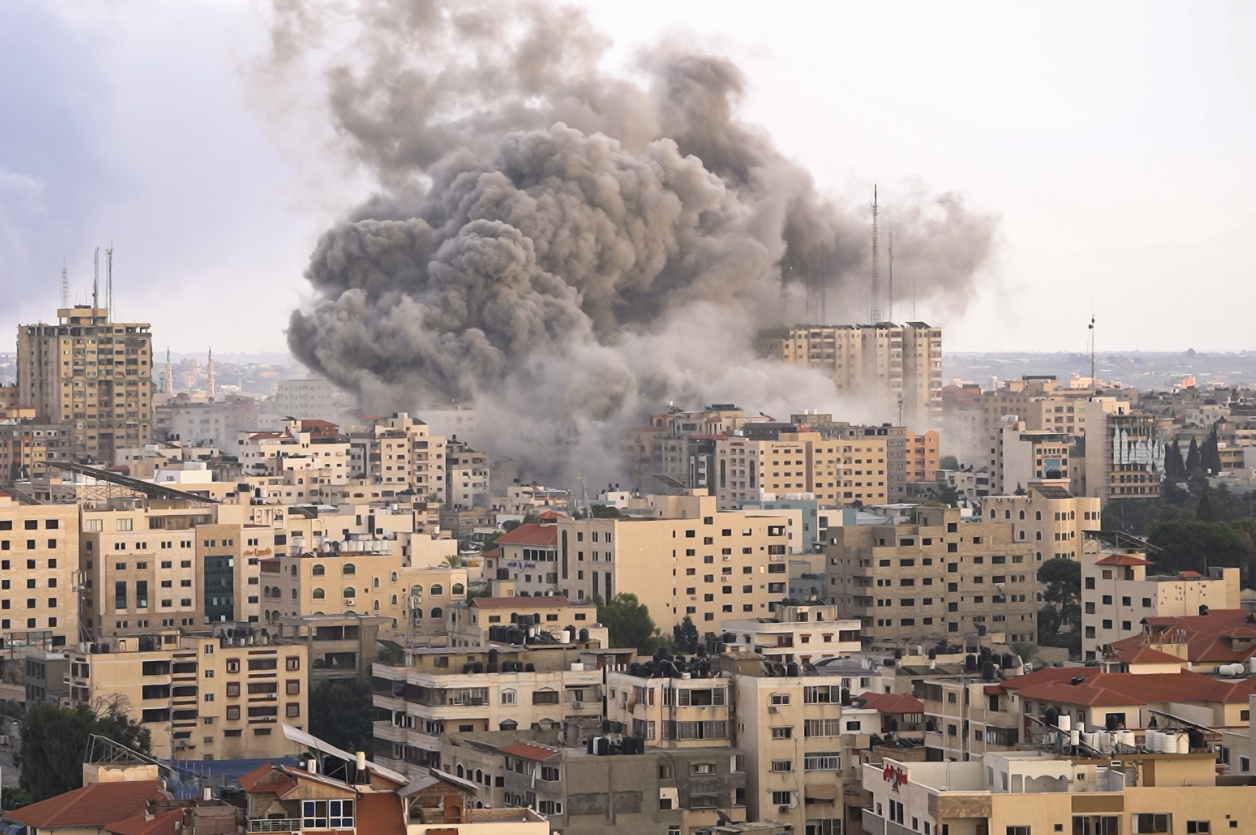
Photo credit: Jaber Jehad Badwan
Intelligence Summary
The ceasefire between Israel and Hamas, brokered by the United States and implemented on October 10, 2025, is under severe strain following multiple deadly incidents across Gaza. Israeli airstrikes and ground fire have killed at least 97 Palestinians since the truce began, according to Gaza health officials, while Israel claims its actions were in response to ceasefire violations by Hamas fighters. The most intense escalation occurred on October 19, when Israeli forces launched widespread strikes across Gaza after two Israeli soldiers were killed in Rafah, an area under Israeli control according to the ceasefire’s “yellow line” boundary.
Israel’s military stated that militants had crossed the yellow line and posed an imminent threat to its troops, while Hamas denied involvement, citing a loss of communication with its units in Rafah since March. The yellow line, drawn on a map released by U.S. President Donald Trump, marks the boundary which Israeli troops were to remain behind under the terms of the ceasefire. It is likely that confusion among Gaza residents about the line’s location has resulted in civilian casualties, including four people shot while returning to their homes in eastern Gaza City.
The ceasefire’s fragility has also been impacted by humanitarian challenges. The United Nations World Food Programme reported that only 750 metric tons of food are entering Gaza daily, far below the 2,000-ton target needed to sustain the population of 2.4 million. Israel announced a temporary halt in aid deliveries after the Rafah incident, however, deliveries later resumed, likely as a result of U.S. diplomatic engagement. The European Union’s foreign policy chief Kaja Kallas stated that sanctions against Israel remain “on the table” should humanitarian access not improve.
Diplomatic efforts have intensified to prevent a collapse of the truce. U.S. special envoy Steve Witkoff and senior adviser Jared Kushner met with Israeli Prime Minister Benjamin Netanyahu on October 20 to discuss the situation. Earlier today, October 21, U.S. Vice President J.D. Vance and his wife Usha Vance arrived in Israel for further talks aimed at stabilizing the ceasefire. Vance’s visit follows Trump’s public insistence that the ceasefire remains intact, despite ongoing violence.
The second phase of the U.S.-brokered 20-point peace plan envisions Hamas’s disarmament, Israeli withdrawal from additional areas of Gaza, and the establishment of an internationally backed governing authority. Hamas negotiator Khalil al-Hayya, speaking from Cairo, reaffirmed the group’s commitment to the ceasefire and said it had received assurances from mediators that the war was over. However, Hamas continues to reject any foreign administration of Gaza, complicating implementation.
Hamas has released all 20 living Israeli hostages and 13 of 28 deceased hostages' remains, while Israel has returned 150 Palestinian bodies as part of the exchange. Gaza’s Health Ministry reported that some of the returned bodies showed signs of torture, prompting calls for a United Nations investigation.
Regional actors have weighed in on the crisis as well. Qatar’s Emir Sheikh Tamim bin Hamad Al Thani condemned Israel’s alleged violations of the ceasefire. President Trump has alternated between threats and restraint, warning that Hamas would be “eradicated” if it failed to comply with the ceasefire while emphasizing that U.S. troops would not be deployed. Netanyahu has pledged to respond to any attacks on Israeli soldiers.
Why it Matters
The Gaza ceasefire’s instability underscores the persistent volatility of the Middle East and the limits of U.S.-brokered diplomacy in a region shaped by competing strategic agendas. The repeated breaches and retaliatory strikes reveal that neither Israel nor Hamas has achieved the conditions necessary for sustainable deterrence. Israel’s continued military operations within Gaza’s demarcated zones suggest a reluctance to relinquish security control. Hamas remains against various elements of the next phase of the peace plan. These dynamics heighten the risk of renewed conflict that could draw in regional actors such as Iran, Hezbollah, and Egypt.
The U.S. administration’s heavy involvement, including the deployment of senior envoys and the vice president, reflects Washington’s intent to reassert influence in Middle Eastern conflict management. However, Trump’s rhetoric complicates the credibility of U.S. mediation. His remarks about "eradicating" Hamas and alleged past strikes on Iran may be intended as deterrence signals, but they risk being perceived as undermining U.S. diplomatic credibility.
The humanitarian dimension adds another layer of strategic complexity. The limited flow of aid risks triggering famine and further destabilizing Gaza. The European Union’s conditional stance on sanctions against Israel could strain Western unity on Middle East policy. If aid access continues to falter, European states may push for punitive measures, while Washington prioritizes maintaining Israeli cooperation.
The ceasefire’s second phase, involving Hamas’s disarmament and the creation of an international governance mechanism, represents a critical test of post-conflict stabilization. Hamas’s rejection of foreign administration and insistence on maintaining interim security control could derail the plan, leaving Gaza in a state of fragmented authority. This outcome would leave the enclave vulnerable to renewed hostilities and external manipulation.
Qatar’s continued mediation role and public condemnation of Israeli actions highlight the Gulf state’s strategic positioning as both a humanitarian actor and a diplomatic intermediary. Its involvement, alongside Egypt’s facilitation of talks in Cairo, demonstrates the enduring importance of regional diplomacy in managing crises that global powers cannot resolve unilaterally.
Ultimately, the Gaza truce’s fragility illustrates the intersection of humanitarian urgency and geopolitical competition. The ceasefire’s collapse would not only reignite catastrophic violence but also undermine U.S. credibility as a mediator and deepen divisions within the Western alliance over Israel’s conduct. Sustaining the truce requires coordinated diplomatic pressure, verifiable monitoring mechanisms, and a credible path toward governance reform in Gaza, conditions that remain elusive amid ongoing military and political volatility.
Key Actors
- Israel
- Hamas
- United States
- Egypt
- Qatar
- European Union
- Iran