Energy Shock and Global Oil Market Disruption
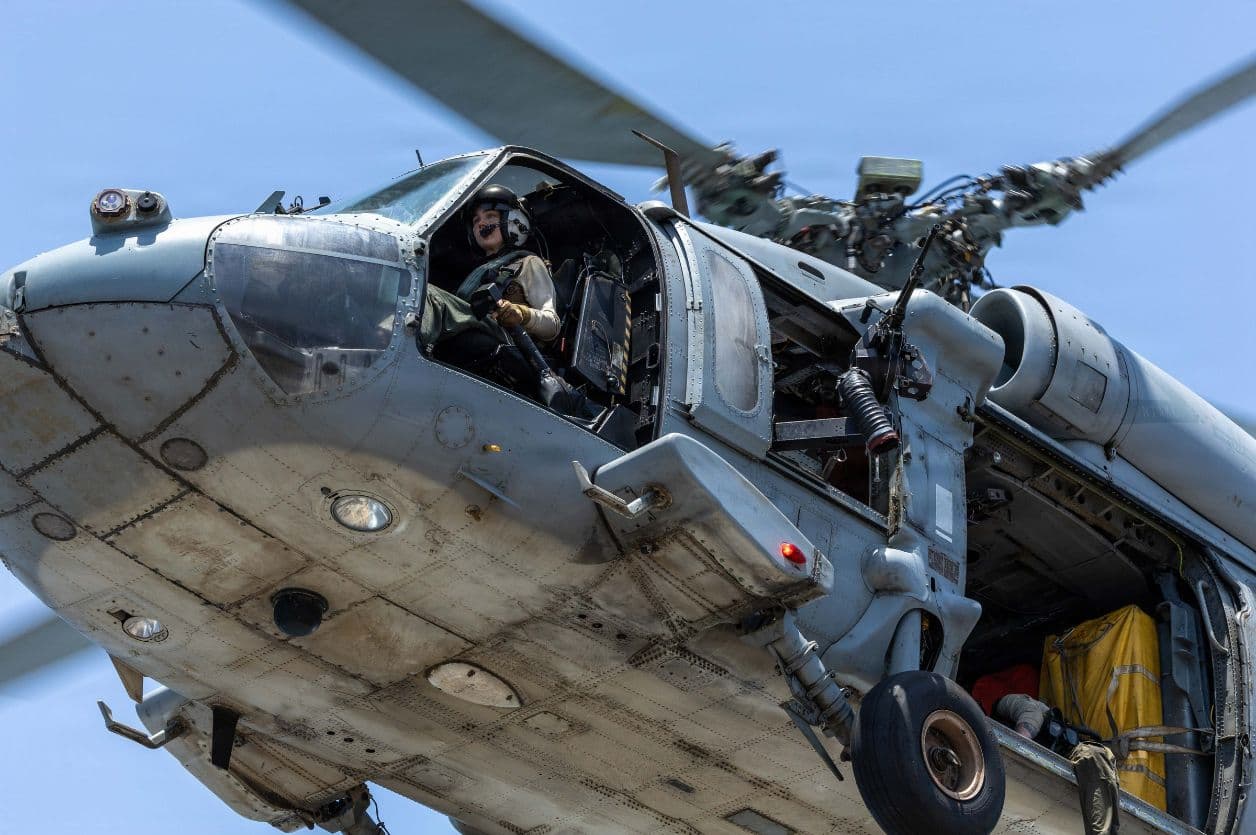
Photo credit: Petty Officer 2nd Class Maxwell Higgins
Intelligence Summary
Oil markets repriced sharply upward as renewed violence in the Strait of Hormuz increased doubts about the durability of the United States–Iran ceasefire framework and the near-term viability of commercial transit through the waterway. Brent crude rose nearly 6 percent on Monday to $114.44 per barrel, then eased to $113.54 by 02:00 GMT on Tuesday. Brent prices increased more than 50 percent since the war began in late February, alongside an estimated daily production shortfall of 14.5 million barrels.
The latest price spike followed U.S. military statements that six Iranian small boats were destroyed after Iranian attacks on commercial vessels in the strait, alongside UAE statements that Iranian missiles and drones targeted the country. An Iranian military source cited by Iran’s official IRNA news agency denied that U.S. forces sank several Iranian boats and characterized the U.S. claim as false. Market participants incorporated expectations of additional infrastructure damage and the possibility of a longer-than-signaled disruption to Hormuz transits.
U.S. President Donald Trump announced on Monday that the U.S. military would guide commercial vessels through the strait under an initiative described as Project Freedom, but commercial operators remained hesitant to transit due to persistent safety concerns. The U.S. military reported that two U.S.-flagged merchant ships crossed the strait in the hours after the announcement, but there were no indications of a substantial resumption of maritime traffic. The International Transport Workers’ Federation (ITF) called for shipowners and flag states not to treat the U.S. announcement as a green light absent clear safety guarantees, coordinated procedures, evacuation provisions, and assurance from Iran that transit would be guaranteed. The International Maritime Organization (IMO) assessed that up to 20,000 seafarers remained stranded on roughly 2,000 vessels in the Strait of Hormuz, describing the scale of stranding as unprecedented in the modern era. United Nations Secretary-General António Guterres called for freedom of navigation in the strait, describing the closure as impeding deliveries of oil, gas, fertiliser, and other critical commodities and as strangling the global economy.
In the Asia-Pacific, Japan’s Prime Minister Sanae Takaichi stated on Monday that the effective closure of the Strait of Hormuz was inflicting an enormous impact on the Indo-Pacific and that Japan and Australia would communicate closely with urgency. Takaichi’s remarks occurred during a three-day visit to Australia that included agreements to boost cooperation on energy and critical minerals. The disruption was framed against the baseline that roughly one-fifth of global oil and liquefied natural gas normally transits Hormuz, with 80 percent of that oil destined for Asia. Australia was described as providing approximately one-third of Japan’s energy supplies and as Japan’s largest liquefied natural gas market.
Australia announced plans to provide support of up to A$1.3 billion (US$937 million) to critical mineral projects with Japanese involvement, with potential supply lines including gallium, nickel, graphite, rare earths, and fluorite. Japan’s government emphasized stable access to critical minerals used in semiconductors, electric vehicle batteries, and weapons systems. Australia and Japan also highlighted defense cooperation and interoperability, including a previously announced A$10 billion (US$7 billion) arrangement for Japan to provide 11 Mogami-class stealth warships to the Australian navy.
Japan also received its first Russian oil delivery since the Iran war began constraining global supplies, with a tanker carrying crude linked to the Sakhalin-2 project reaching the coast of Imabari in western Japan on Monday, May 4, 2026, according to multiple Japanese media citing unnamed officials at wholesaler Taiyo Oil. Beyond energy and shipping, corporate guidance reflected spillover into transport and tourism, with Norwegian Cruise Line Holdings lowering its full-year 2026 outlook due to Middle East disruptions, higher diesel costs, and softer European travel demand. The company projected adjusted EPS of $1.45 to $1.79 versus a prior forecast of about $2.38, and adjusted EBITDA of $2.48 billion to $2.64 billion versus a prior $2.95 billion. Second-quarter guidance also fell below consensus expectations, including adjusted EPS of $0.38 and adjusted EBITDA of about $632 million, alongside an occupancy projection of about 102.5 percent. Analysts also anticipated sustained price elevation even after a potential deal due to cargo backlogs, damaged infrastructure, and the need to clear Iranian mines.
Why it Matters
This episode demonstrates how chokepoint insecurity rapidly converts tactical maritime incidents into systemic macroeconomic stress. The immediate repricing of Brent, combined with the longer-run increase since late February and the cited production shortfall, signals that markets are not treating the disruption as a brief volatility event. They are treating it as a structural supply shock with compounding second-order effects. The persistence of stranded crews and vessels also indicates that the disruption is not only about oil volumes. It is about the operational paralysis of maritime logistics, insurance risk, crew safety, and the credibility of any announced escort mechanism.
The gap between an announced naval guidance initiative and the continued reluctance of shipping companies is strategically important. It implies that deterrence signaling and operational capability are not sufficient if commercial actors judge the residual risk as unacceptable. That dynamic can blunt the coercive leverage of military deployments and complicate escalation management. It also increases the likelihood that states will pursue parallel mitigation strategies outside the immediate conflict zone, including alternative sourcing, stock drawdowns, and accelerated bilateral arrangements.
Asia’s exposure is central. The stated baseline that a large share of global oil and LNG normally transits Hormuz, with most oil flows destined for Asia, means the shock is asymmetric across regions. Japan’s framing of an enormous Indo-Pacific impact, paired with Australia’s role as a major supplier, highlights how energy security becomes an alliance management issue rather than a purely commercial one. The rapid bundling of energy, critical minerals, and defense cooperation shows a convergence of supply-chain security with military interoperability. This is not only about replacing barrels. It is about ensuring access to inputs that underpin advanced manufacturing and defense production.
Critical minerals financing and procurement are also a strategic hedge against a broader sanctions and counter-sanctions environment. The explicit linkage to semiconductors, electric vehicle batteries, and weapons systems underscores that energy shocks can accelerate industrial policy alignment among U.S.-aligned partners. The inclusion of rare earths and other specialized minerals suggests that the crisis is being used to justify deeper upstream coordination, potentially reducing vulnerability to coercion in other domains.
Japan’s receipt of Russian oil, even as a single delivery tied to Sakhalin-linked production, illustrates how acute supply stress can reopen politically sensitive supply channels. Even without broader policy conclusions, the fact pattern indicates that energy security imperatives can pressure governments and firms to diversify toward any available supply, including sources that may carry reputational or diplomatic costs. This creates openings for producers under pressure elsewhere to regain market relevance through opportunistic deliveries.
The corporate guidance downgrade in the cruise sector shows how energy insecurity propagates into consumer demand and services trade. Higher diesel costs and softer European travel demand reflect a transmission mechanism from maritime insecurity to household sentiment and discretionary spending. When firms revise earnings expectations and deployment plans, the shock becomes embedded in forward-looking economic behavior, not just spot prices.
Finally, the emphasis on freedom of navigation and international law, alongside labor safety warnings, indicates that legitimacy and governance are part of the operational picture. If restoring transit requires not only naval presence but also credible safety guarantees and demining, then the timeline for normalization becomes inherently political and technically constrained. That combination increases the risk of prolonged fragmentation in energy flows and supply chains, with states accelerating bilateral deals and security partnerships to compensate for uncertainty in global commons governance.
Stay Informed. Stay Ahead.