United States Pressure on Greenland Strains Transatlantic Alliances
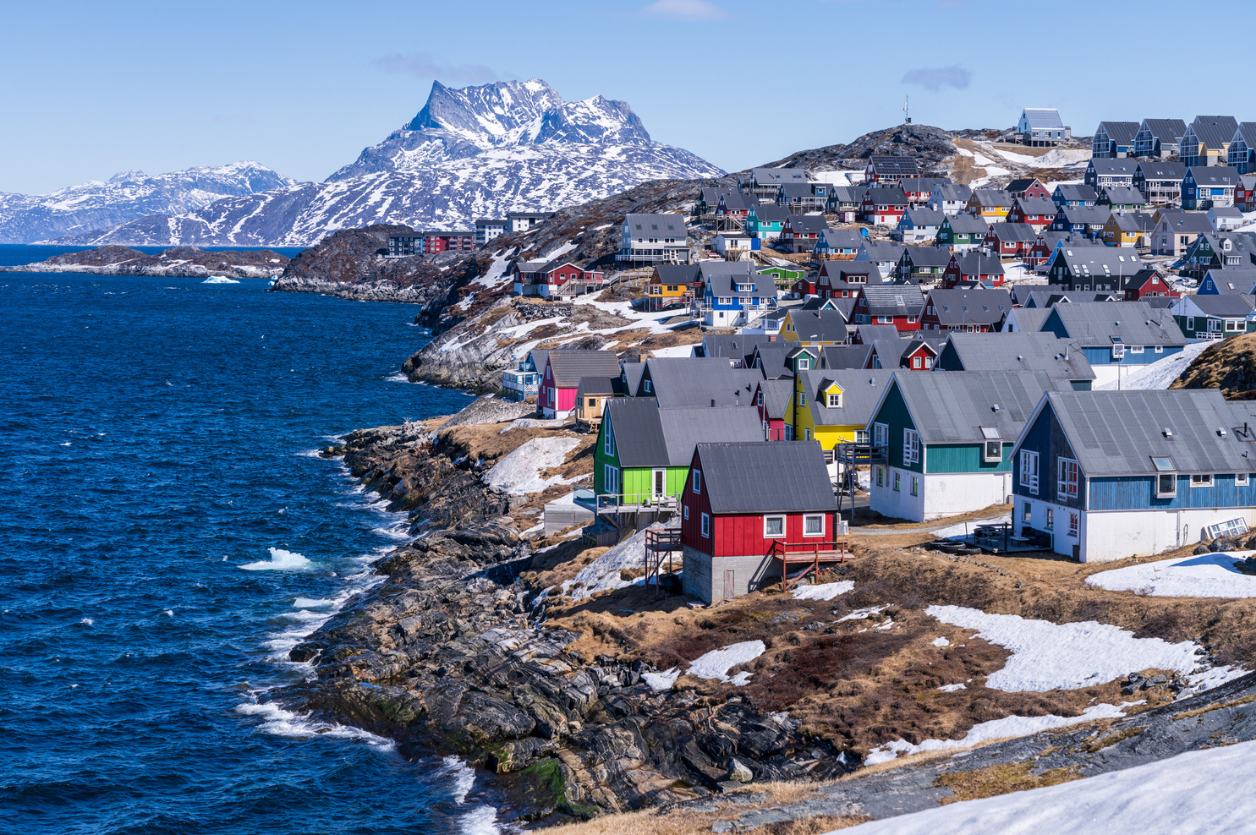
Photo credit: iStockPhoto.com/BackyardProduction
Intelligence Summary
At the beginning of 2026, tensions between the United States and Denmark escalated after U.S. President Donald Trump renewed calls for Greenland to come under direct U.S. control. On January 5, Danish Prime Minister Mette Frederiksen claimed that any U.S. military action against Greenland would effectively end the North Atlantic Treaty Organization (NATO), describing such a move as an attack on a fellow NATO member that would result in the termination of post–World War II security arrangements.
President Trump stated on January 4 that the United States “needs Greenland” for national security reasons, claiming that the island is surrounded by Russian and Chinese ships and that Denmark is incapable of defending it. He reiterated that he would revisit the issue “in 20 days,” and has reportedly not ruled out the use of military force to secure control. Trump’s remarks followed a social media post by Katie Miller, wife of Deputy Chief of Staff Stephen Miller, showing Greenland overlaid with the U.S. flag and the caption “SOON,” which triggered alarm in Copenhagen and Nuuk.
Greenland’s Prime Minister Jens-Frederik Nielsen issued a response on X, calling the post disrespectful and emphasizing that Greenland’s future would not be decided by social media. He stated that Greenland is not for sale and that relations between nations must be based on mutual respect and international law. Nielsen also urged calm, saying there was no reason for panic and that the United States could not simply conquer Greenland, and called for the restoration of good cooperation with Washington.
Denmark’s government summoned the U.S. ambassador following Trump’s December 2025 appointment of Louisiana Governor Jeff Landry, a supporter of annexation, as special envoy to Greenland. Frederiksen reiterated that the United States has no right to annex any of the three countries within the Danish Kingdom and urged Washington to stop threatening a historically close ally.
European reactions were cautious but firm. The European Union’s foreign policy spokesperson, Anitta Hipper, emphasized that the EU would continue to uphold the principles of national sovereignty, territorial integrity, and the inviolability of borders, particularly if the territorial integrity of a member state was questioned. British Prime Minister Keir Starmer and German Federal Minister of Foreign Affairs Johann Wadephul both expressed support for Denmark and Greenland’s autonomy, while Nordic and Baltic leaders, including those from Iceland, Norway, Sweden, Finland, Latvia, Lithuania, and Estonia, voiced solidarity with Copenhagen.
Analysts have reiterated that any U.S. attempt to annex Greenland would effectively end NATO, and believe that the EU has limited options beyond diplomatic protest. Experts such as Jacob Funk Kirkegaard and Michael Paul at the German Institute for International and Security Affairs argued that Trump’s claims about Russian and Chinese naval presence were false and that his motivations appeared more symbolic than strategic, reflecting a desire to expand U.S. territory rather than address genuine defense needs.
Greenland’s strategic importance was repeatedly emphasized. The island hosts a U.S. military base and is critical to the U.S. ballistic missile defense system. It also possesses significant reserves of oil and critical minerals, and its location along emerging Arctic shipping routes enhances its geopolitical value. Denmark has increased its Arctic defense presence and monitoring capabilities in response to U.S. pressure.
Denmark and Greenland have maintained that cooperation with the United States must occur through proper channels and in accordance with international law, while Washington continues to frame the issue as one of national security. European leaders warned that the alliance system itself could fracture if the United States pursued unilateral action against a NATO ally.
Why it Matters
The diplomatic developments surrounding Greenland illustrate how U.S. unilateralism, especially in light of Washington’s actions in Venezuela, has strained long-standing alliance structures and raised questions about NATO’s durability. Denmark’s warning that a U.S. attack on Greenland would end NATO highlights the fragility of transatlantic security when alliance members perceive threats from within. These developments also point to growing instability in the Arctic, where strategic geography, resource access, and military basing increasingly intersect with questions of sovereignty and international law.
For the United States, Greenland represents a strategic asset and a test of its global posture. Its location between North America and Europe makes it central to missile defense and Arctic navigation, and its mineral wealth aligns with Washington’s efforts to reduce dependence on Chinese critical materials. However, Washington’s public statements risk alienating allies and weakening the alliance structures that underpin global influence.
For Denmark and the European Union, the crisis exposes the limits of European strategic autonomy. EU officials reaffirmed principles of sovereignty but offered no concrete deterrent measures, revealing Europe’s reliance on U.S. security guarantees even as Washington challenges allied sovereignty. The muted European response mirrors the pattern seen after the Venezuela intervention, where verbal condemnation was not matched by coordinated action. This could encourage further unilateral action by the U.S. while weakening trust in alliance commitments.
The crisis also highlights the Arctic’s emergence as a region facing increased instability. Trump’s references to Russian and Chinese ships, though unsubstantiated, reflect genuine U.S. concern about growing non-Western presence in the region. Moscow and Beijing have expanded Arctic operations, and Washington’s assertiveness may be partly aimed at preempting their influence. Yet by threatening a NATO ally, the United States risks driving Europe toward greater independence or even closer alignment with other powers in pursuit of stability.
Denmark’s decision to strengthen Arctic defenses and expand surveillance reflects recognition that hybrid threats, including disinformation and coercive diplomacy, can destabilize even allied relationships. The appointment of a U.S. special envoy and the use of social media by senior officials’ families demonstrate how informal channels can escalate geopolitical tensions, blurring the line between statecraft and provocation.
Strategically, the Greenland dispute may mark a turning point in NATO cohesion. If Washington continues to treat allied territories as potential acquisitions, European states may accelerate efforts to develop independent defense capabilities, potentially through the EU or regional coalitions.
Developments around Greenland show how domestic policies, resource interests, and alliance relationships are increasingly intertwined. Actions framed as national security measures are now creating stress inside the very alliances meant to preserve stability, with the Arctic emerging as a new pressure point.
Key Actors
- United States
- Denmark
- Greenland
- European Union
- NATO
- United Kingdom
- Germany
Stay Informed. Stay Ahead.