
Gulf Oil Exports Adapt to Hormuz Closure

Oct 6 / Steven A. Smith, PhD
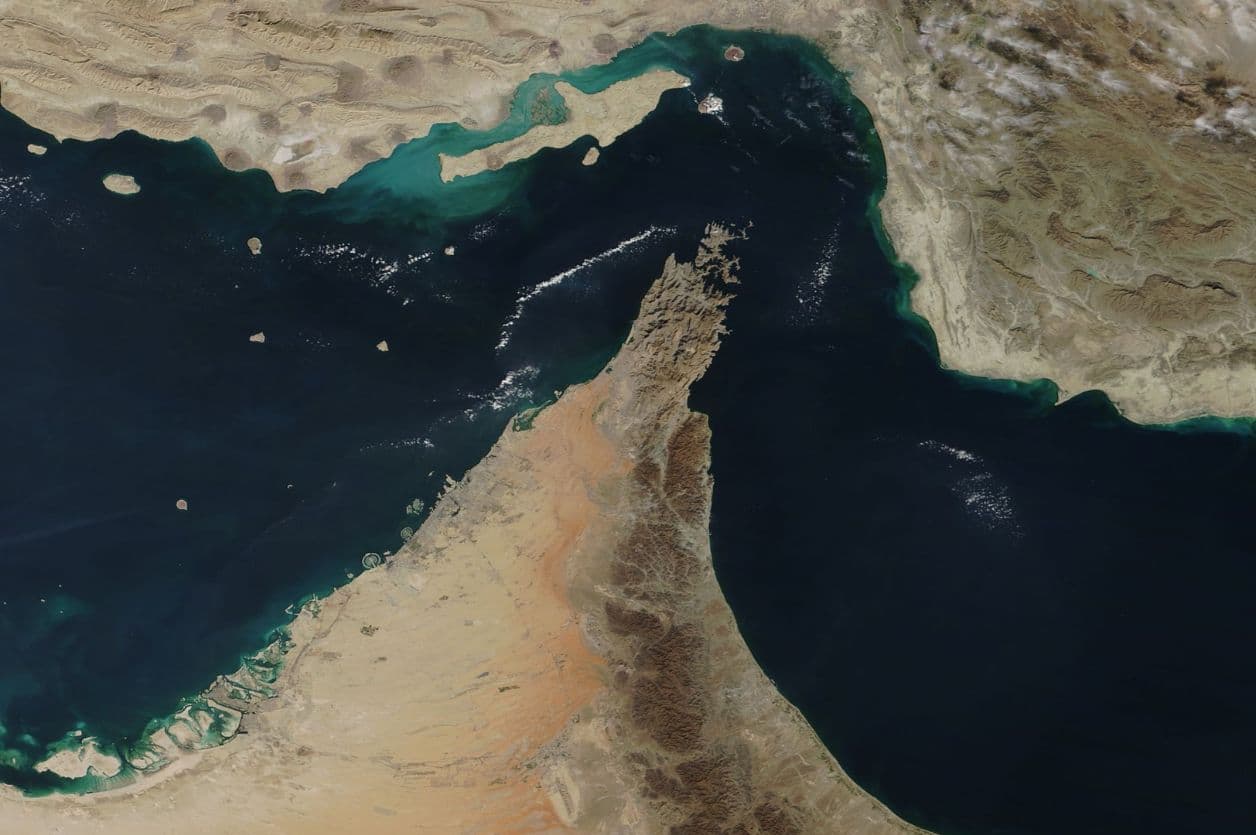
Strait of Hormuz. Photo credit: MODIS Land Rapid Response Team, NASA GSFC

Intelligence Summary

Iran has said it will keep the Strait of Hormuz closed until the United States accepts seven conditions linked to an Iranian reopening proposal. Parliament Speaker Mohammad Bagher Ghalibaf said Tehran’s conditions are based on the Islamabad memorandum, though the conditions themselves have not been publicly detailed. He also said Iran had received US proposals through a mediator but rejected the premise of further delay or unilateral US demands. President Donald Trump had ruled out Iran’s proposed roadmap for reopening the strait the previous week.


Iranian Foreign Minister Abbas Araghchi said Tehran remains prepared to pursue diplomacy while also preparing for further military action if the United States acts again. Iranian officials have presented reopening Hormuz as Tehran’s immediate priority, while saying Washington remains focused on nuclear negotiations. This indicates that the parties are not publicly describing the diplomatic agenda in the same terms. Iran is treating maritime access as the central issue, whereas its officials portray the United States as seeking a wider negotiation.


The strait has been largely blocked or disrupted for more than seven months following US and Israeli strikes on Iran on February 28. In peacetime, about one-fifth of global oil and natural-gas shipments transit Hormuz. Yet regional exporters have partially adapted. Kpler data show that non-Iranian Middle Eastern crude exports exceeded their prewar average on four days in late September, reaching 19.5 million to 22.5 million barrels per day. About 40 percent of Gulf crude reportedly left without crossing Hormuz in September, aided by Saudi Red Sea exports, the UAE’s Fujairah pipeline, and extensive ship-to-ship transfers in the Gulf of Oman.


Maritime risk remains high despite this export recovery. Kpler reported at least seven incidents involving vessels near Hormuz in recent weeks. Maritime intelligence firm Marisks said the tanker *Kazimah III* was struck by an unidentified projectile on October 1, although all crew members were evacuated safely. Iran’s own crude exports remain substantially below prewar levels, primarily because of US policy, according to Kpler.

Why It Matters

The closure gives Iran a tangible issue around which to structure diplomacy with Washington. By making reopening contingent on its stated conditions, Tehran has linked a matter of international energy security to broader negotiations without publicly disclosing the terms of a settlement. This raises the political cost of stalemate for both sides. Iran can maintain that diplomacy remains possible, while the United States faces pressure to address a disruption affecting a major global energy transit route. At the same time, incompatible public priorities on Hormuz and nuclear talks may impede progress if neither side accepts the other’s framing of the negotiation.


The situation also creates a continuing risk of escalation even if neither side intends on a wider conflict. Iranian officials have paired diplomatic language with warnings that they are prepared to respond to renewed US military action. The reported continuation of vessel attacks or incidents near the strait makes the maritime environment a potential trigger for further confrontation, especially when responsibility for individual attacks is unclear. A negotiated reopening would reduce one source of friction, but it would not by itself resolve the underlying disagreement reflected in Iran’s conditions and Washington’s rejection of the earlier roadmap.


The recovery in non-Iranian crude exports limits the effectiveness of a complete maritime disruption as an instrument of economic pressure. Saudi Arabia, the UAE, and other exporters have demonstrated an ability to reroute significant volumes through pipelines, Red Sea terminals, and offshore tanker transfers. This reduces the immediate risk that a blocked Hormuz will produce a sustained collapse in regional oil exports. However, these workarounds do not eliminate exposure to attacks around the Gulf of Oman or restore normal shipping patterns. The shift toward ship-to-ship transfers also means that regional export resilience is increasingly dependent on operational arrangements outside the strait itself.


The principal indicators of whether the crisis is moving toward de-escalation are narrow but observable: whether Iran or the United States clarifies its respective terms, whether mediation produces a mutually acknowledged proposal, and whether attacks on commercial vessels decline. A continued gap between Iranian conditions and US negotiating priorities would make a prolonged partial blockade more likely. Conversely, a reduction in maritime incidents combined with an agreed mechanism for reopening the waterway would signal that the parties have separated immediate shipping security from their broader political and nuclear disputes.

Stay Informed. Stay Ahead.

The global landscape changes daily, don't get left behind.
Thank you!