Hormuz Crisis Pushes US–China Rivalry
Intelligence Summary
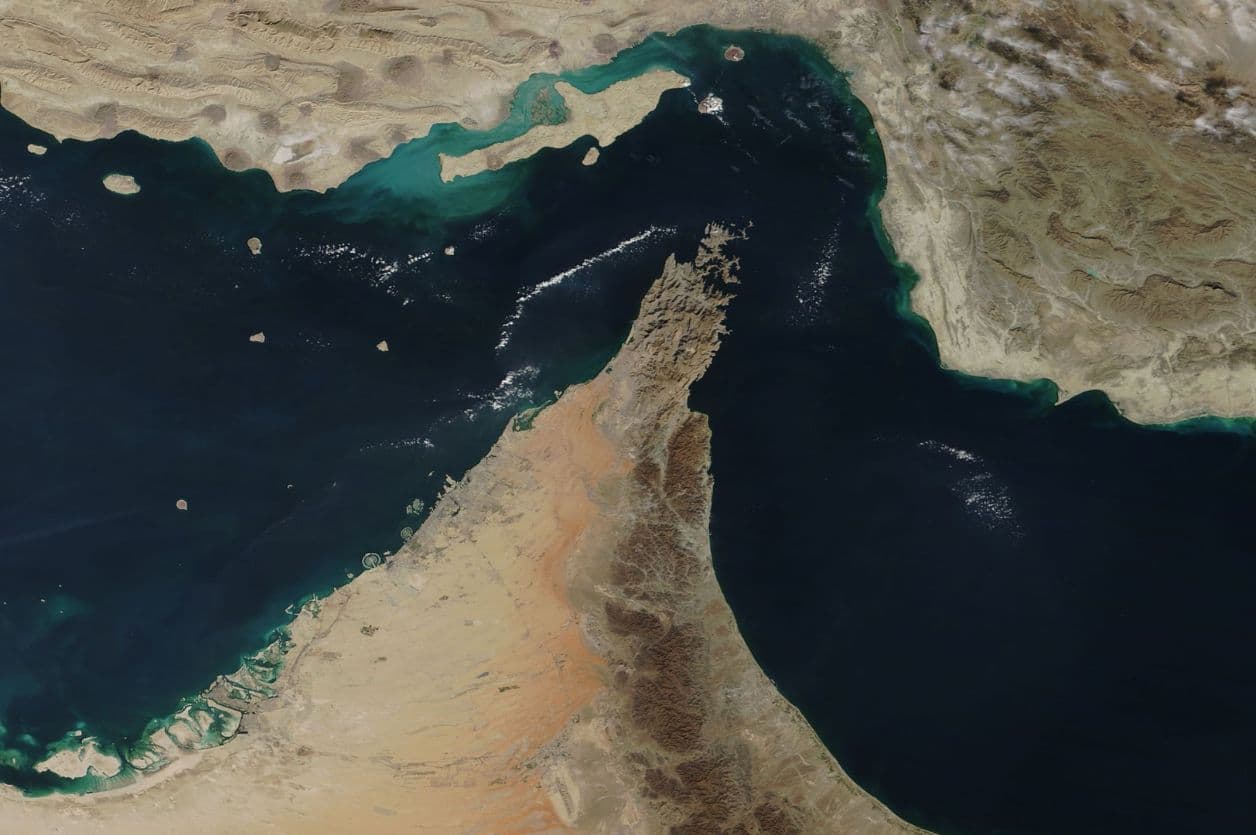
United States Treasury Secretary Scott Bessent accused China of funding Iran by purchasing 90 percent of Iran’s energy, and urged Beijing to support a US-led effort to reopen the Strait of Hormuz after Iran blocked it. Bessent’s remarks came ahead of an expected visit by US President Donald Trump to Beijing the following week for talks with Chinese President Xi Jinping. Trump announced the day prior that the United States would guide ships stranded in Hormuz out of the strait under an operation labeled Project Freedom, and warned Iran against interference. Bessent stated that Iran did not control Hormuz and that the United States had absolute control of the strait. Bessent also urged China to use leverage over Iran to help resolve the crisis by pressing Tehran to open the strait.
China and Russia vetoed efforts at the UN Security Council to condemn Iran’s blockade of Hormuz, and both blocked a draft resolution earlier in the month on grounds it was one-sided and did not address US and Israeli attacks on Iran. China’s UN Ambassador Fu Cong stated the draft failed to capture root causes and the full picture in a comprehensive and balanced manner. The Hormuz dispute unfolded alongside renewed US sanctions pressure on Iran-linked oil trade networks following the 2018 US withdrawal from the JCPOA, which had traded Iranian nuclear constraints under international supervision for sanctions relief. China continued importing Iranian oil after the JCPOA collapse.
After the United States imposed sanctions on Chinese entities linked to the Iranian oil trade the prior week, China’s Foreign Ministry spokesperson Lin Jian rejected US jurisdiction over financial transactions not involving the United States and opposed unilateral sanctions lacking a basis in international law. In a separate development, China ordered domestic companies not to comply with US sanctions on five Chinese refiners linked to Iranian oil trade, using for the first time a blocking measure introduced in 2021 to protect firms from foreign laws deemed unjustified. The sanctioned refiners faced asset freezes and transaction bans, and the measures included Hengli Petrochemical (Dalian) Refinery, described as the most ambitious US target to date in China’s refining sector. The sanctions on Hengli triggered a reported $1.4 billion reduction in the fortunes of Fan Hongwei and Chen Jianhua after Hengli shares fell 10 percent. China’s commerce ministry stated on Saturday that the US measures unlawfully restricted normal trade with third countries and breached international norms, and issued an order banning recognition, enforcement, and compliance with the sanctions aimed at the five companies. Banks working with the refiners sought clarity from the banking regulator, and a grace period from the US Treasury’s Office of Foreign Assets Control was referenced as providing time for compliance decisions. Analysts cited in the same account assessed that escalation risk would rise if the United States extended secondary sanctions to Chinese financial institutions or major state-owned entities, and noted the blocking measure enabled compensation claims in Chinese courts against entities that comply with US sanctions, including banks and downstream customers.
In parallel, Taiwan President Lai Ching-te returned to Taipei after visiting Eswatini, Taiwan’s only African diplomatic ally, and stated Taiwan had the right to engage with the world. Lai’s trip was originally scheduled for April 22 to April 26 for the 40th anniversary of King Mswati III’s accession and his 58th birthday, and he traveled on Saturday aboard the king’s plane. Taiwan stated that the Seychelles, Mauritius, and Madagascar denied overflight permission after intense pressure from Beijing, forcing a longer route. Flight-tracking showed Lai’s aircraft returning via the southern Indian Ocean over Australia’s Christmas Island, Indonesia, Malaysia, and the Philippines before landing at Taoyuan International Airport. Lai described the visit as demonstrating Taiwan’s will to uphold international order with like-minded countries, and Eswatini was identified as one of 12 states maintaining formal diplomatic ties with Taiwan.
Separately, initial details were outlined for a $12 billion US Export-Import Bank rare earth stockpiling initiative labeled Project Vault, combining about $2 billion in private capital with a $10 billion Ex-Im loan. The initiative’s initial sourcing could include China, with later replenishment prioritizing domestic production first, allied nations second, and other sources last. Ex-Im Chief Banking Officer Brian Greeley discussed the program alongside representatives of Glencore Plc and Hartree Partners LP, identified as trading houses procuring materials. The program considered roughly 60 minerals, relied initially on warehouse networks controlled by trading partners, and planned over time to develop its own storage network through building or leasing facilities.
China simultaneously pursued messaging aimed at Europe amid perceived transatlantic strain since Trump’s January 2025 return, framing a multipolar vision and emphasizing UN reform during an April 29 visit to Beijing by UN General Assembly President Annalena Baerbock, where China’s Foreign Minister Wang Yi highlighted reform and multipolar governance. A Chinese Foreign Ministry statement described China as supporting multilateralism, international law, and the UN’s pillars of peace, development, and human rights.
Why it Matters
The convergence of Hormuz coercion, sanctions escalation, and competing legal narratives signals a sharper phase of systemic US–China rivalry. The US Treasury Secretary’s linkage of China’s energy purchases to Iran’s ability to sustain pressure in the Strait of Hormuz reframes a regional chokepoint crisis into a direct test of great power alignment. It also raises the stakes for the upcoming Trump–Xi meeting by placing maritime access and energy flows alongside trade and security disputes. The US decision to operationalize ship guidance under Project Freedom, paired with claims of absolute control of the strait, functions as deterrence messaging. It also increases the risk of miscalculation if Iran or aligned actors contest escort operations, because any incident could be interpreted through the lens of US credibility and Chinese responsibility.
China’s and Russia’s UN Security Council posture matters because it contests the legitimacy of a condemnation framework that isolates Iran without addressing US and Israeli actions. This approach reinforces Beijing’s preference for narrative parity and multipolar diplomacy, while limiting Washington’s ability to mobilize formal UN-backed pressure. The result is a more fragmented international legal environment where competing claims about international law and jurisdiction become operational tools, not just rhetoric.
The sanctions confrontation is moving from targeted enforcement into a contest over extraterritorial reach and domestic countermeasures. China’s activation of its 2021 blocking mechanism, and the explicit instruction to companies not to comply with US sanctions on five refiners, signals a willingness to absorb higher financial and diplomatic risk to protect energy security and strategic autonomy. The reported market impact on Hengli’s owners illustrates how sanctions can impose immediate costs, but Beijing’s response suggests it is prepared to socialize those costs across the system if compliance is seen as a precedent-setting vulnerability. The mention of potential secondary sanctions on Chinese banks highlights a key escalation ladder. If Washington targets financial intermediaries, the dispute could shift from oil trade enforcement into broader financial decoupling dynamics.
Taiwan’s constrained routing to Eswatini demonstrates how diplomatic competition is increasingly enforced through access denial and aviation permissions, not only formal recognition switches. The overflight denials attributed to pressure from Beijing show how China can leverage relationships with third countries to impose friction on Taiwan’s leadership travel. Lai’s framing of the trip as upholding international order with like-minded partners indicates Taipei’s intent to treat diplomatic space as a legitimacy contest. This matters because it increases the probability that symbolic diplomatic engagements become triggers for coercive responses, especially when they intersect with broader US–China tensions.
Critical minerals policy adds another layer of interdependence and vulnerability. Project Vault’s initial willingness to source from China underscores a near-term constraint: even as Washington seeks supply chain resilience, immediate availability can override strategic preference. The program’s structure, including private capital, trader-led procurement, and reliance on existing warehouse networks, suggests a market-integrated approach rather than a purely state-directed stockpile. That design may improve speed and flexibility, but it also exposes the initiative to price opacity and potential leverage by dominant suppliers. The longer-term waterfall prioritizing domestic and allied sources signals intent to reduce dependence, but the transition period is strategically sensitive.
China’s outreach to Europe, including emphasis on UN reform during a high-level UN General Assembly visit, indicates Beijing is working to widen diplomatic maneuver space as US alliances face strain. If Europe is persuaded to act more independently on trade, technology, or multilateral votes, Washington’s coalition-based sanctions and export-control strategies become harder to sustain. Taken together, these developments show rivalry expanding across maritime security, sanctions law, diplomatic access, and industrial inputs, with each domain reinforcing the others.
Stay Informed. Stay Ahead.