Hormuz Crisis Reignites Global Oil Shock
Intelligence Summary
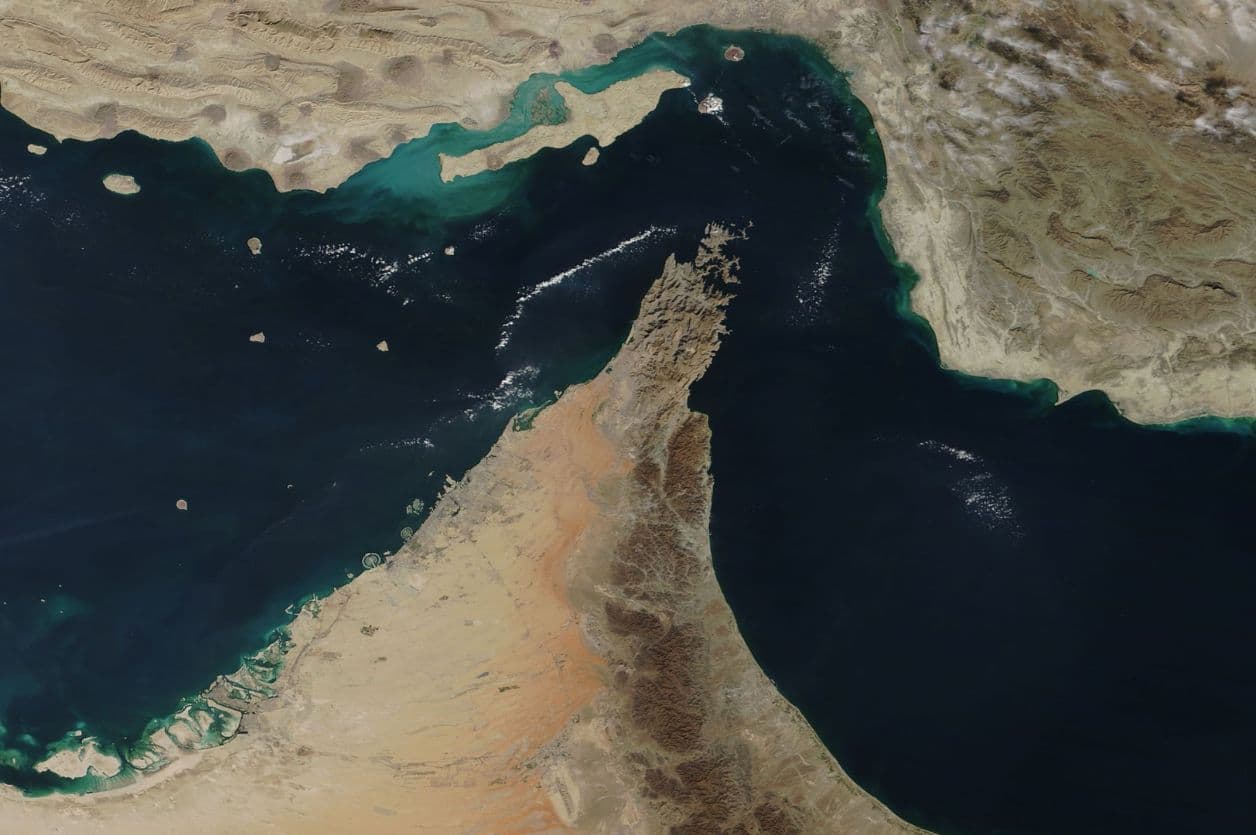
Global energy markets experienced renewed volatility this week as the United States and Iran resumed hostilities over the Strait of Hormuz, a critical maritime chokepoint through which roughly one-fifth of the world’s oil supply normally transits. The U.S. Central Command (CENTCOM) reported that it had conducted dozens of strikes on Iranian targets to degrade Tehran’s capacity to attack vessels in the strait, following an Iranian assault on the Cyprus-flagged container ship MV GFS Galaxy. Iran retaliated with missile and drone attacks on U.S. partners including the United Arab Emirates, Qatar, Kuwait, Oman, and Bahrain.
Iran’s Persian Gulf Strait Authority reiterated that vessels not using its designated routes would not be guaranteed safe passage, while CENTCOM insisted that the strait remained open to lawful commercial traffic. Maritime intelligence data indicated a sharp decline in vessel traffic, with only six ships crossing the strait between Thursday evening and Friday morning, compared to 18–22 daily crossings earlier in the month. The Joint Maritime Information Centre later confirmed that some traffic continued along the Omani coastline, but Iran maintained that the waterway was closed until further notice.
Oil markets reacted immediately. Brent crude rose more than 4 percent to $78.82 per barrel, its highest level since late June, while West Texas Intermediate (WTI) climbed 3 percent to around $74. Analysts projected that Brent would remain in the upper $70s through August and September amid geopolitical uncertainty. The renewed fighting reversed the price stabilization that followed the June 17 memorandum of understanding between Washington and Tehran, which had briefly restored oil prices to pre-war levels.
The escalation also triggered sharp declines in Asian equity markets. Japan’s Nikkei 225 fell nearly 2 percent, South Korea’s Kospi plunged 9 percent, and SK Hynix shares dropped 15 percent, the largest single-day fall on record. The selloff reflected investor anxiety over both the Middle East conflict and the fragility of the global technology sector.
Iran’s Foreign Ministry declared that the U.S. had violated all clauses of the ceasefire memorandum and announced that Tehran would suspend its commitments under the agreement. Explosions were reported in Bandar Abbas, Qeshm Island, and Jask, while Iran claimed to have targeted U.S. bases in Qatar, Oman, and Bahrain. CENTCOM denied Iranian claims of U.S. casualties.
The energy shock reverberated globally. The Indian Ministry of Petroleum and Natural Gas stated that the effective closure of Hormuz since late February had forced India to diversify its crude sourcing, raising non-Hormuz imports from 55 percent to 70 percent of total supply. Russia’s share of India’s oil imports rose to more than half by June 2026, equivalent to about 2.6 million barrels per day, while India also expanded imports from Venezuela, Brazil, Angola, Oman, and Egypt. The ministry emphasized that ship-to-ship transfers via the Red Sea and diplomatic engagement with Gulf states had allowed 12 Indian LPG vessels to transit Hormuz safely without paying tolls.
In Europe, the United Kingdom accelerated its energy diversification strategy. The government provisionally approved three major pumped storage hydropower projects in Scotland, the first in over four decades, to strengthen energy security and reduce dependence on imported fossil fuels. Energy Minister Michael Shanks stated that the lesson from the Iran conflict was that Britain could not remain exposed to volatile fossil fuel markets. The projects, located at Loch Ness, Loch Lochy, and Loch Earba, are expected to be completed by the early 2030s and provide up to 10 GW of storage capacity.
The European Commission also prepared to unveil a 2040 electrification target aimed at cutting the bloc’s oil consumption by half and gas use by two-thirds, potentially reducing energy import costs by $228 billion. The plan, part of the EU’s broader decarbonization agenda, seeks to make Europe the first “electro-continent” by expanding renewable energy and electrified transport systems.
Why it Matters
The renewed U.S.-Iran confrontation underscores the vulnerability of global energy supply chains to geopolitical shocks centered on maritime chokepoints. The Strait of Hormuz remains the single most critical artery for global oil trade, and even temporary disruptions can trigger immediate price surges and financial instability. The July 2026 escalation demonstrated how military conflict can rapidly reverse market normalization, with Brent crude rising above $78 per barrel within hours of renewed hostilities. The incident also revealed the limits of diplomatic de-escalation mechanisms, as the June memorandum of understanding collapsed within weeks, eroding confidence in conflict management frameworks.
For major energy importers, the crisis accelerated structural shifts in sourcing and policy. India’s rapid diversification away from Hormuz-dependent suppliers illustrates how middle powers are adapting to sustained instability in the Gulf. By increasing Russian imports to over half of total crude intake and expanding partnerships with Latin American and African producers, New Delhi effectively restructured its energy map. This diversification, supported by ship-to-ship transfers and alternative routes through the Red Sea, reflects a deliberate strategy to insulate national energy security from regional conflict and sanctions exposure.
In Europe, the crisis reinforced the strategic imperative of energy independence. The United Kingdom’s approval of new hydropower storage projects marks a significant policy inflection point, linking domestic renewable investment directly to geopolitical risk mitigation. The projects’ timing signals that energy security is now viewed as a national defense priority. Similarly, the European Commission’s forthcoming 2040 electrification target represents a systemic attempt to decouple the continent’s economy from fossil fuel volatility. By aiming to halve oil consumption and reduce gas use by two-thirds, the EU seeks to transform energy vulnerability into industrial opportunity, positioning itself as a leader in electrified infrastructure and clean technology manufacturing.
The broader financial implications are equally significant. The simultaneous collapse of Asian equity markets and surge in oil prices revealed the interconnectedness of the energy and technology sectors. South Korea’s 9 percent market drop and SK Hynix’s record 15 percent plunge highlight how energy shocks can cascade into unrelated industries through inflationary pressure and investor sentiment. The resulting volatility complicates monetary policy for major economies, as central banks face renewed inflation risks just as they attempt to stabilize post-pandemic growth.
Strategically, the conflict reaffirms the centrality of competition in energy geopolitics. The U.S. military’s attempted enforcement of freedom of navigation in Hormuz demonstrates Washington’s commitment to maintaining global trade routes, while Iran’s assertion of control over the strait reflects its use of energy chokepoints as instruments of deterrence. The confrontation also tests the credibility of U.S. extended deterrence in the Gulf, as regional allies such as Kuwait and Qatar face direct attacks.
The crisis further exposes the fragility of global energy governance. Despite OPEC+ output adjustments and stranded tanker releases, markets remain highly sensitive to geopolitical risk. The inability of existing institutions to prevent or manage such disruptions suggests that energy security will increasingly depend on national resilience measures, such as diversified sourcing, strategic reserves, and renewable capacity.
In sum, the July 2026 Hormuz escalation transformed energy security from a market concern into a strategic imperative. It catalyzed diversification in Asia, accelerated renewable investment in Europe, and reinforced the significance of maritime chokepoints. The episode demonstrates that in an era of intense geopolitical rivalry, energy flows are not merely economic transactions but instruments of statecraft, shaping alliances, deterrence postures, and the global balance of power.
Stay Informed. Stay Ahead.