Houthi Blockade Risks Second Oil Chokepoint
Intelligence Summary
On July 20, 2026, Yemen’s Houthi movement, officially known as Ansar Allah, declared a maritime blockade against Saudi Arabia, marking a major escalation in the long-running conflict between the Iran-aligned group and the Saudi-led coalition that has supported Yemen’s internationally recognized government since 2015. The announcement followed Saudi airstrikes on Sanaa International Airport a week earlier, which the Houthis said prevented an Iranian aircraft from landing. The Saudi-backed Yemeni government claimed responsibility for the strike, stating it was intended to block Iranian access to Yemeni airspace.
Houthi military spokesman Yahya Saree stated that the blockade would take effect immediately and was based on the principle of “an eye for an eye,” describing it as a direct response to what the group called twelve years of Saudi-imposed siege on Yemen’s ports and airports. Saree warned that any Saudi escalation would be met with “comprehensive and decisive” retaliation and called for general mobilization across Houthi-controlled areas. The group’s leadership, including Abdul Malik al-Houthi, threatened to target Saudi oil and other vital facilities if the kingdom intensified its attacks.
The Houthis’ declaration came amid renewed hostilities following years of relative calm under a 2022 truce. In the days preceding the announcement, the Houthis launched ballistic missiles and drones at Saudi Arabia’s Abha International Airport in Asir Province, which the Saudi-led coalition said it intercepted. The escalation also coincided with broader regional instability, including U.S.-Iran hostilities in the Strait of Hormuz, which had already disrupted global energy markets.
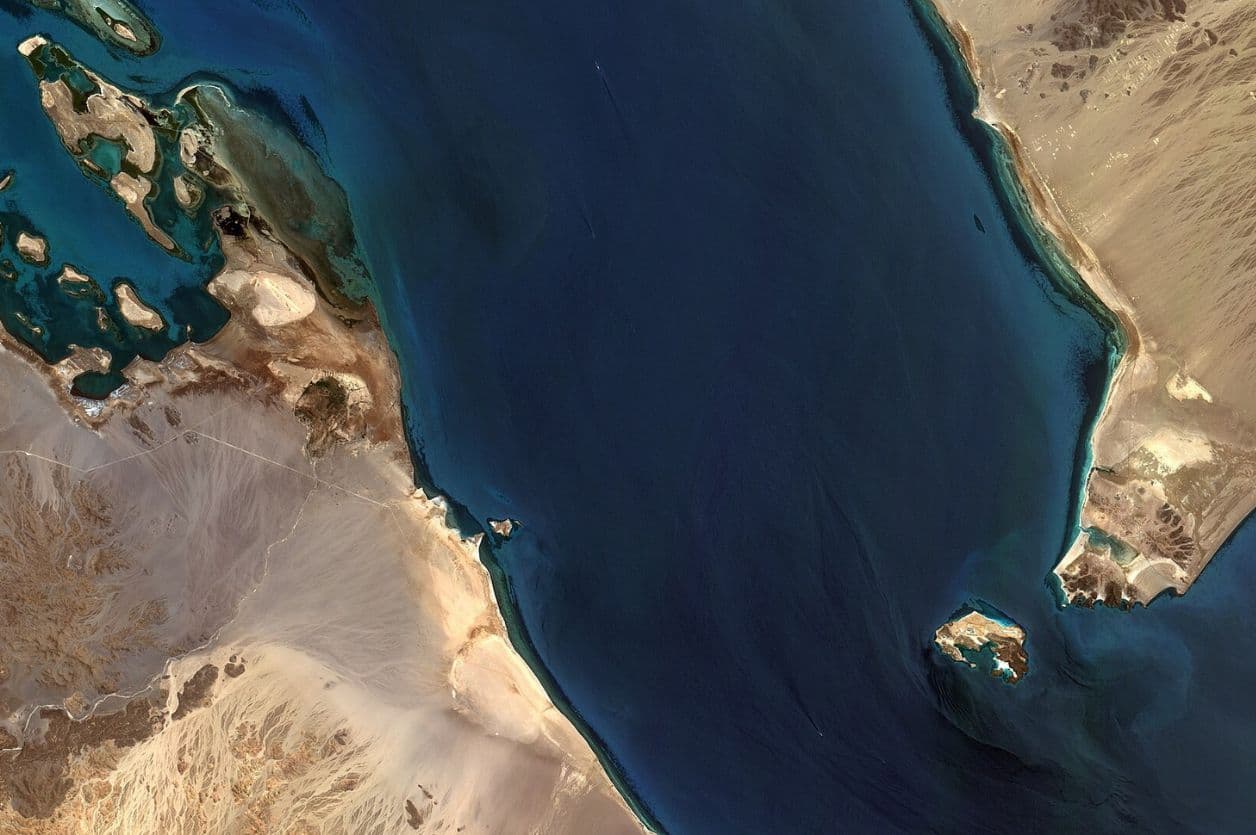
The Houthis did not specify how they would enforce the blockade, but their previous record of maritime attacks suggests potential threats to shipping through the Bab al-Mandeb Strait, a 29–32 km-wide chokepoint connecting the Red Sea to the Gulf of Aden. The strait handles roughly 7.4 million barrels per day of petroleum shipments, or about 7 percent of global output, and is a critical route for oil exports from Saudi Arabia’s Red Sea port of Yanbu. Saudi Arabia has increasingly relied on its 1,201 km East-West Pipeline, which carries up to seven million barrels per day from the Abqaiq oil field to Yanbu, as an alternative to the Strait of Hormuz, which has been largely closed since the U.S.-Israeli conflict with Iran began in February 2026.
Analysts noted that even without direct attacks, the Houthis’ announcement could disrupt shipping and create uncertainty for Saudi ports and global trade. The Bab al-Mandeb Strait already saw reduced traffic after Houthi attacks on merchant vessels during the 2023 Gaza war, when four ships were sunk and nine crew members killed before a ceasefire in October 2023. The Houthis’ new declaration raised fears of renewed maritime insecurity, particularly as the group’s deputy media head, Nasruddin Amer, stated that the Bab al-Mandeb would be closed in retaliation for Saudi actions.
Reports also indicated that Iran had asked the Houthis to be prepared to close the Red Sea oil route if the United States struck Iranian power infrastructure, suggesting coordination within Iran’s network of allied groups. The Houthis are a key component of Iran’s “Axis of Resistance,” which includes Hezbollah in Lebanon and various militias in Iraq and the Palestinian territories. The U.S. and Israel had previously conducted air campaigns against Houthi positions in response to Red Sea attacks, but those operations ceased after a deal that halted Houthi assaults in late 2023.
The renewed blockade threat signaled a potential return to regional maritime conflict, with implications for global energy supply chains already strained by the closure of the Strait of Hormuz and ongoing U.S.-Iran hostilities.
Why it Matters
The Houthis’ declaration of a maritime blockade against Saudi Arabia represents a significant escalation in the Yemen conflict and the broader regional contest between Iran and its adversaries. Strategically, the move threatens to close or severely restrict access to the Bab al-Mandeb Strait, one of the world’s most critical maritime chokepoints. With the Strait of Hormuz already compromised by U.S.-Iran hostilities, simultaneous disruption of Bab al-Mandeb could effectively block up to a quarter of global oil and gas flows, creating a dual chokepoint crisis with far-reaching economic and security consequences.
For Saudi Arabia, the blockade directly targets its energy export lifeline. The kingdom’s East-West Pipeline to Yanbu was designed to bypass Hormuz, but its reliance on Red Sea shipping now exposes it to Houthi threats. Even the perception of risk can drive up insurance premiums, reroute vessels around Africa, and inflate global energy prices. The Houthis’ ability to project maritime power, even through limited drone or missile attacks, gives them disproportionate leverage over global trade and energy markets.
The timing of the blockade also underscores the interconnectedness of regional conflicts. The Houthis’ action followed Saudi strikes on Sanaa Airport, which themselves were linked to Iranian involvement in Yemen and the funeral of Ayatollah Ali Khamenei. This sequence illustrates how local incidents can cascade into regional crises when great power competition and proxy dynamics are involved. Iran’s reported request for the Houthis to prepare to close the Red Sea oil route if the U.S. attacked Iranian infrastructure further demonstrates Tehran’s use of asymmetric partners to deter or retaliate against Western pressure.
From a military and intelligence perspective, the Houthis’ announcement signals renewed mobilization and potential resumption of large-scale hostilities after years of relative calm. Their call for general mobilization and readiness for “all options” suggests preparation for sustained conflict. The group’s demonstrated capacity to strike Saudi airports and threaten oil infrastructure indicates that it retains significant missile and drone capabilities, despite reports of depleted stockpiles following earlier Red Sea operations.
For the United States and its allies, the blockade poses a strategic dilemma. Protecting navigation through Bab al-Mandeb would likely require renewed naval deployments and coordination with regional partners such as Egypt, Djibouti, and Saudi Arabia. However, direct intervention risks entanglement in a broader confrontation with Iran and its allies. The situation also tests international law regarding blockades and the use of force in maritime domains.
Economically, the blockade compounds existing energy market volatility. With Saudi exports increasingly routed through the Red Sea, any disruption could tighten global supply and accelerate inflationary pressures. The potential for simultaneous crises in Hormuz and Bab al-Mandeb underscores the fragility of global energy logistics and the strategic importance of maritime chokepoints.
Diplomatically, the escalation challenges ongoing efforts to stabilize Yemen and the wider Gulf. The 2022 truce had offered a rare window for de-escalation, but renewed hostilities risk undoing years of negotiation. The Houthis’ alignment with Iran complicates Saudi Arabia’s attempts to balance its security concerns with its Vision 2030 economic diversification goals, which depend on stable export routes and investor confidence.
In sum, the Houthi blockade announcement is not an isolated act but a manifestation of overlapping conflicts: the Yemen war, the Iran-Saudi rivalry, and the broader U.S.-Iran confrontation. It highlights how non-state actors can exploit maritime chokepoints to exert strategic pressure far beyond their immediate theaters of operation, reshaping global energy security and testing the resilience of international maritime governance.
Stay Informed. Stay Ahead.