Houthi Expansion Raises Maritime Threat
Intelligence Summary
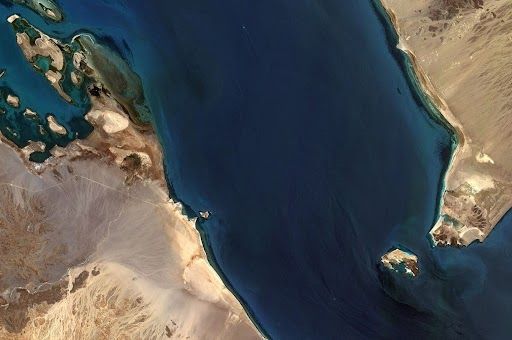
Ansarallah forces, also known as the Houthis, have expanded their position along Yemen’s Red Sea coast, capturing the port city of Mokha and Mayyun Island in the Bab al-Mandeb Strait last week, according to Yemeni government and Houthi officials. On September 14, officials from both sides said Houthi fighters had also deployed on Greater Hanish and Lesser Hanish, islands north of the strait, after government-allied forces withdrew from the archipelago. These gains give the Houthis positions along Yemen’s coastline and near the maritime chokepoint linking the Red Sea with the Gulf of Aden.
Government forces have responded with a counteroffensive in western Taiz, where they said they repelled a Houthi advance and retook positions with air support. Yemeni military reporting described strikes on Houthi positions around Mokha, Dhubab, and elsewhere in Taiz. The government has acknowledged that the earlier loss of Mokha and Mayyun was a serious setback but says it is regrouping and plans to reinforce the Red Sea coast. The Houthi advance is also shifting attention toward Marib, the government’s principal remaining northern stronghold and a major oil and gas area, although fighting there has not yet produced a reported territorial breakthrough comparable to the coastal gains.
The conflict has again crossed Yemen’s border with Saudi Arabia. The Houthis claimed on September 14 to have launched dozens of missiles and drones against Saudi military facilities, including King Khalid Air Base near Khamis Mushait. The attacks have been described as retaliation for a Saudi air campaign. Saudi Arabia did not immediately confirm those claims. Saudi civil defense did report that a projectile near the Yemeni border injured two people and damaged a mosque and other buildings, attributing it to the Houthis. The group’s attacks on Saudi-linked shipping and oil infrastructure are occurring as Saudi Arabia depends more heavily on Red Sea export routes because Iranian forces have effectively blocked the Strait of Hormuz.
The renewed fighting has produced a rapid humanitarian shock. The International Organization for Migration estimates that roughly 86,000 people have been displaced in Yemen in recent weeks, while more than 2,000 have reached Djibouti in the Horn of Africa.

Why It Matters
The coastal gains improve Ansarallah’s ability to threaten or monitor traffic through Bab al-Mandeb without necessarily proving that they can close the waterway. The strait normally handles about 12 percent of global trade, including significant shares of seaborne oil and liquefied natural gas. Control of coastal positions and nearby islands reduces the distance between Houthi forces and shipping lanes, making targeting simpler and increasing the perceived risk for commercial operators. The immediate effect is likely to be heightened insurance, routing, and security costs even if the Houthis continue to publicly state that international navigation remains safe.
The development is particularly consequential because Bab al-Mandeb has become more important while Hormuz is disrupted. Saudi Arabia has relied on Red Sea routes to move oil exports, but Houthi attacks on Saudi infrastructure and shipping now place pressure on that alternative. Repairs to a Saudi oil pipeline hit the previous week were expected to require three to five weeks, and oil prices rose as concerns increased over Saudi export capacity. The combination of constraints at both chokepoints increases the market impact of localized military developments in Yemen and gives Iran greater leverage in its conflict with the United States.
For Yemen’s internationally recognized government, the losses at Mokha, Mayyun, and the Hanish islands weaken its military and political position at a moment when it is trying to demonstrate that the 2022 truce’s collapse will not lead to a decisive Houthi victory. A sustained government counteroffensive in Taiz could complicate Houthi efforts to consolidate their gains because Taiz links the Houthi-held north, government-held south, and the Red Sea coast. Conversely, further Houthi progress toward Marib would have greater strategic consequences than the coastal campaign alone. It would threaten the government’s remaining northern base and place major Yemeni energy resources at risk of Houthi control.
The principal uncertainty is whether the Houthis convert their new geography into a sustained maritime coercion campaign. Shipping volumes through the Red Sea had already fallen by 50 to 55 percent between 2023 and 2025 during earlier Houthi attacks, as major carriers diverted around the Cape of Good Hope. Existing international naval forces are present in the region, but mission restrictions may limit rapid action beyond their assigned mandates. Indicators of a more serious escalation would include attacks on non-Saudi commercial vessels, deployment of artillery or anti-ship systems on the newly occupied islands, and the ability of government forces to regain ground around Mokha and Taiz.
Stay Informed. Stay Ahead.