Houthi Missile and Drone Attacks Disrupt Saudi Airports
Intelligence Summary
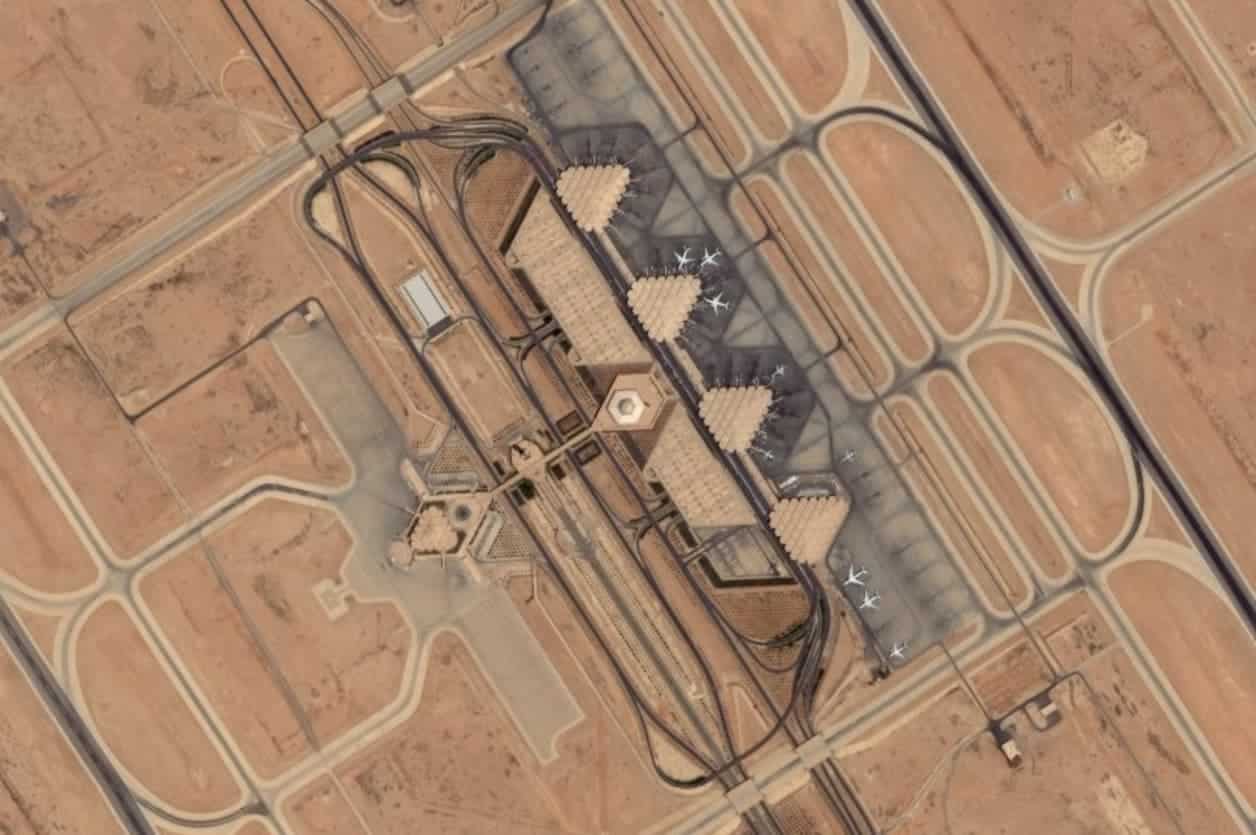
Houthi missile and drone attacks have struck Saudi civilian aviation infrastructure for a second consecutive day, killing at least one person and forcing the closure of major airports. On Sunday, a projectile struck King Khalid International Airport in Riyadh, killing a Pakistani national and injuring 11 others, according to Saudi aviation authorities. Saudi-led coalition officials said air defenses intercepted a cruise missile near the airport, but did not clarify whether that interception was connected to the projectile that caused casualties. The attack followed a strike on Saturday that killed between 12 and 13 people and injured more than 300, according to differing casualty figures reported by Saudi authorities and other accounts.
The Houthis claimed responsibility for operations against Riyadh and Dammam airports, as well as two oil and gas facilities in Saudi Arabia's Eastern Province. Their military spokesman said the attacks responded to 124 Saudi air strikes in Yemen over the preceding 24 hours and characterized the campaign as reciprocal escalation. The Houthis also warned airlines, airport personnel, and travelers against using Saudi airports and airspace, while exempting travel to and from Mecca and Medina. Saudi authorities later confirmed an attack on Dammam airport.
King Khalid International Airport and King Fahd International Airport in Dammam remain closed following the attacks. The disruption has extended to King Abdulaziz International Airport in Jeddah, where more than 150 flights were canceled and 374 delayed on Sunday. Australia, New Zealand, the United States, Canada, the United Kingdom, South Korea, and Japan have issued travel guidance ranging from avoiding particular airports to reconsidering or canceling travel to Saudi Arabia.
The attacks occur amid renewed fighting in Yemen. Saudi Arabia has expanded its military involvement in support of a Yemeni government counteroffensive after the Houthis seized territory along the Red Sea coast near the Bab el-Mandeb Strait. The Saudi-led coalition called the airport attacks a war crime and pledged a severe response. The United States is considering whether to join Saudi strikes, while US forces already provide intelligence and targeting support to the coalition.

Why It Matters
The attacks demonstrate that the conflict has moved beyond localized battlefield pressure in Yemen toward direct disruption of Saudi Arabia's civilian transport network. Closing Riyadh and Dammam airports imposes immediate costs on commercial aviation, travelers, and Saudi economic activity, while disruptions at Jeddah show that the consequences can spread beyond the sites directly struck. The Houthi warning to airlines may amplify those effects even where physical damage is limited, because carriers and foreign governments must assess the risk to aircraft, personnel, and passengers.
The pattern of attacks also creates a difficult escalation choice for Riyadh and its partners. Saudi military operations in Yemen have been followed by Houthi strikes against airports, oil facilities, and other infrastructure, and both sides publicly frame their actions as responses to the other's escalation. A more forceful Saudi-led retaliation could degrade Houthi launch capacity, but it could also increase the likelihood of further attacks on Saudi civilian and energy infrastructure. The coalition's ability to intercept a missile near Riyadh did not prevent casualties at the airport, illustrating the challenge of defending a large number of high-value sites against repeated missile and drone operations.
The development has regional energy and maritime implications because the current Yemen fighting is tied to control of territory near Bab el-Mandeb. The Houthis' earlier seizure of coastal areas contributed to oil-price pressure because Saudi Arabia had relied more heavily on Red Sea exports after the Strait of Hormuz was effectively closed by the US-Israeli war with Iran. Attacks on Saudi airports and reported targeting of oil and gas facilities therefore compound risks to the kingdom's transport and export infrastructure at a time when alternative routes are already strategically important.
International reactions could broaden the conflict's military dimension without necessarily producing a political settlement. Washington has signaled that it may join Saudi operations, while European governments have condemned the airport strikes and expressed solidarity with Saudi Arabia. Yet Iran's call for dialogue, coupled with its denial of direct military support to the Houthis, points to a central constraint: external actors can pressure the Houthis militarily but may lack an agreed diplomatic mechanism for halting reciprocal attacks. Indicators of further deterioration would include a prolonged closure of Riyadh airport, additional successful strikes on oil facilities, or formal US participation in coalition attacks.
Stay Informed. Stay Ahead.