
India Faces Largest Youth Revolt in Years
Intelligence Summary
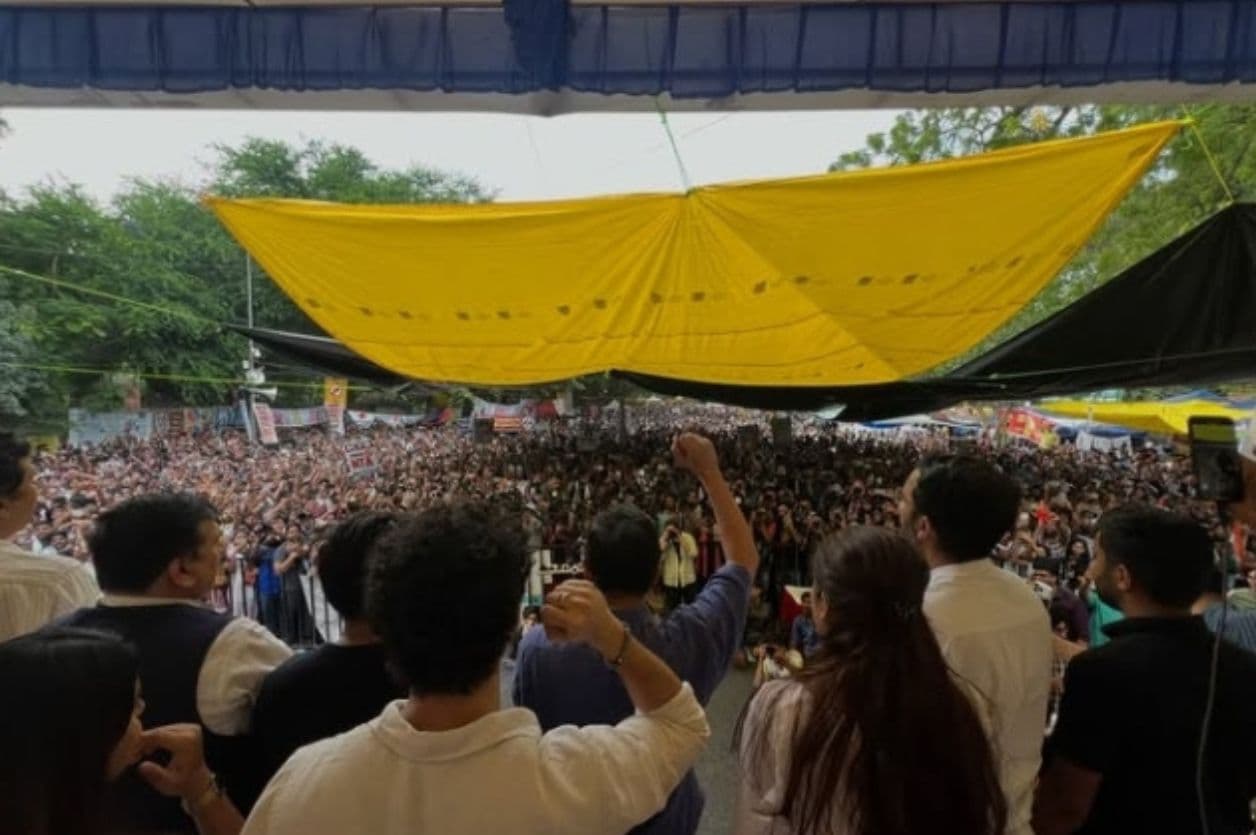
India experienced one of its largest youth-led protest movements in recent years as tens of thousands of demonstrators, organized under the satirical “Cockroach Janta Party” (CJP), attempted to march on the Indian Parliament in New Delhi to demand the resignation of Education Minister Dharmendra Pradhan over allegations of widespread corruption and exam paper leaks. The movement, which began as an online campaign in June, rapidly evolved into a nationwide mobilization drawing students, professionals, and families from across India.
The protests were triggered by the annulment of India’s national medical entrance exam after questions were leaked, forcing 2.2 million students to retake the test under heavy security. Reports indicated that at least a dozen students had died by suicide following the scandal, intensifying public anger. The CJP, founded by 30-year-old Abhijeet Dipke, a Boston University graduate, capitalized on this outrage, transforming a viral social media movement into a physical protest network. The group’s name originated from a controversial remark by Chief Justice Surya Kant, who compared unemployed youth to “cockroaches,” a comment that Dipke and his followers reappropriated as a symbol of resilience.
On July 20, 2026, protesters gathered at Jantar Mantar, a historic observatory and traditional protest site in central Delhi, before attempting to march toward Parliament. Police had denied permission for the march and deployed large numbers of officers and paramilitary personnel to block access roads. As demonstrators advanced, police used tear gas and baton charges to disperse the crowds, resulting in multiple injuries. Volunteer medics treated at least ten people for head wounds and fractures, while others were seen bleeding or carried away by fellow protesters.
Authorities suspended mobile internet services in parts of central Delhi, citing the need to maintain public order. Despite the crackdown, protesters continued to occupy the area, waving flags, chanting slogans, and distributing food and water under heavy rain. Police estimated that more than 100,000 people participated in the demonstrations across Delhi, with additional protests reported in Mumbai and Bangalore.
The government initiated limited dialogue with protest leaders. CJP spokesperson Saurav Das and another representative met with Health Minister JP Nadda, who acknowledged receipt of their written demands but made no commitments. Nadda later urged demonstrators to end their sit-in and restore normalcy. Meanwhile, Education Minister Pradhan met with Home Minister Amit Shah, though the agenda of their discussion was not disclosed.
The protests coincided with the opening of Parliament’s monsoon session, which was repeatedly adjourned as opposition lawmakers demanded debate on the exam scandal and criticized police actions. Opposition leaders, including Akhilesh Yadav of the Samajwadi Party and Congress MP Shashi Tharoor, condemned the use of force and expressed solidarity with the protesters.
The movement’s momentum was further fueled by the forcible hospitalization of veteran activist Sonam Wangchuk, who had been on a 21-day hunger strike in support of the CJP. His removal from the protest site on July 18 was widely viewed as a catalyst for the mass mobilization that followed. Wangchuk’s wife accused authorities of illegal detention, while Wangchuk vowed to continue his fast from the hospital.
By late evening on July 20, police dismantled the Jantar Mantar protest site and cleared remaining demonstrators. The CJP leadership reported that police attempted to detain Dipke, though authorities denied the claim. Despite the dispersal, the protests marked a significant escalation in youth dissent against Prime Minister Narendra Modi’s government, reflecting deep frustration over unemployment, corruption, and perceived democratic backsliding.
Why it Matters
The July 2026 protests represent a critical inflection point in India’s domestic stability and governance trajectory. The CJP movement, though initially focused on exam corruption, has evolved into a broader expression of generational discontent with systemic inequality, job scarcity, and political unresponsiveness. The scale of mobilization, over 100,000 participants in Delhi alone, demonstrates the capacity of digitally networked youth movements to challenge entrenched political structures in the world’s largest democracy.
From a geopolitical perspective, the unrest exposes vulnerabilities in India’s internal cohesion at a time when it seeks to project itself as a stable pillar of the Indo-Pacific order. Sustained domestic instability could weaken New Delhi’s diplomatic leverage in regional forums such as the Quad and G20, where it positions itself as a counterweight to China. The protests also highlight the growing role of social media as a force multiplier for political mobilization, raising potential concerns for information control, cyber monitoring, and state response mechanisms.
The government’s decision to suspend mobile internet and deploy paramilitary forces underscores the increasing securitization of civil dissent. Such measures, while aimed at maintaining order, risk eroding India’s democratic credentials and could invite international scrutiny from human rights organizations and Western partners. The use of tear gas and baton charges against largely peaceful demonstrators may also deepen domestic polarization and embolden opposition parties ahead of future elections.
The CJP’s demands for accountability in education governance intersect with broader structural issues in India’s labor market. Persistent youth unemployment, coupled with the perception of corruption in merit-based systems, undermines confidence in state institutions. This erosion of trust could have long-term implications for India’s human capital development and economic competitiveness, particularly in technology and services sectors that rely on skilled graduates.
Strategically, the protests reveal the fragility of India’s social contract amid rapid economic transformation. The Modi government’s calibrated response of combining limited dialogue with coercive policing suggests an attempt to contain dissent without conceding political ground. However, the involvement of figures like Sonam Wangchuk, known for his environmental and educational activism, lends the movement moral legitimacy that could sustain its appeal beyond immediate grievances.
The symbolism of the “cockroach” as a reclaimed identity reflects a deeper cultural shift in how marginalized youth articulate resistance. This transformation from online satire to mass mobilization mirrors protest dynamics seen in neighboring South Asian states, where youth-led movements have precipitated political crises. Should the CJP persist or inspire similar movements, India may face recurring cycles of protest that test the resilience of its democratic institutions.
Internationally, prolonged unrest could affect investor confidence and complicate India’s economic diplomacy, particularly as it seeks to attract manufacturing supply chains relocating from China. A perception of instability or authoritarian overreach could deter foreign partners prioritizing political predictability. Conversely, if the government manages to channel the movement’s energy into policy reform, particularly in education and employment, it could reinforce India’s image as a responsive democracy capable of self-correction.
Ultimately, the July 2026 protests underscore the intersection of governance, legitimacy, and generational change in India’s political evolution. The state’s handling of this crisis will shape not only domestic political alignments but also India’s credibility as a democratic leader in an increasingly contested global order.
Stay Informed. Stay Ahead.