Indo-Pacific Alliances Under Strain
Photo credit: Senior Airman Brittany Russell
Intelligence Summary
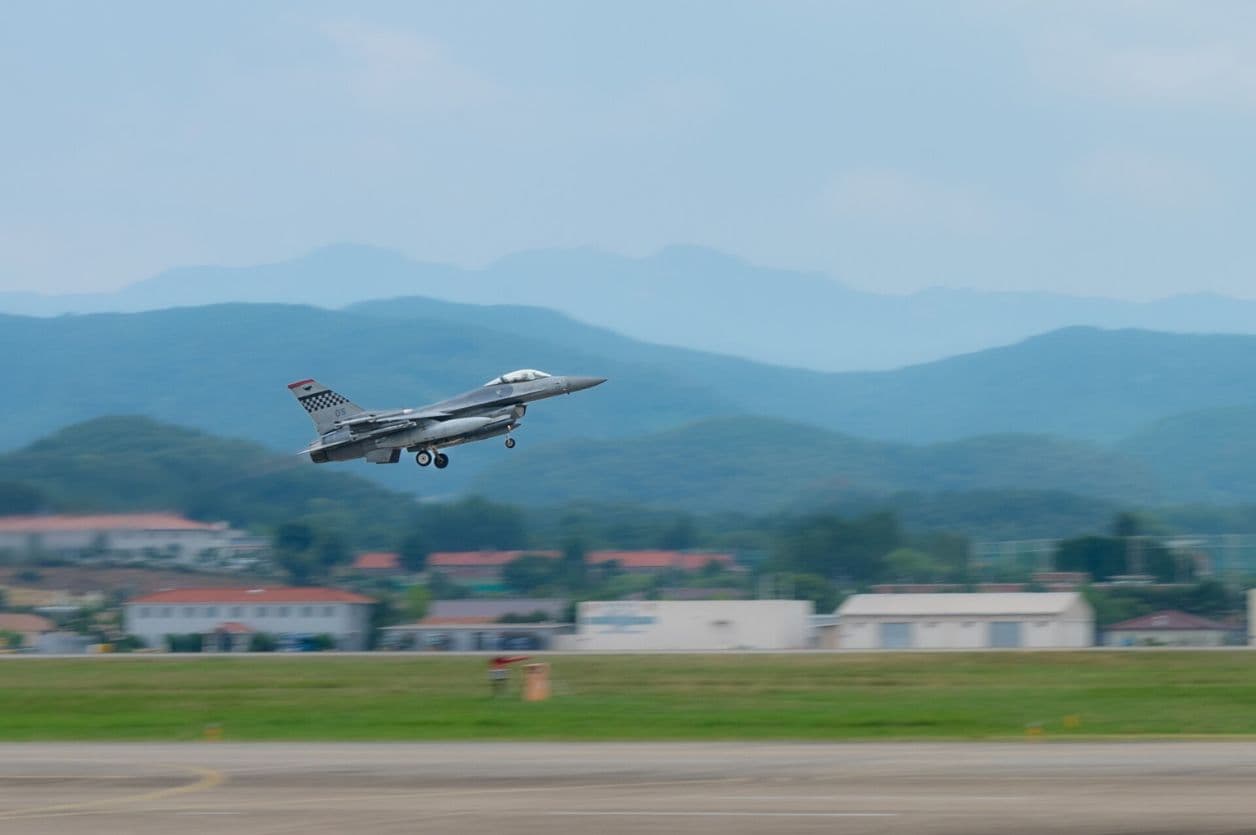
President Donald Trump ordered the Pentagon to substantially reduce US participation in the annual Ulchi Freedom Shield exercises with South Korea, scheduled for August 17-27. He cited drill costs, his relationship with North Korean leader Kim Jong Un, and his view that the exercises signal hostility toward Pyongyang. Trump also connected his dissatisfaction to Seoul’s refusal to join the US effort to denuclearize Iran. South Korea’s Defense Ministry said the drills would proceed as scheduled. The 11-day exercise involves 18,000 South Korean soldiers and US allies. Pyongyang called the drills a provocation and said expanding US-Japan-South Korea cooperation was becoming a nuclear alliance.
Separately, South Korea’s Joint Chiefs of Staff said North Korean troops recently crossed the Military Demarcation Line on the eastern front, prompting South Korean forces to fire warning shots under established operating procedures. The troops returned, according to the command. Yonhap described this as the first publicly reported crossing this year and stated that North Korean forces crossed the line 17 times in 2025. North Korea did not immediately comment.
China’s Coast Guard began law-enforcement patrols off Taiwan’s eastern coast in June, after Japan and the Philippines announced planned negotiations on their overlapping exclusive economic zones and continental shelves in waters east of Taiwan. Beijing opposed the negotiations, asserting that Taiwan is Chinese territory and that it should be involved. China has maintained the patrols, according to the account, while its military, coast guard, legal, and administrative functions have operated in parallel. On August 12, an Indonesian frigate conducted a passing exercise with a Chinese naval frigate in the same area during Taiwan’s Han Kuang drill. Jakarta said the event was part of the vessel’s transit route and was not combat training, while Taipei requested clarification.
Washington is preparing a letter that would tell countries participating in its AI cooperation framework that they cannot also join China’s rival framework. The proposed policy centers on Pax Silica, a US-led initiative covering AI models, semiconductors, and critical minerals. Kazakhstan has joined both efforts, while Japan, Australia, and South Korea are among Pax Silica participants. Meanwhile, Australia’s government has adopted sharper language on Chinese regional ambitions despite its policy of stabilizing bilateral ties and continued economic dependence on China, particularly through iron ore trade.
Why it Matters
Trump’s decision to reduce US participation in the drills could raise doubts about Washington’s willingness and readiness to defend South Korea. Ulchi Freedom Shield is designed to prepare South Korean and US-aligned forces for defense against North Korea. A public divergence between Washington and Seoul over its scope could complicate alliance signaling even if the drills proceed. North Korea may read reduced US participation as confirmation that political engagement with Trump can constrain allied military activity. The most important near-term indicator is whether the Pentagon’s reduction affects command-post, readiness, or combined-force elements.
The Korean Peninsula is entering a period in which reassurance and deterrence are moving in opposite directions. Trump has emphasized his relationship with Kim, but South Korean forces recently fired warning shots after North Korean personnel crossed the Military Demarcation Line. That combination leaves Seoul managing an immediate border-security requirement while its principal ally seeks to lower the political temperature with Pyongyang. The risk is not necessarily deliberate escalation. Rather, reduced allied training and recurring frontier incidents could narrow the margin for managing misunderstandings or local tactical encounters. Monitoring North Korean activity near the demarcation line will help determine whether the crossing was isolated or part of a more persistent test of South Korean procedures.
China’s eastern Taiwan patrols appear designed to turn disputed political claims into a sustained operating presence. The Coast Guard patrols began after Japan and the Philippines moved toward maritime-boundary talks, while China has objected to those negotiations on the grounds that Taiwan falls under Chinese sovereignty. Routine law-enforcement activity can make Chinese presence more familiar without requiring a major military escalation. This method places regional governments in a difficult position: resistance could invite pressure, while accommodation may alter expectations about access and authority. Indonesia’s limited passing exercise with the Chinese navy shows how even low-level encounters can acquire political meaning near Taiwan. The key indicator is whether Chinese patrols become daily and whether additional regional navies normalize contact with Chinese forces there.
Technology policy is becoming a more explicit instrument of alliance management and strategic competition. Washington’s proposed requirement that partners choose between its AI framework and China’s competing organization would link access to AI investment, semiconductors, and critical-mineral cooperation to geopolitical alignment. Such pressure could reduce room for states seeking parallel economic relationships with both powers, especially where Chinese technology or mineral demand remains significant. The initiative also turns AI governance from a standards competition into a test of political reliability. Whether the draft letter is issued, and whether Washington enforces exclusion against dual participants such as Kazakhstan, will show whether Pax Silica is primarily a coordination platform or an emerging bloc structure.
Australia illustrates the alliance-management problem created by greater US pressure and uneven confidence in US reliability. Canberra has sharpened its language on China’s ambitions while continuing to pursue economic stability with Beijing and maintaining its strategic commitment to the United States. This posture may become harder to sustain if regional states are pressed to make binary security and technology choices. Australia’s experience also suggests that economic interdependence does not remove strategic friction, but can constrain how forcefully governments respond to it. Changes in Canberra’s official China rhetoric, defense arrangements in the Pacific, and its posture toward US-led technology initiatives will indicate whether Australia is shifting from calibrated balancing toward more overt alignment.
Stay Informed. Stay Ahead.