Domestic Unrest and Foreign Pressure Converge in Iran
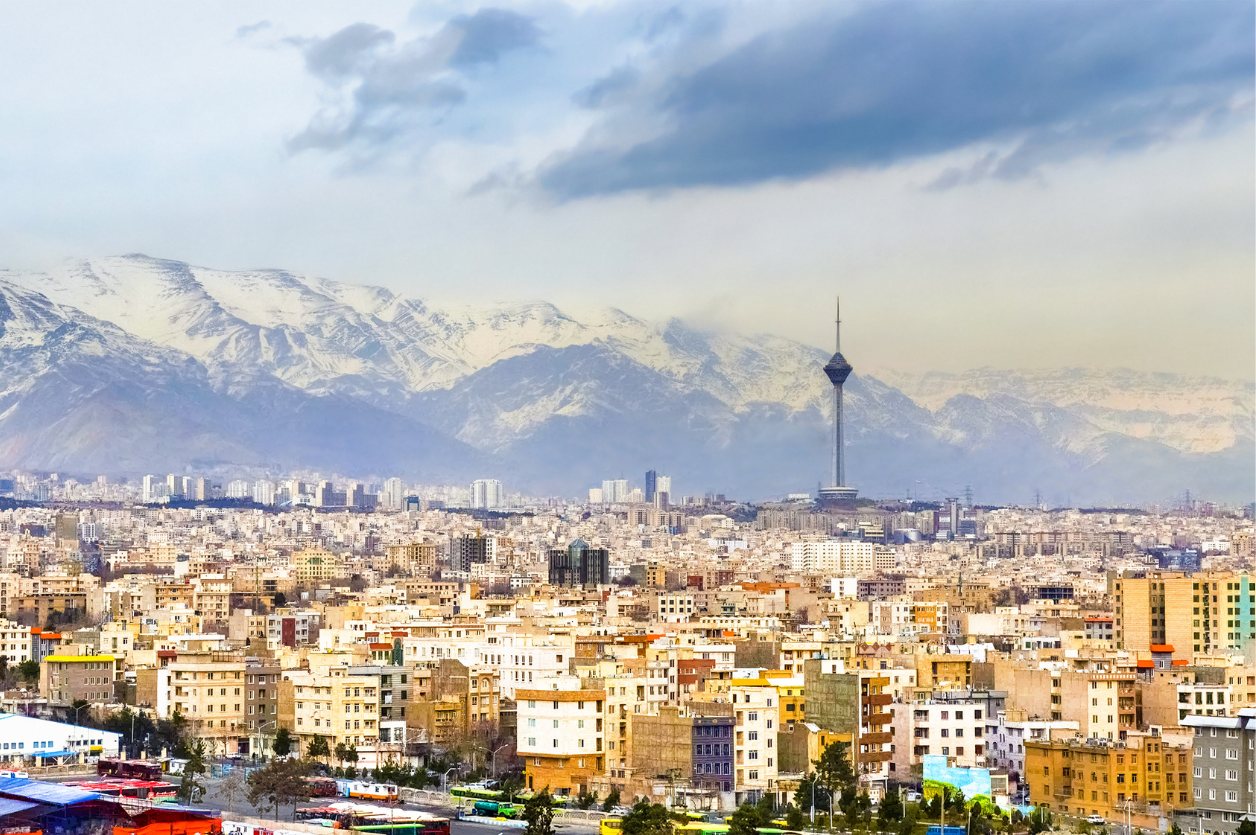
Photo credit: iStockphoto.com/Leonid Andronov
Intelligence Summary
Mass protests erupted across Iran in late December 2025, beginning among shopkeepers in central Tehran before spreading nationwide. The unrest, initially driven by economic grievances, evolved into widespread demonstrations against the political establishment. The nights of January 8 and 9 were the deadliest, with thousands killed, according to foreign-based sources. Supreme Leader Ayatollah Ali Khamenei publicly acknowledged that several thousand Iranians had died, an unusual admission given his past avoidance of casualty figures. Abbas Masjedi Arani, head of Iran’s medical examiner authority, reported that many victims were shot in the chest or head from close range or from rooftops, while others were stabbed.
The Iranian government imposed a near-total internet blackout on January 8, cutting mobile and landline communications and preventing emergency calls. The blackout lasted nearly two weeks, with limited restoration of local calls and text messaging by mid-January. A senior parliamentarian later stated that the government might lift the ban within days, following reports that state television had been hacked to display speeches by U.S. President Donald Trump and Reza Pahlavi, the exiled son of the former Shah, calling for revolt.
Iranian authorities deployed thousands of heavily armed security personnel to patrol major cities, particularly Tehran’s Grand Bazaar, and established checkpoints nationwide. The judiciary announced the creation of a joint task force between the Supreme Court and the prosecutor’s office to expedite protest-related trials, promising swift punishment for those accused of participating in riots.
The government attributed the violence to foreign interference, accusing the United States and Israel of arming and funding “terrorists” to destabilize the country. Tehran prosecutor Ali Salehi warned that any U.S. involvement would be met with a “deterring and quick” response. Khamenei personally denounced Trump as a criminal for his repeated public encouragement of protesters.
Foreign-based monitors, including the Human Rights Activists News Agency (HRANA), reported more than 3,300 confirmed deaths, 2,107 severe injuries, and over 24,000 arrests. Reuters cited an unnamed Iranian official estimating at least 5,000 deaths, including 500 security personnel, with the heaviest casualties in Kurdish-majority regions. These figures could not be verified.
Internationally, U.S. President Trump called for regime change, stating it was “time to look for new leadership in Iran” after initially considering but then postponing airstrikes against the country. U.S. officials indicated that military options remained under review, with the aircraft carrier USS Abraham Lincoln scheduled to arrive in the region. Trump’s administration reportedly weighed the risks of retaliation against U.S. and Israeli forces, given limited missile defense coverage in the Middle East.
Israeli Prime Minister Benjamin Netanyahu refrained from public comment, though Israeli media reported that he instructed officials to avoid interviews after a minister claimed Israeli operatives were active inside Iran.
Parallel to these events, analytical commentary described the crisis as part of a broader U.S.-Israeli hybrid warfare campaign combining sanctions, cyber operations, psychological operations, and covert action to destabilize Iran. The analysis argued that such tactics, rooted in decades of intervention since the 1953 coup against Prime Minister Mohammad Mossadegh, aim to keep Iran economically weakened and diplomatically isolated. Historical context emphasized that Western powers have long sought to control Iran’s energy resources, with the 1953 coup marking the beginning of modern regime-change operations tied to oil interests.
By mid-January 2026, the protests had largely subsided, but the combination of mass casualties, digital isolation, and foreign involvement left Iran in a state of deep internal crisis and heightened international tension.
Why it Matters
The Iranian crisis represents a convergence of domestic instability and the influence of foreign powers, with implications for regional security, energy markets, and international law. The scale of the protests and the government’s response indicate a legitimacy crisis within the Islamic Republic. The reported death tolls suggest the most violent internal unrest since the 1979 revolution. The internet blackout and information control measures demonstrate the regime’s reliance on digital repression to maintain authority, and the hacking of state television reveals the vulnerability of Iran’s cyber infrastructure and the potential for foreign interference.
From a strategic perspective, the crisis exposes Iran’s dual vulnerability: internal dissent and external pressure. The government’s accusations against the United States and Israel reflect the long-standing reality of hybrid warfare aimed at regime destabilization. The commentary describing coordinated use of sanctions, cyber operations, and covert action aligns with patterns observed in previous U.S. and Israeli strategies toward Iran, including the Stuxnet cyberattack and targeted assassinations of nuclear scientists. The current unrest provides an opportunity for external actors to exploit internal fractures, potentially accelerating regime change efforts without direct military intervention.
The U.S. administration’s open discussion of “new leadership” in Tehran and the deployment of the USS Abraham Lincoln signal a posture of coercive deterrence. Although Washington refrained from immediate strikes, the presence of a carrier group and the rhetoric of regime change increases the risk of miscalculation. Iran’s leadership, already under pressure from domestic unrest, may interpret these moves as preparation for direct confrontation, prompting asymmetric responses through regional proxies or cyber retaliation.
Energy security is a central dimension of this crisis. Iran remains a major oil producer, and instability there threatens global supply chains, particularly if unrest spreads to key production or export facilities. Historical analysis linking Western intervention to control over Iranian oil highlights the enduring strategic importance of the country’s energy sector. Any escalation involving sanctions, sabotage, or maritime disruption in the Strait of Hormuz could have immediate effects on global energy prices and shipping security.
The protests also highlight the intersection of human rights and geopolitical competition. Western governments’ expressions of support for Iranian demonstrators are viewed by Tehran as cover for regime-change operations, while the Iranian response is used internationally to justify further sanctions. This dynamic reinforces a cycle of confrontation that undermines prospects for diplomatic engagement, including any revival of the nuclear agreement.
The hacking of state television and the partial restoration of communications suggest that cyber operations are now integral to domestic control and foreign influence. The use of digital tools to shape narratives, suppress dissent, or project power blurs the line between internal security and external interference. For intelligence analysts, this underscores the need to monitor information operations as a symptom and a driver of geopolitical conflict.
In the broader context, Iran’s turmoil serves as a proxy battleground for competing strategic visions. The United States and Israel view the weakening of Tehran as essential to regional containment, while Iran frames its resistance as defense against imperial aggression. The outcome will influence not only Middle Eastern stability, but also the credibility of international norms governing sovereignty and non-intervention. The crisis reflects how domestic unrest, hybrid warfare, and global power politics are increasingly intertwined.
Key Actors
- Islamic Republic of Iran
- United States
- Israel
- Human Rights Activists News Agency (HRANA)
- Iranian Revolutionary Guard Corps (IRGC)
Stay Informed. Stay Ahead.