Iran Unrest Coincides With Renewed U.S. Pressure
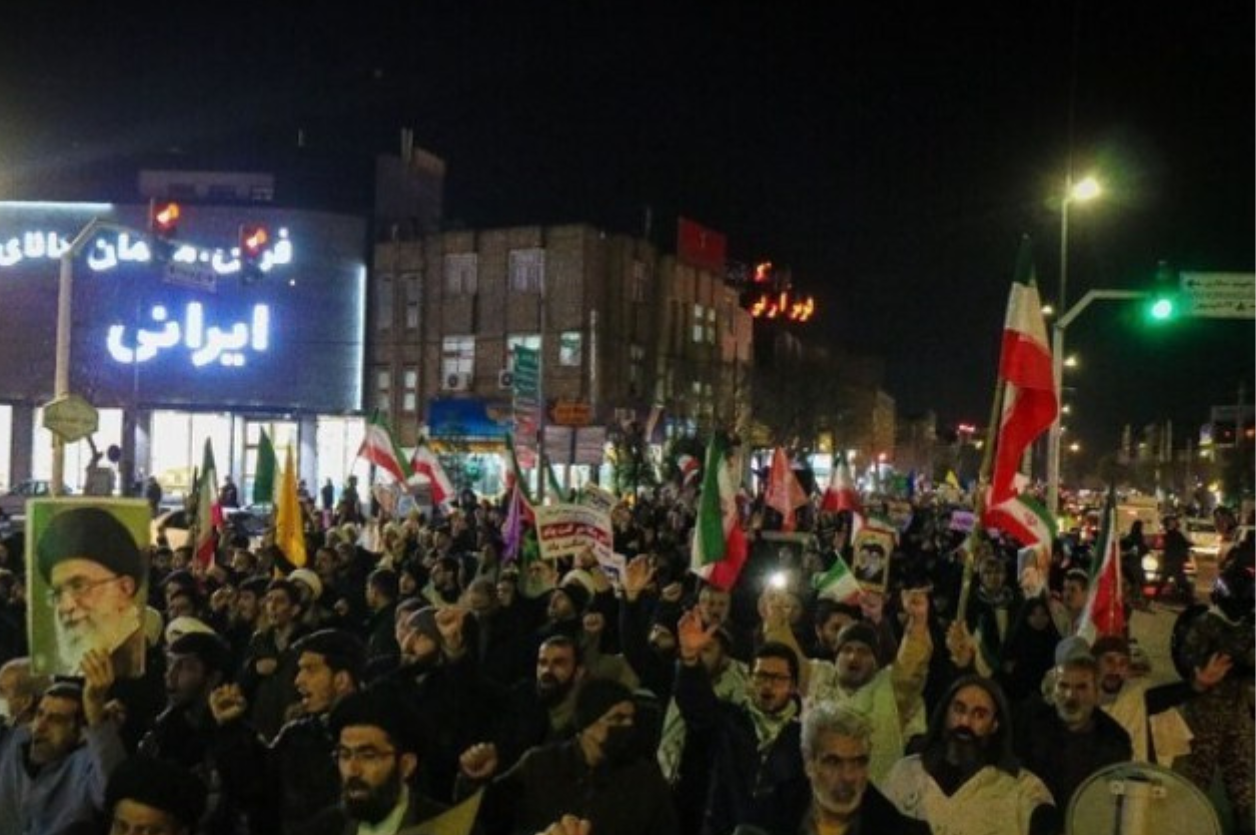
Photo credit: Tasnim News
Intelligence Summary
In late December 2025, protests erupted across Iran after a sharp collapse in the national currency and inflation rates exceeding 40 percent. The Iranian rial fell to between 1.4 and 1.7 million per U.S. dollar, triggering strikes by Tehran’s bazaar merchants and spreading unrest nationwide. Within two weeks, the demonstrations evolved into the largest anti-government movement since the 1979 revolution, with protesters demanding political change and an end to clerical rule.
The government’s response was severe. Security forces killed hundreds of people, according to Western human rights groups such as the Human Rights Activists News Agency, while more than 10,000 were detained. Hospitals were overwhelmed, and videos verified by international outlets showed rows of body bags near Tehran. The Iranian government imposed a near-total internet blackout lasting more than 80 hours, cutting off communications and limiting independent verification.
President Masoud Pezeshkian initially promised dialogue and small economic relief measures, including a monthly allowance, but later endorsed a different approach, labeling protesters as terrorists and vandals. The judiciary warned that those charged with “waging war against God” could face the death penalty. Supreme Leader Ayatollah Ali Khamenei praised pro-government rallies and declared the unrest a “national battle” against the United States and Israel.
Iranian Foreign Minister Abbas Araghchi told diplomats that the situation was under control and accused Washington and Tel Aviv of orchestrating the violence. He stated that Iran was prepared for war but also open to “honorable” negotiations based on mutual respect. Tehran summoned the ambassadors of Germany, France, Italy, and the United Kingdom, accusing them of supporting the protests.
The United States responded with escalating rhetoric and economic measures. President Donald Trump announced a 25 percent tariff on any country doing business with Iran, effective immediately, targeting major trade partners such as China, India, Turkey, and the UAE. Trump said the tariffs were “final and conclusive” and part of a broader “maximum pressure” campaign.
At the same time, the White House confirmed that airstrikes against Iran were “on the table.” Press Secretary Karoline Leavitt stated that the president was considering “very strong options,” including targeted strikes, cyber operations, and expanded sanctions. Trump told reporters aboard Air Force One that Iranian officials had reached out to negotiate but warned that the U.S. “may have to act before a meeting.”
Iran’s parliament speaker Mohammad Bagher Ghalibaf warned that any U.S. attack would make Israeli and American bases and ships legitimate targets. The Islamic Revolutionary Guard Corps (IRGC) deployed heavily to western provinces, setting up checkpoints and restricting movement.
International reactions were divided. French President Emmanuel Macron condemned Iran’s “state violence” and called for respect for human rights. The European Parliament banned Iranian diplomats from its premises, while the EU considered new sanctions and debated listing the IRGC as a terrorist organization. UN Secretary-General António Guterres urged Tehran to exercise restraint and lift the communications blackout.
By mid-January 2026, the protests had subsided in some areas, but the death toll continued to rise. Iran’s leadership claimed victory over “foreign-backed riots,” while Washington maintained both threats of military action and offers of negotiation.
Why it Matters
The confrontation between the United States and Iran in early 2026 brought together internal unrest in Iran, rivalry between major powers, and coercive economic and military signaling. The protests exposed the fragility of Iran’s internal stability after years of sanctions, economic mismanagement, and regional conflict. The government’s suppression, coupled with the largest internet blackout in its history, demonstrated its capacity for control and its vulnerability to internal dissent.
For Washington, the crisis provided an opportunity to reassert deterrence and pressure Tehran after the 2025 joint US-Israeli strikes on Iranian nuclear facilities. The Trump administration’s dual-track approach of threatening airstrikes while keeping diplomatic channels open mirrored earlier “maximum pressure” strategies but carried higher escalation risks. The 25 percent tariff on all countries trading with Iran extended U.S. coercion beyond the bilateral level, effectively weaponizing global trade relationships to isolate Tehran. This move risked alienating partners such as India and Turkey, whose energy and commercial ties with Iran are longstanding.
Iran’s response combined defiance and pragmatism. Araghchi’s statements that Iran was “more prepared for war than last year” signaled confidence in deterrence capabilities, likely including missile forces and asymmetric regional assets. Yet his simultaneous openness to “honorable negotiations” suggested Tehran’s awareness of its economic and diplomatic isolation. The IRGC’s deployment to border provinces and the regime’s invocation of “foreign enemies” reflected genuine security concerns and an effort to consolidate elite unity.
The crisis also tested European diplomacy. EU institutions condemned the crackdown and considered new sanctions, but European governments were divided between supporting U.S. pressure and preserving limited engagement channels with Tehran. The European Parliament’s ban on Iranian diplomats and Germany’s push to list the IRGC as a terrorist organization marked a hardening stance. France’s condemnation of “state violence” underscored growing transatlantic alignment on human rights.
Regionally, the standoff risked destabilizing the Persian Gulf and Eastern Mediterranean. Iran’s threats to target U.S. and Israeli assets in the event of an attack raised the prospect of a multi-front escalation involving proxy forces in Iraq, Syria, and Lebanon. The IRGC’s forward deployments near the Iraqi border suggested preparation for asymmetric retaliation. Any U.S. strike, even limited, could have triggered missile exchanges affecting Gulf energy infrastructure and maritime chokepoints such as the Strait of Hormuz.
Ultimately, the 2026 US-Iran confrontation underscored the erosion of traditional deterrence boundaries. Economic warfare, cyber operations, and information control became as central as conventional military threats. The episode demonstrated how domestic unrest in a sanctioned state can rapidly escalate into an international crisis when external powers perceive opportunity and risk in intervention. For students of intelligence and geopolitics, it exemplifies the need to integrate political, economic, military, and social indicators when assessing escalation dynamics in hybrid conflicts.
Key Actors
- United States
- Islamic Republic of Iran
- Islamic Revolutionary Guard Corps (IRGC)
- European Union and European Parliament
- France and Germany
- Israel
- United Nations
Stay Informed. Stay Ahead.