How the Iran War Paralyzed Global Air Travel
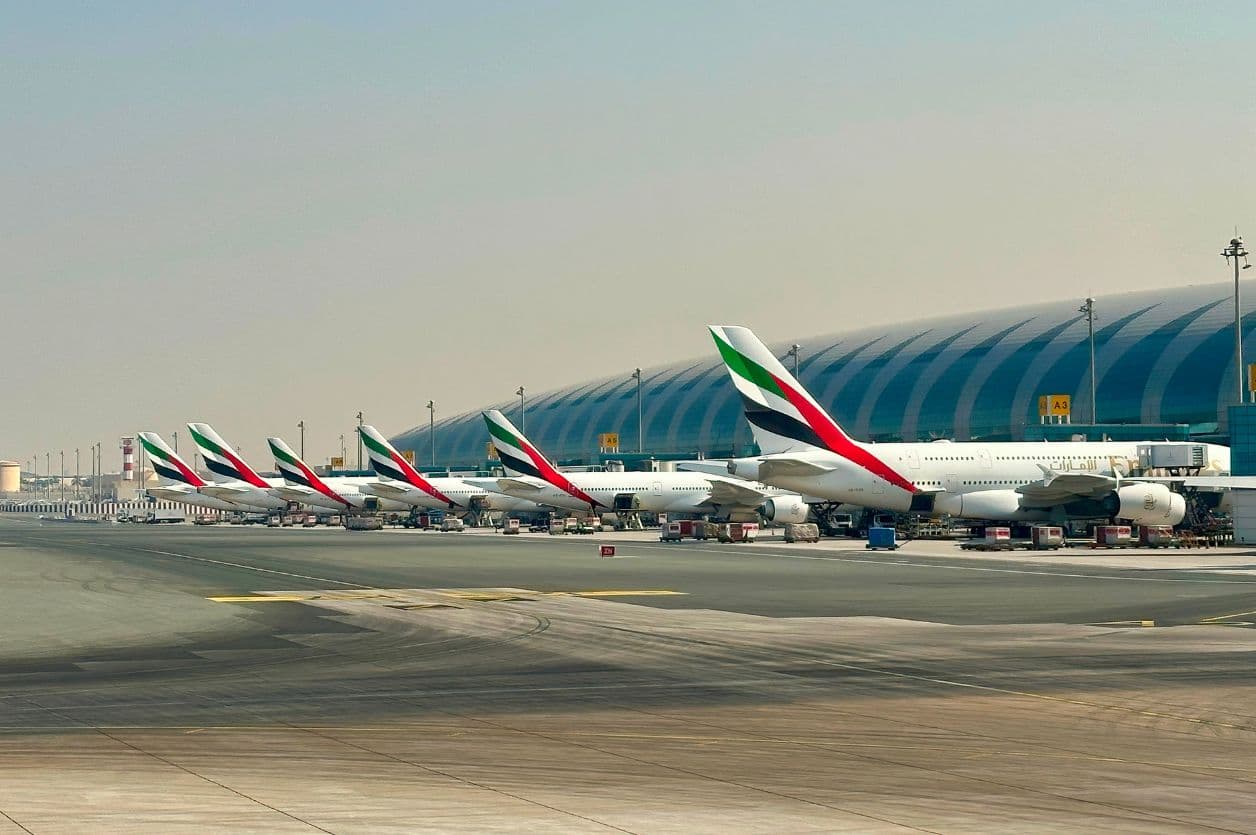
Emirates Airline, Dubai, Photo credit: iStockPhoto.com/Nigel Harris
Intelligence Summary
The outbreak of large-scale hostilities between the United States, Israel, and Iran triggered an unprecedented disruption to global air travel and civilian mobility. Following the initial U.S.-Israeli strikes on Tehran on March 2, Iran launched retaliatory missile and drone attacks across the Gulf region, prompting widespread airspace closures and grounding of flights across multiple Middle Eastern countries. Airspace over Iran, Israel, Lebanon, Jordan, Iraq, Qatar, Kuwait, Bahrain, and parts of Saudi Arabia was closed to civilian traffic, while the United Arab Emirates restricted flights until at least March 4.
The resulting aviation paralysis stranded hundreds of thousands of travelers across major transit hubs such as Dubai, Doha, and Abu Dhabi, which collectively handle around 90,000 passengers daily. At least 2,800 flights were canceled globally on March 1 and another 3,000 on March 2, marking the most severe disruption to international air travel since the COVID-19 pandemic. Thousands of passengers were left stranded in airports across the region, with many sleeping in terminals as airlines suspended operations indefinitely.
The U.S. Department of State issued an emergency advisory on March 2 urging all American citizens to immediately leave more than a dozen Middle Eastern countries, including Saudi Arabia, Qatar, Bahrain, Egypt, Iran, Iraq, Israel, Jordan, Kuwait, Lebanon, Oman, Syria, the United Arab Emirates, and Yemen, citing serious safety risks from ongoing missile and drone attacks. Assistant Secretary of State for Consular Affairs Mora Namdar posted the advisory on social media, an unusual method for such a directive, emphasizing the urgency of departure using any available commercial transportation. The U.S. Embassy in Amman, Jordan, evacuated its personnel the same day due to a specific threat.
Parallel to the U.S. advisory, the Indian Embassy in Tehran issued a warning on March 3 urging its nationals to remain indoors and avoid unnecessary movement amid continued U.S. and Israeli strikes on Iranian targets. Approximately 9,000 Indian citizens, including students, were reported to be stranded in Iran as air travel ceased and local security conditions deteriorated.
In Europe, the German Travel Association reported that around 30,000 German tourists were unable to return home due to the closure of regional airspace and suspension of flights by major carriers such as Lufthansa. The German Defense Ministry stated that military evacuation flights would be considered only as a last resort if commercial options were exhausted. German tour operators established crisis hotlines and temporary accommodations for stranded travelers in affected countries.
Meanwhile, Iran’s retaliatory strikes extended beyond military targets to include areas near major civilian airports. In Bahrain, Iranian drones and missiles struck both military and civilian sites, including residential buildings and hotels frequented by U.S. personnel. The attacks forced the closure of Bahrain’s airspace and suspension of all civilian flights. Similar strikes were reported near airports in Kuwait, Iraq, and the United Arab Emirates, further compounding the regional aviation crisis.
Russian carriers, including Aeroflot, suspended flights to Tehran, Dubai, and Abu Dhabi, leaving approximately 8,000 Russian tourists stranded abroad after missing Middle East connections. The cumulative effect of these disruptions created a cascading global impact on travel, logistics, and business operations, with ripple effects extending to Europe, Asia, and North America.

Why it Matters
The mass civilian displacement and air travel paralysis resulting from the U.S.-Israel-Iran conflict represent a multidimensional crisis with strategic, economic, and humanitarian implications. The closure of airspace across nearly the entire Middle East effectively severed one of the world’s most critical aviation corridors linking Europe, Asia, and Africa. This disruption not only stranded hundreds of thousands of travelers but also impeded the movement of goods, emergency aid, and diplomatic personnel, demonstrating how modern warfare can rapidly destabilize global mobility networks.
From a strategic perspective, the U.S. and allied governments’ evacuation advisories underscore the severity of the threat environment and the erosion of diplomatic safety norms. The unprecedented use of social media by a senior U.S. official to issue a mass evacuation order reflects both the urgency of the situation and the breakdown of traditional communication channels during high-intensity conflict. The evacuation of U.S. diplomatic staff from Jordan and the suspension of embassy operations in multiple countries highlight the vulnerability of Western diplomatic infrastructure in the region.
The attacks on Bahrain, Kuwait, and other Gulf states hosting U.S. military facilities reveal the expanding reach of Iranian retaliatory capabilities. The targeting of areas near civilian airports and hotels used by Western personnel blurs the line between military and civilian domains, raising questions about proportionality and compliance with international humanitarian law. The closure of Bahrain’s airspace following direct strikes near the U.S. Navy’s Fifth Fleet headquarters illustrates how military escalation can instantly translate into civilian disruption and economic paralysis.
The crisis also exposes the fragility of global supply chains and the dependence of international commerce on Middle Eastern transit hubs. With Dubai, Doha, and Abu Dhabi serving as key nodes for both passenger and cargo traffic, their shutdown reverberated through global logistics networks, delaying shipments and disrupting business continuity far beyond the conflict zone. The scale of flight cancellations and the grounding of major carriers such as Lufthansa and Aeroflot demonstrate how regional instability can cascade into systemic global effects.
For countries like India and Germany, the crisis tested consular readiness and crisis management capabilities. India’s advisory to its 9,000 nationals in Iran and Germany’s contingency planning for 30,000 stranded tourists illustrate the scale of civilian exposure to geopolitical conflict. The German Defense Ministry’s consideration of military evacuation flights underscores the potential for humanitarian operations to intersect with military logistics under wartime conditions.
The U.S.-Israel-Iran confrontation, while primarily military, has produced a civilian crisis that undermines confidence in international travel safety and global governance mechanisms. The inability of international institutions to coordinate airspace management or humanitarian corridors during the crisis points to a growing gap between military escalation and civilian protection frameworks.
Finally, the disruption of air travel and mass displacement may have long-term political consequences. Diaspora communities affected by the crisis could influence domestic politics in their home countries, while prolonged instability in the Middle East may accelerate global realignments in aviation, energy, and security policy. The 2026 air travel crisis thus serves as a symptom and a catalyst of a broader geopolitical transformation in which civilian infrastructure becomes a frontline in major international confrontations.
Key Actors
- United States
- Iran
- Israel
- Germany
- India
- Bahrain
- United Arab Emirates
Stay Informed. Stay Ahead.