
Israel’s Death Penalty Law Deepens International Criticism
Intelligence Summary
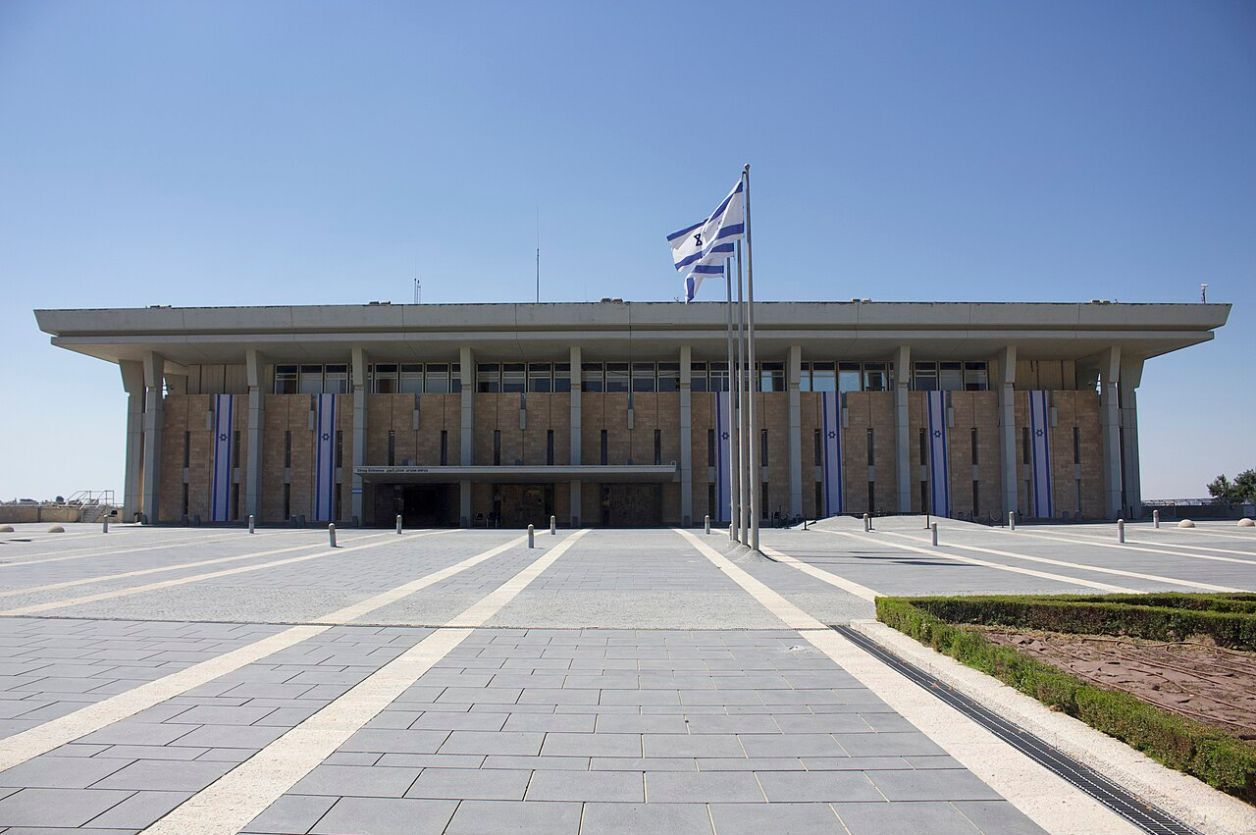
On March 30, 2026, Israel’s parliament, the Knesset, passed legislation mandating the death penalty by hanging for Palestinians convicted in military courts of killing Israelis in attacks defined as acts of terrorism. The bill passed its third and final reading with 62 votes in favor, 48 against, and one abstention, with Prime Minister Benjamin Netanyahu and his coalition partners supporting it. The law will take effect within 30 days of passage and applies exclusively to Palestinians tried in military courts in the occupied West Bank, where conviction rates exceed 96 percent.
The legislation was introduced and championed by National Security Minister Itamar Ben-Gvir, leader of the far-right Otzma Yehudit (Jewish Power) party, who made the measure a key condition of his coalition agreement with Netanyahu. Ben-Gvir, a settler from the West Bank, publicly celebrated the bill’s passage, wearing a lapel pin shaped like a noose and declaring that the law would ensure that those who kill Jews would face execution rather than imprisonment. The law stipulates that executions must occur within 90 days of sentencing, with a possible extension to 180 days, and removes the possibility of presidential clemency.
Legal experts and human rights organizations immediately challenged the law’s legality and constitutionality. The Association for Civil Rights in Israel filed a petition with the Supreme Court on the same day, arguing that the law is discriminatory by design, enacted without legal authority over West Bank Palestinians, and violates international conventions that prohibit unequal application of capital punishment. The Knesset’s own legal adviser had previously warned that the bill conflicted with international law and lacked provisions for clemency.
The Palestinian Authority condemned the law as a war crime and a violation of the Fourth Geneva Convention, asserting that it legitimizes extrajudicial killings under legislative cover. Hamas issued a statement warning that the law endangered Palestinian prisoners in Israeli custody and called on the international community to intervene. Palestinian prisoner advocacy group Addameer reported that as of March 11, 2026, more than one-third of the 9,500 Palestinians detained by Israel were held under administrative detention without trial.
International reaction was swift. The foreign ministers of France, Germany, Italy, and the United Kingdom issued a joint statement expressing deep concern that the law undermines Israel’s democratic principles and obligations under international law . Amnesty International stated that the measure would become another discriminatory tool within what it described as Israel’s system of apartheid.
Within Israel, opposition lawmakers and civil society groups denounced the law as racist and counterproductive. Opposition member Gilad Kariv described it as a stain on Israel’s values, while Yair Golan, leader of the Democrats party, warned that it could lead to international sanctions and would not enhance security. The law’s passage occurred amid heightened violence in the occupied West Bank and Gaza, where Israeli military operations and settler attacks had intensified.
Why it Matters
The enactment of Israel’s death penalty law for Palestinians represents a significant escalation in the legal and political dimensions of the Israeli-Palestinian conflict. Strategically, it institutionalizes a dual legal system that applies capital punishment exclusively to Palestinians, reinforcing international perceptions of apartheid-like governance. This legal asymmetry undermines Israel’s claims to democratic parity and rule of law, particularly as the law explicitly excludes Jewish Israelis from equivalent punishment for similar crimes. The measure therefore deepens the legitimacy crisis Israel faces in international forums and may accelerate calls for sanctions or legal action under international humanitarian law.
From a security perspective, the law is unlikely to serve as an effective deterrent. Rights groups and Israeli legal experts have noted that the military courts where Palestinians are tried already have near-total conviction rates, often based on coerced confessions. The mandatory nature of the death penalty removes judicial discretion and risks executing individuals convicted under questionable evidentiary standards. This could inflame Palestinian resentment, increase militant recruitment, and provoke retaliatory violence in the West Bank and Gaza. The law’s passage during an ongoing regional war involving Iran and its allies compounds the risk of multi-front instability, as Palestinian factions may interpret the measure as part of a broader campaign of collective punishment.
Diplomatically, the law strains Israel’s relations with key European allies. The coordinated condemnation by France, Germany, Italy, and the United Kingdom signals a rare unified stance among major Western partners, suggesting that Israel’s internal policies are beginning to erode its traditional diplomatic support base. This could have downstream effects on arms cooperation, intelligence sharing, and trade relations, particularly if the European Union considers human rights conditionality in future agreements. The law also complicates U.S. diplomacy, as Washington faces pressure from both domestic constituencies and international partners to distance itself from policies perceived as discriminatory.
Legally, the measure challenges the jurisdictional boundaries of Israeli authority in the occupied territories. By legislating capital punishment for West Bank residents, Israel effectively asserts sovereignty over non-Israeli citizens in occupied land, contravening the Fourth Geneva Convention’s restrictions on the occupying power’s legislative authority. This could expose Israeli officials to international legal scrutiny, including potential proceedings at the International Criminal Court.
Domestically, the law consolidates the influence of far-right factions within Israel’s governing coalition. Itamar Ben-Gvir’s success in pushing through the measure demonstrates the extent to which ultranationalist agendas now shape state policy. This shift may embolden further legislative initiatives targeting Palestinians or restricting judicial oversight, deepening internal polarization. The Supreme Court’s pending review of the law will test the resilience of Israel’s judicial independence, which has already been under strain from government efforts to curtail its powers.
In the broader geopolitical context, the law’s passage contributes to the erosion of Israel’s moral standing at a time when it seeks international backing in its conflict with Iran and regional militias. The perception of systemic discrimination weakens Israel’s ability to frame its military actions as defensive and lawful. It also provides adversaries such as Iran, Hezbollah, and Hamas with leverage to depict Israel as a state operating outside international norms. The resulting diplomatic isolation could limit Israel’s strategic flexibility, particularly if Western partners begin conditioning support on adherence to human rights standards.
Stay Informed. Stay Ahead.