Lebanon Conflict Broadens as Israel Expands Targeting
Intelligence Summary
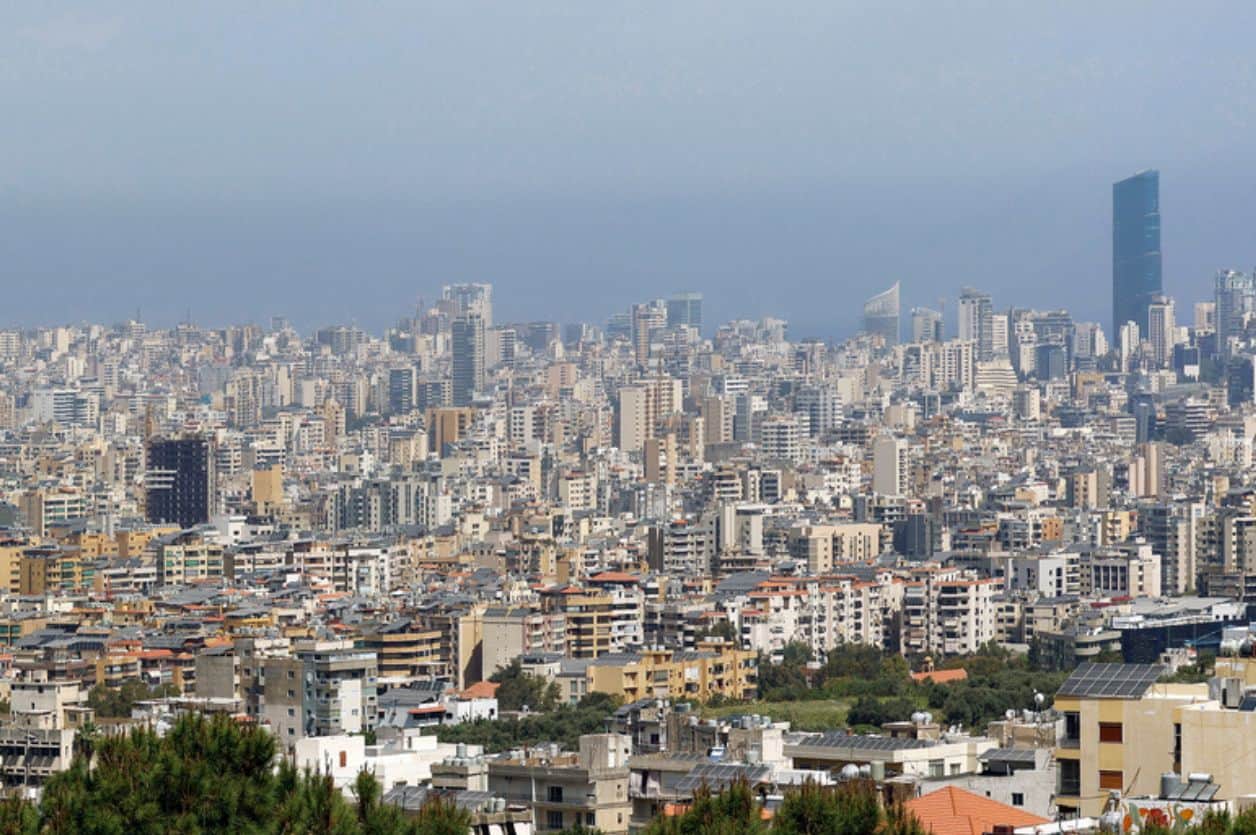
An Israeli strike hit a residential apartment in Bchamoun, about 10 km southeast of Beirut, early Tuesday and killed at least two people while wounding five, according to Lebanon’s Ministry of Public Health. The strike occurred without warning and hit an area outside Beirut’s southern suburbs, where prior evacuation notices had been issued in earlier phases of the campaign. Footage circulating online showed at least one apartment engulfed in flames after the strike.
Overnight attacks also struck Beirut’s southern suburbs, with Lebanon’s National News Agency listing seven raids targeting Bir al-Abed, Al-Ruwais on the outskirts of Al-Manshiyya, Haret Hreik, the Sayyed Hadi Nasrallah Highway, Saint Therese, Burj al-Barajneh, and Al-Kafaat. Israel also hit a petrol station belonging to the Amana company in Rashidieh near Tyre, producing a large fire plume. Israel has repeatedly struck Amana petrol stations since the conflict reignited, describing them as part of Hezbollah’s economic infrastructure that can support military activity.
Lebanese authorities reported at least 1,039 people killed and 2,876 injured in Israeli attacks since early March. The same Lebanese Ministry of Health figures included 118 children among those killed. The conflict displaced more than 1.2 million people, described as about one in five people across Lebanon, in a UN briefing in New York by UN spokesperson Stephane Dujarric on Monday. Dujarric also stated that more than 130,000 people, including about 46,000 children, were sheltering in more than 600 collective sites nationwide, with most sites already at full capacity.
Israeli operations included air attacks and a ground offensive in southern Lebanon following a cross-border Hezbollah attack on March 2. The March 2 Hezbollah attack was described as a response to the killing of Iran’s Supreme Leader Ayatollah Ali Khamenei. Hezbollah had not attacked Israel since a November 2024 ceasefire despite near-daily Israeli breaches of that deal. A separate timeline description linked intensified Israeli attacks in early March to Hezbollah rocket launches after the start of the U.S. and Israel war on Iran on February 28. Israel pushed deeper into Lebanese territory as part of a ground invasion described as intended to root out Hezbollah fighters.
Israel issued additional evacuation threats, including for Burj Shemali in southern Lebanon, while also issuing forced displacement orders for all of southern Lebanon and for Beirut’s southern suburbs over recent weeks. Israeli strikes and movement constraints were described as making it extremely difficult for people south of the Litani River to leave, and as complicating Lebanese armed forces access and humanitarian aid delivery.
Israel’s Finance Minister Bezalel Smotrich called for a fundamental change in the war’s end state, including Israeli control up to the Litani River, roughly 30 km north of the Israeli border, and framed the Litani as a new border. Smotrich made these remarks on Monday to members of his Religious Zionism party and also in a Monday radio interview. The UN stated that Israeli strikes on civilian infrastructure may amount to war crimes, and Amnesty International urged Israel to halt attacks on Lebanese healthcare workers, emphasizing their protected status under international law. The World Health Organization recorded at least 64 attacks on healthcare facilities resulting in 51 deaths and 91 injuries, according to Dujarric.
Hezbollah continued firing into northern Israel while clashing with Israeli troops on the ground in Lebanon. Hezbollah stated it conducted five attacks early Tuesday against Israeli troop gatherings, a barracks, a radar site, and artillery positions, including drone attacks at dawn on the Liman military barracks in northern Israel and rocket fire at Israeli soldiers near the Fatima Gate in Kfar Kila.
Lebanon’s Prime Minister Nawaf Salam said on Sunday that members of Iran’s Revolutionary Guards were commanding Hezbollah operations in Lebanon and described IRGC personnel as having forged passports and entered Lebanon illegally. Salam linked an earlier incident in which an Iran-made drone hit a British base in Cyprus to the Revolutionary Guard presence, while Nicosia assessed the drone was probably fired by Hezbollah in Lebanon rather than from Iran. Salam cited IRGC announcements of joint operations with Hezbollah against Israel as evidence of command involvement. Lebanon’s government decided this month to ban any activity by the Iranian Revolutionary Guards in Lebanon, imposed a ban on Hezbollah military activities, and called on Hezbollah to hand over its weapons to the state.
Why it Matters
The operational pattern in Lebanon indicates a campaign that blends decapitation-style targeting, infrastructure denial, and population displacement pressure. The strike in Bchamoun, outside the previously emphasized southern-suburbs evacuation geography, signals a widening target envelope around Beirut that increases escalation risk and complicates deconfliction for civilians. The repeated evacuation threats and forced displacement orders, combined with strikes on transport links and fuel infrastructure, create conditions where movement becomes dangerous and basic services degrade quickly. That dynamic matters because it can generate self-reinforcing instability: displacement overwhelms shelter capacity, humanitarian access becomes harder, and state institutions face rising legitimacy and logistics stress.
The destruction and targeting of bridges and fuel stations has strategic effects beyond immediate military utility. Severing connectivity between southern Lebanon and the rest of the country can isolate Hezbollah operating areas, but it also constrains Lebanese Armed Forces mobility and emergency response. Fuel infrastructure strikes can disrupt civilian supply chains and emergency services, while also pressuring Hezbollah’s financing and logistics networks if the targeted firms are genuinely linked to its economic base. The net effect is to turn the battlespace into a governance and sustainment contest, not only a contest of firepower.
Annexation rhetoric tied to the Litani River is strategically consequential because it reframes the conflict from limited objectives to territorial revision. Even if not implemented, such statements can harden Hezbollah’s incentives to continue fighting and can narrow diplomatic off-ramps for Lebanon’s government. It also raises the stakes for external actors, since a declared intent to change borders increases the salience of international law arguments and potential war-crimes scrutiny, especially amid documented harm to healthcare facilities and large-scale displacement.
The scale of casualties and displacement matters for escalation pathways. High civilian harm and mass displacement can increase domestic pressure inside Lebanon for retaliation, reduce political space for compromise, and intensify recruitment and mobilization dynamics for armed groups. At the same time, the strain on collective shelters and the reported attacks on healthcare facilities increase the probability of a public health emergency, which can become a strategic variable by constraining military and governmental options.
The Lebanese prime minister’s public claim that Iran’s Revolutionary Guards are commanding Hezbollah operations introduces a direct state-to-state dimension that can widen the conflict. If Lebanese authorities treat IRGC presence as an illegal foreign command structure, Beirut’s decision to ban IRGC activity and to prohibit Hezbollah military activity becomes a high-risk internal security move. Implementation would require coercive capacity that the state may struggle to apply, potentially creating internal fragmentation or confrontation. That matters because internal Lebanese conflict would multiply the number of active fronts and complicate any ceasefire architecture.
The Cyprus drone incident adds a regional escalation vector. A strike on a British base, even if assessed as launched from Lebanon, increases the risk of third-party involvement and retaliatory dynamics that extend beyond Israel and Lebanon. It also highlights the role of unmanned systems in signaling and coercion, where attribution disputes and proxy relationships can rapidly escalate crises.
Finally, the continued Hezbollah attacks on northern Israel, including drones and rockets against military sites and troop gatherings, indicate that deterrence is not being restored through air and ground pressure alone. Sustained cross-border fire keeps Israeli domestic security concerns acute and can drive further ground operations. In parallel, Lebanon’s government is attempting to reassert monopoly over force by demanding Hezbollah disarmament, but the ongoing combat environment makes that objective harder to realize. The combined effect is a conflict that is simultaneously external, internal, and regional, with annexation rhetoric and alleged IRGC command involvement increasing the probability of a wider and longer war.
Stay Informed. Stay Ahead.