
Israel's Campaign Reshapes Lebanon's South
Intelligence Summary
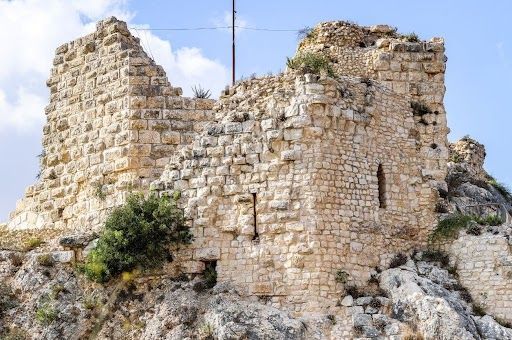
Israel has expanded its ground offensive deep into Lebanon, marking its most extensive incursion in over twenty-six years. Israeli forces captured the medieval Beaufort Castle, a 900-year-old fortress near Nabatieh, after days of heavy fighting and airstrikes against Hezbollah positions The Israeli Defense Forces (IDF) raised their flag over the fortress, with Defense Minister Israel Katz declaring that troops would remain there as part of a new “security zone.” Prime Minister Benjamin Netanyahu described the capture as a decisive shift in Israel’s campaign, ordering the military to “deepen and expand” its hold on areas previously under Hezbollah control.
The Beaufort Castle’s location, 700 meters above sea level and overlooking the Litani River, provides commanding views across southern Lebanon and northern Israel. Control of the site offers Israel significant tactical advantages, including observation and fire-control capabilities over Hezbollah’s logistical routes between southern Lebanon, the Bekaa Valley, and Beirut. Israeli forces advanced beyond the Litani River to the Zahrani River, issuing evacuation orders for residents in multiple villages, including Houmine al-Faouqa, Bnaafoul, and Jbaa, and later extending these orders northward. The IDF warned civilians to move at least 1,000 meters from targeted areas as operations intensified.
Lebanon’s Ministry of Public Health reported more than 3,400 deaths and over 10,000 injuries since March 2, when hostilities began following Hezbollah’s rocket attacks on Israel in retaliation for the killing of Iran’s Supreme Leader Ali Khamenei. Israeli forces now occupy approximately 2,000 square kilometers of Lebanese territory, nearly one-fifth of the country. The Lebanese government accused Israel of collective punishment and a scorched-earth policy, while Hezbollah continued to launch drones and missiles into northern Israel.
On June 1, Netanyahu ordered strikes on Beirut’s southern suburb of Dahiyeh, a Hezbollah stronghold, prompting mass civilian evacuations. Defense Minister Katz stated that there would be “no calm in Beirut” if Hezbollah continued attacks in the north. Iran warned it would retaliate against northern Israel if the Beirut strikes persisted. The United States intervened diplomatically, with President Donald Trump announcing that both Israel and Hezbollah had agreed to halt hostilities following his calls with Netanyahu and Hezbollah representatives. Trump said Israel had agreed not to send ground troops into Beirut, while Hezbollah would cease attacks.
Despite this announcement, fighting continued in southern Lebanon. Israeli strikes killed at least 12 people on June 1, including paramedics, while Hezbollah drone attacks killed one Israeli soldier and wounded three others. The Lebanese National News Agency reported additional casualties in Tyre and Nabatieh, including hospital staff injured in airstrikes.
International reactions were sharply critical of Israel’s escalation. French President Emmanuel Macron stated that nothing justified the deepening occupation of Lebanese territory and called for an emergency UN Security Council meeting. UK Foreign Secretary Yvette Cooper and German Foreign Minister Johann Wadephul urged restraint, warning that further escalation would worsen displacement and civilian suffering. Lebanese Prime Minister Nawaf Salam appealed for an immediate ceasefire and Israeli withdrawal.
Meanwhile, the United Nations Interim Force in Lebanon (UNIFIL) faced criticism for failing to prevent the invasion. Analysts questioned its effectiveness as Israel advanced beyond the Litani River, with both Israel and Hezbollah accusing the peacekeeping mission of bias. UNIFIL reported the highest number of ceasefire violations since April 17, when a US-brokered truce was announced. The mission’s mandate is set to expire at the end of 2026, raising concerns about a security vacuum in southern Lebanon.
Why it Matters
The deepening Israel-Lebanon conflict represents a critical inflection point in Middle Eastern stability, with implications extending far beyond the immediate battlefield. Israel’s seizure of Beaufort Castle and its advance beyond the Litani River signal a shift from limited border defense to a strategy of territorial control and deterrence. The operation’s scale and symbolism evoke Israel’s 1982 occupation, suggesting a potential reestablishment of a long-term security zone. This move undermines the April ceasefire and risks transforming southern Lebanon into a semi-permanent militarized buffer, destabilizing the Lebanese state and eroding the authority of its government.
The conflict’s escalation also threatens to entangle regional powers. Hezbollah’s involvement directly links the Lebanese front to the broader US-Israel-Iran confrontation. Iran’s warning of retaliation for Israeli strikes on Beirut underscores the risk of a multi-front war that could draw in Syria and Iraq-based militias. The United States’ mediation efforts, including President Trump’s announcement of a temporary halt to hostilities, highlight Washington’s dual challenge of supporting Israel’s security objectives while preventing a wider regional conflagration that could derail its negotiations with Tehran.
The humanitarian toll is severe. Over one million Lebanese have been displaced, and civilian infrastructure, including hospitals and schools, has been repeatedly targeted. The destruction of medical facilities in Tyre and Nabatieh demonstrates the erosion of international humanitarian norms. European leaders’ condemnation reflects growing concern that Israel’s campaign violates international law and risks long-term regional instability. France’s call for a UN Security Council meeting and Germany’s warnings about displacement signal a potential shift in Western tolerance for Israel’s military actions.
Strategically, the capture of Beaufort Castle provides Israel with a commanding surveillance position over southern Lebanon and northern Israel, enhancing its ability to monitor Hezbollah movements and disrupt supply lines from the Bekaa Valley. However, this tactical gain may come at the cost of strategic overreach. Israel’s deeper incursion could strengthen Hezbollah’s domestic legitimacy by reinforcing its narrative of resistance. The Lebanese government’s inability to control the conflict further weakens state institutions, potentially creating a governance vacuum that nonstate actors could exploit.
The weakening of UNIFIL’s credibility compounds these risks. The mission’s inability to prevent Israel’s advance or protect civilians exposes the limitations of international peacekeeping under asymmetric warfare conditions. With its mandate expiring at the end of 2026, the absence of a replacement mechanism could leave southern Lebanon without any stabilizing presence, increasing the likelihood of renewed hostilities.
The conflict also intersects with global energy and security dynamics. The simultaneous US-Iran negotiations over the Strait of Hormuz and the Lebanon front’s escalation illustrate how regional conflicts can disrupt broader diplomatic efforts. A prolonged Israeli occupation could provoke Iranian-backed attacks on maritime routes or energy infrastructure, amplifying global economic risks.
Ultimately, the Israel-Lebanon escalation demonstrates how localized military operations can rapidly evolve into regional crises. The combination of territorial expansion, civilian displacement, and diplomatic paralysis underscores the fragility of the Middle East’s security architecture. Without sustained international mediation and credible enforcement of ceasefire agreements, the conflict risks becoming a protracted confrontation that reshapes the balance of power across West Asia.
Stay Informed. Stay Ahead.