Israel Advances Legal and Administrative Control In the West Bank
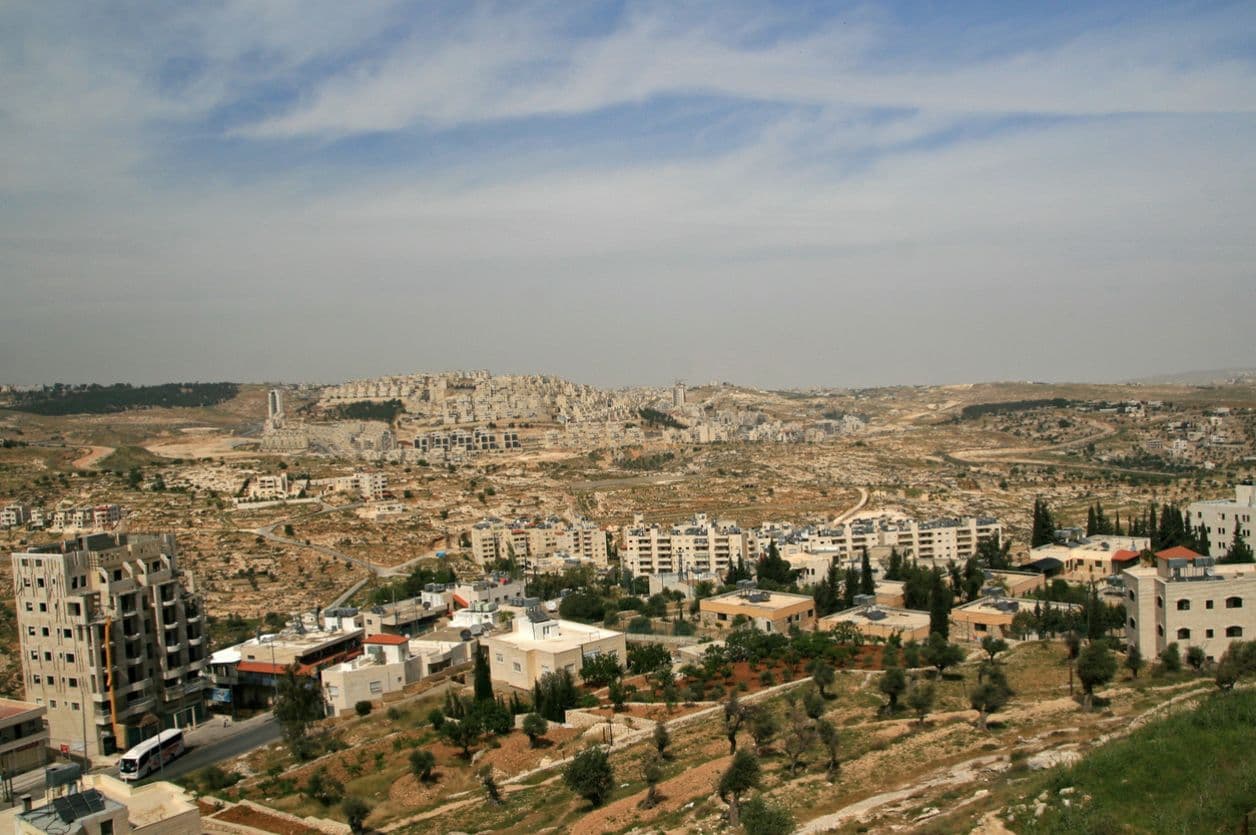
West Bank May 2025 Photo credit: iStockPhoto.com/Tomasz Dutkiewicz
Intelligence Summary
Israel’s security cabinet approved a package of measures late on Sunday that expands Israeli administrative, legal, and enforcement authority across the occupied West Bank. Palestinian officials and multiple international actors described the steps as de facto annexation and a breach of existing agreements. The measures were advanced by Finance Minister Bezalel Smotrich and Defence Minister Israel Katz, who presented them as a dramatic shift intended to remove long-standing legal barriers affecting settlers and to accelerate settlement development. Katz framed the policy as anchoring settlement as an inseparable part of government policy and as extending equal legal and civil rights to settlers, while Smotrich publicly linked the steps to preventing the creation of a Palestinian state.
A central component of the package changes land ownership and transaction rules in ways that Palestinian officials and analysts say will facilitate land acquisition by settlers. The cabinet approved cancelling a Jordanian-era prohibition on direct land sales in the West Bank to non-Arabs, and it also moved to declassify or lift secrecy on land registry records that had been restricted for decades, including secrecy described as dating back to the Ottoman period. The measures also repeal a legal requirement for a transaction permit to complete real estate purchases, reducing oversight mechanisms intended to prevent fraud. Palestinian concerns cited in reporting included increased pressure on individuals to sell, and heightened risks of forgery and deceit enabled by exposing ownership records and easing transfers. Palestinian documentation officials described the registry changes as creating an open market that could allow the targeting of specific landowners for coercion, including pressure and extortion.
The package also expands Israeli enforcement and administrative reach into areas that, under the Oslo Accords framework, are associated with Palestinian civil and in some cases security control. Reporting described authorization for Israeli forces to conduct enforcement actions and demolitions in Areas A and B, including through regulations tied to heritage, archaeological, antiquities, and environmental mechanisms. The measures further shift planning, licensing, and construction authority in Hebron from the Palestinian municipality to Israeli authorities, including the Israeli Civil Administration and the army, and include establishing a separate local or municipal entity for settlers in Hebron. Additional administrative changes cited include moving oversight of Rachel’s Tomb in Bethlehem from municipal jurisdiction to direct Israeli administration for maintenance and services.
Religious sites in Hebron featured prominently in the announced changes and related disputes. The Ibrahimi Mosque, also known as the Cave of the Patriarchs, was described as a site revered by Jews, Muslims, and Christians, and reporting linked the new measures to transferring building licensing and planning rights in sensitive areas around the site to Israeli authorities. Palestinian officials warned against violations affecting Islamic and Christian holy sites, and reporting noted that in January Israel barred Palestinian directors of the Ibrahimi Mosque and seized planning rights over part of the site.
Palestinian President Mahmoud Abbas described the measures as dangerous and as an open attempt to legalize settlement expansion, land confiscation, and demolition of Palestinian properties. He called for the United States and the United Nations Security Council to intervene. Rawhi Fattouh, chairman of the Palestinian National Council, characterized the decisions as racist and dangerous, while multiple Palestinian factions, including Hamas and the Popular Front for the Liberation of Palestine, condemned the move. Israeli settlement representatives welcomed the decisions, with the Yesha Council describing them as entrenching Israeli sovereignty in practice, while an Israeli anti-occupation monitoring group warned the steps risk toppling the Palestinian Authority and breaking barriers to massive land theft across the West Bank.
International reactions included a statement by the foreign ministers of Egypt, Jordan, the United Arab Emirates, Indonesia, Pakistan, Turkey, Saudi Arabia, and Qatar condemning the measures as illegal steps aimed at imposing unlawful sovereignty and accelerating annexation and displacement. The United Kingdom stated it strongly condemned the move and called on Israel to reverse it, describing unilateral attempts to alter the geographic or demographic make-up of Palestine as unacceptable and inconsistent with international law. A U.S. official reiterated U.S. opposition to annexation and linked West Bank stability to Israel’s security and the administration’s stated goal of achieving peace in the region. The measures were announced three days before a planned meeting in Washington between Israeli Prime Minister Benjamin Netanyahu and U.S. President Donald Trump.
Reporting also described immediate on-the-ground violence and enforcement activity following the cabinet’s ratification, including a reported settler raid on the Al-Rashaydeh Mosque east of Bethlehem with theft and damage, the beating of an 80-year-old disabled Palestinian man in Bani Naim east of Hebron, demolition notices in Berin east of Hebron, and demolitions in Bedouin communities in the northern Jordan Valley.
Why it Matters
The measures approved by Israel’s security cabinet matter because they shift the West Bank from a contested occupation framework toward a more formalized, state-like administrative integration, using property law, registries, permitting, and municipal governance as instruments of control rather than relying only on security operations. The combination of cancelling restrictions on land sales, declassifying land registries, and removing transaction-permit requirements is significant because it targets the mechanics of ownership transfer and dispute resolution, which can produce durable changes in who holds land and who can build, even absent a declared annexation. In intelligence terms, land registries are a high-value dataset, and opening them can enable more precise targeting of individuals and parcels for acquisition strategies, coercion, or legal contestation, which Palestinian documentation officials explicitly warned could occur through pressure and extortion.
The extension of enforcement and demolition authority into Areas A and B is geopolitically consequential because it erodes the functional boundaries created by the Oslo framework and increases the likelihood of direct friction between Israeli forces and Palestinian communities in zones previously treated as under Palestinian civil administration. Even if framed through antiquities, environmental, or heritage mechanisms, the practical effect described in reporting is an expanded legal basis for confiscation and demolition, which can accelerate displacement dynamics and intensify local instability. The reported spike in settler violence and enforcement actions immediately after ratification underscores how policy signals can translate into rapid changes in behavior on the ground, especially when settlers interpret decisions as a green light for impunity.
The Hebron-related governance changes matter because they combine security, municipal authority, and religious symbolism in one of the West Bank’s most sensitive flashpoints. Transferring planning and construction powers away from the Palestinian municipality and creating a separate settler municipal entity institutionalizes parallel governance, which can harden segregation and complicate any future negotiated arrangements. The Ibrahimi Mosque and adjacent areas are not only religious sites but also political triggers. Reports linked the measures to earlier January actions affecting Palestinian directors and planning rights, suggesting a pattern of administrative takeover that can catalyze broader mobilization.
Diplomatically, the breadth of condemnation from eight Muslim-majority states, alongside the UK’s formal objection and a U.S. reiteration of opposition to annexation, indicates widening strain between Israel and multiple external stakeholders, including partners engaged in regional diplomacy. The fact that the measures were announced shortly before Netanyahu’s meeting with Trump increases the likelihood that West Bank policy becomes directly entangled with U.S.-Israel political coordination; it also raises the stakes for Washington’s ability to influence Israeli actions when Israeli ministers publicly frame the policy as designed to foreclose Palestinian statehood.
Finally, the development has implications for international law and multilateral pressure pathways because it is being explicitly framed by Palestinian officials and multiple states as illegal annexation and displacement. If the measures continue to be implemented, the likely near-term effect is heightened instability driven by land disputes, demolitions, and settler-Palestinian violence, while the medium-term effect is a narrowing of diplomatic space by creating administrative facts that are difficult to reverse.
Key Actors
- Israel (security cabinet, Finance Ministry, Defence Ministry, West Bank military command)
- Palestinian Authority and Palestinian leadership (Mahmoud Abbas)
- Israeli settler movement and settlement bodies (Yesha Council)
- United States (White House; US President Donald Trump)
- United Kingdom (government and Foreign Secretary)
- Eight Muslim-majority states’ foreign ministries (Saudi Arabia, UAE, Egypt, Jordan, Turkey, Qatar, Indonesia, Pakistan)
- United Nations (UN Security Council referenced by Palestinian leadership)
Stay Informed. Stay Ahead.