Transatlantic Tensions Surface During King Charles III U.S. Visit
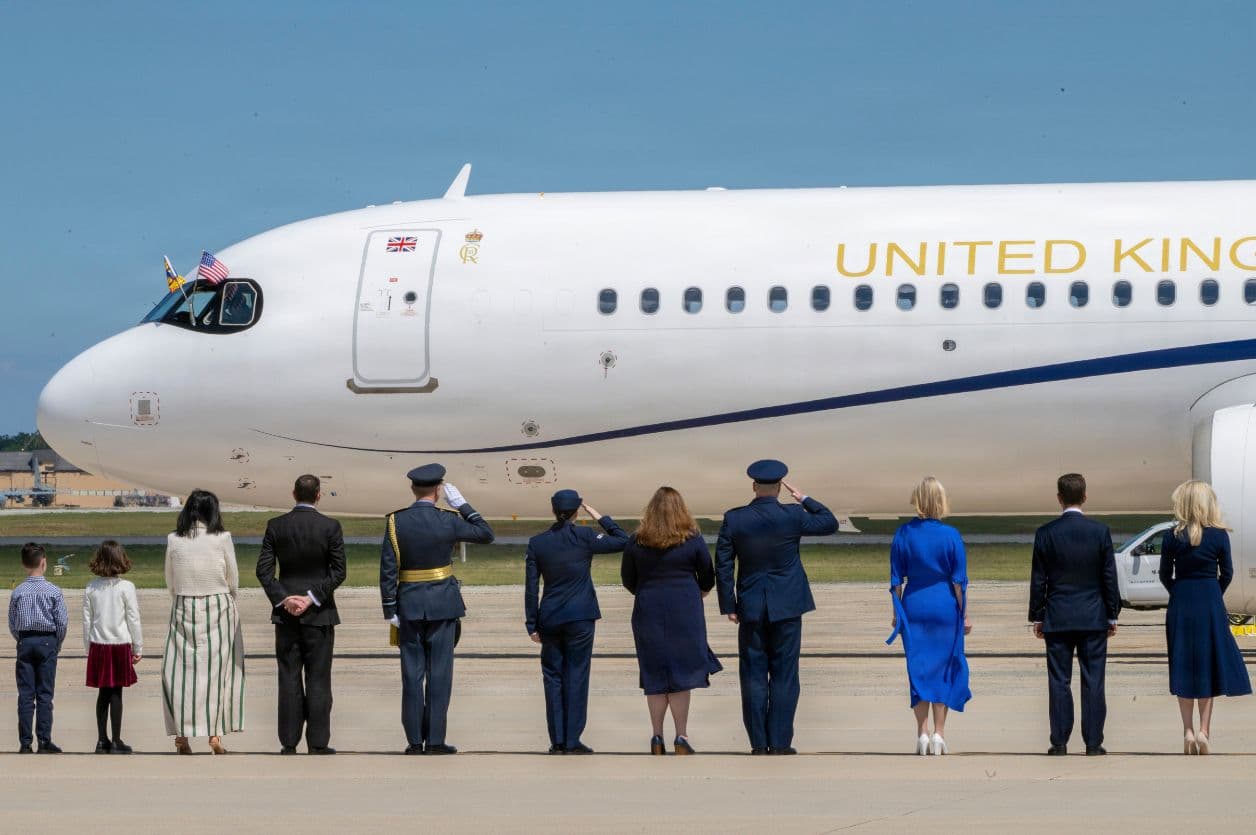
Photo credit: Airman 1st Class Joshua Kaentong 316th Wing
Intelligence Summary
King Charles III began a four-day visit to the United States on Monday, April 27, 2026, amid heightened strain in transatlantic relations linked to the U.S.-Israeli war on Iran and associated disputes over allied support. The United Kingdom’s ambassador to the United States, Christian Turner, framed the visit as an effort to renew and revitalize the bilateral relationship. The visit was also positioned to mark the United States’ 250th anniversary and to underscore the U.S.-U.K. special relationship.
Security became an immediate operational concern for the visit after a shooting at a Washington dinner attended by U.S. President Donald Trump on Saturday, April 25, 2026, triggered a last-minute security review. The visit proceeded in Washington, D.C., with heightened visibility around the White House and ceremonial symbolism, including U.S. and U.K. flags displayed ahead of the arrival.
The immediate political friction centered on the Iran conflict and allied military cooperation. President Donald Trump publicly criticized U.K. Prime Minister Keir Starmer over Starmer’s stance on the U.S.-Israeli war on Iran. Trump accused Starmer of not assisting Washington in the fight against Iran and of not helping the United States reopen the Strait of Hormuz. Early in the conflict, Starmer initially refused to allow U.S. forces to use U.K. military bases for strikes on Iran, and Trump subsequently compared Starmer unfavorably to Winston Churchill.
In parallel, public criticism of Washington’s Iran approach emerged from within Europe’s senior leadership. German Chancellor Friedrich Merz stated on Monday that Iran’s leadership was in the process of humiliating the United States in the ongoing conflict. Merz assessed that Washington lacked a clear strategy and questioned what kind of exit the United States might pursue from the conflict. Merz linked the Middle East situation to negative economic effects on Germany, stating that the war against Iran was directly affecting German economic output and costing Germany significant money.
Merz also addressed a specific European operational offer connected to maritime security and energy flows. Germany maintained an offer to deploy minesweepers to help reopen the Strait of Hormuz, a route through which a large portion of global oil supplies pass, while setting an explicit prerequisite that hostilities must first end. Merz used the same intervention to argue for a stronger European role, emphasizing that the European Union has 100 million more inhabitants than the United States and that greater EU unity could make it at least as strong as the United States.
The broader context for the current strain was framed through a historical timeline of U.S.-U.K. alignment and periodic divergence across major crises. Examples included close coordination during World War II, U.S. opposition to the 1956 Suez invasion through UN action and financial pressure, initial U.S. reluctance to support the U.K. in the 1982 Falklands War before providing logistical support, and disputes over Northern Ireland diplomacy in 1994 that later contributed to U.S. involvement in talks leading to the 1998 Good Friday Agreement. Additional examples included differences over the scope of intervention during the 1998–1999 Kosovo War, close U.S.-U.K. coordination in the 2003 Iraq invasion with British troop and intelligence contributions, and later U.S. criticism of U.K. follow-through after the 2011 Libya intervention.
Why it Matters
This episode illustrates a dual stress test for the transatlantic alliance: operational burden-sharing during an active Middle East war and political cohesion under public dispute. The King’s visit functions as a high-visibility instrument of statecraft, but it cannot substitute for alignment on concrete military access, basing permissions, and shared objectives. The dispute over whether U.S. forces could use U.K. bases for strikes on Iran shows how quickly tactical decisions can become strategic signals. When such decisions are contested publicly, they shape perceptions of alliance reliability well beyond the immediate battlefield.
The Strait of Hormuz dimension elevates the stakes from a regional war to a global economic and energy-security problem. The German offer to deploy minesweepers, conditioned on an end to hostilities, highlights a central dilemma for European governments. They face pressure to contribute to maritime security and the restoration of commercial flows, yet they also seek to avoid being pulled into escalation dynamics. Minesweeping is not a symbolic gesture. It is a specialized military task that implies risk acceptance, rules of engagement, and coordination with other naval forces. Conditioning that offer on a cease in hostilities signals caution and a preference for de-escalation sequencing, which may diverge from Washington’s urgency to reopen the route under wartime conditions.
The public critique by a sitting German chancellor of U.S. strategy in the Iran conflict matters because it normalizes open intra-alliance dissent at senior levels. Such dissent can constrain collective action by making it harder to agree on shared end states, timelines, and acceptable costs. It also affects deterrence signaling. If adversaries perceive disunity, they may calculate that allied responses will be slower, narrower, or politically reversible. Even when European leaders remain committed to NATO, visible disagreement over strategy and exit planning can weaken the credibility of coordinated pressure.
The economic framing is equally consequential. By tying the Iran war to direct impacts on German economic output, European leaders implicitly broaden the definition of national security to include energy price shocks, supply disruptions, and industrial competitiveness. That framing can drive domestic political constraints on foreign policy, including limits on military deployments, reluctance to expand sanctions, or demands for faster diplomatic off-ramps. It also increases the likelihood that European capitals will pursue parallel diplomatic tracks that prioritize economic stabilization, even if Washington prioritizes coercive leverage.
The historical timeline of U.S.-U.K. relations underscores that the relationship has repeatedly oscillated between deep military integration and sharp political disagreement. The current moment resembles earlier episodes where Washington used leverage or withheld support, and where London faced hard choices between autonomy and alignment. The lesson for alliance managers is that institutional ties and shared history do not prevent divergence when threat perceptions and risk tolerance differ. The King’s visit may reduce rhetorical temperature and preserve channels, but the underlying driver is policy alignment on Iran, basing, and maritime security.
Finally, the security review triggered by a shooting at a Washington event attended by the U.S. president highlights how domestic security incidents can intersect with diplomacy. High-profile visits concentrate symbolic targets and operational vulnerabilities. When combined with wartime tensions and alliance disputes, even isolated security events can amplify perceptions of instability and complicate diplomatic efforts.
Stay Informed. Stay Ahead.