
Korean Peninsula Tensions Rise After Missile Tests
Intelligence Summary
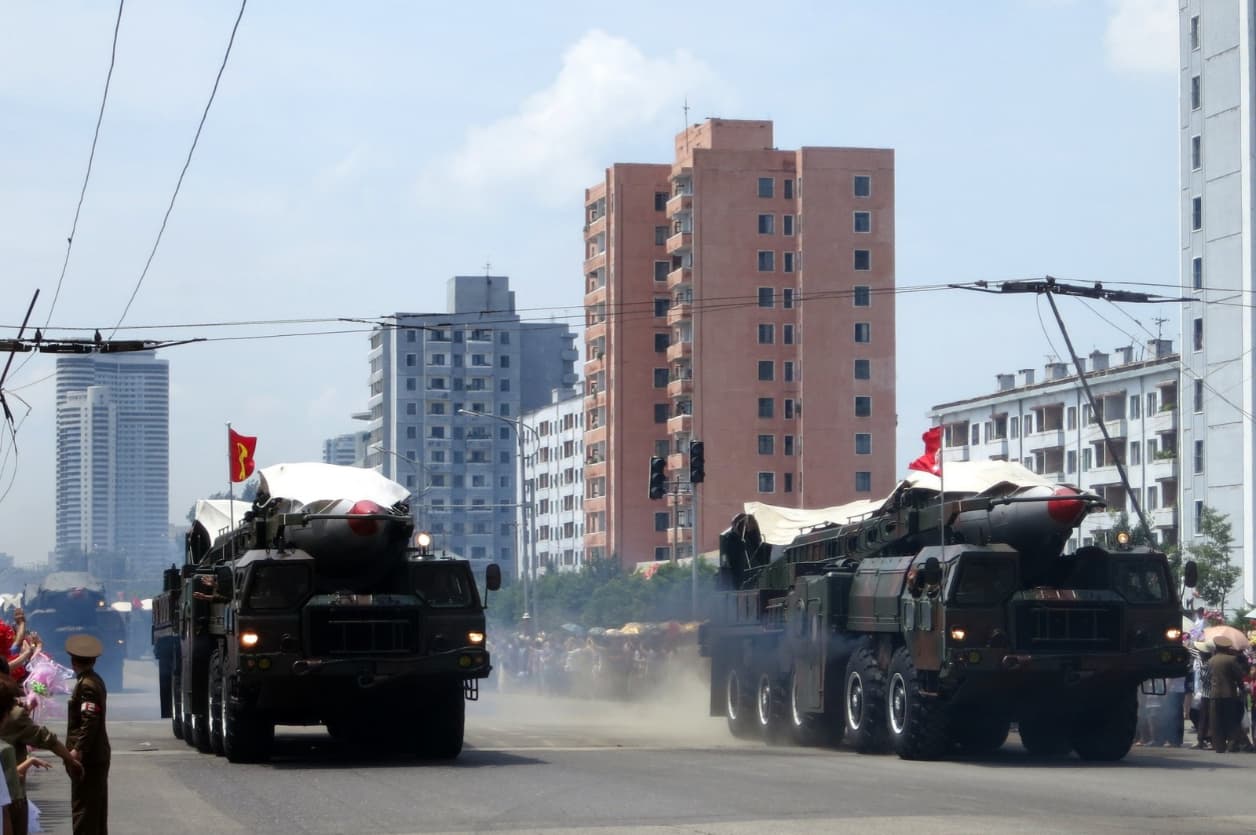
North Korea fired multiple ballistic missiles from the Pyongyang area toward waters off its east coast on October 12. South Korea’s Joint Chiefs of Staff said the launches involved various missile types and that one traveled more than 900 kilometers before falling into the sea. Japan detected at least two launches, 17 minutes apart, which landed outside its exclusive economic zone. Japanese Deputy Defense Minister Takashi Koyari said the missiles traveled approximately 220 kilometers and more than 910 kilometers respectively. No damage to aircraft or vessels was reported.
The flight path of the longer-range missile remains uncertain. Koyari described it as irregular and said it may have been a hypersonic weapon, but neither Japanese nor South Korean officials publicly confirmed its type. The launches followed North Korea’s October 3 test of what it described as a hypersonic intermediate-range missile intended to evade missile defenses in South Korea and Japan. Monday’s event was part of an active testing cycle, with North Korea conducting weapons tests on more than 10 occasions during the year, including four in October.
South Korea’s military assessed the launches as a demonstration of missile capabilities and a likely response to Seoul’s recent test of a domestically developed hypersonic weapon. President Lee Jae Myung publicly oversaw that test, which his office said would eventually improve South Korea’s capacity to strike key targets without warning in a Korean Peninsula conflict. Seoul called the North’s ballistic launches violations of UN Security Council resolutions and demanded their immediate cessation. Japan protested through diplomatic channels in Beijing.
The launches occurred amid a prolonged diplomatic freeze and heightened border friction. Three South Korean soldiers were injured last month by landmines near the Demilitarized Zone. South Korea and the United Nations Command concluded that North Korean forces had planted the devices, while Pyongyang denied responsibility and accused Seoul of provocation. North Korea continues to reject US and South Korean offers to restart talks, maintaining that Washington must abandon what it calls a hostile policy and drop denuclearization demands as a precondition for negotiations.
Why It Matters
The immediate strategic significance lies less in the number of missiles fired than in the increasingly reciprocal nature of advanced weapons demonstrations on the peninsula. South Korea’s public hypersonic test gave Pyongyang an incentive to display its own missile capabilities, while North Korea’s response gives Seoul grounds to emphasize its conventional deterrent programs. This interaction can sustain a cycle in which each side treats the other’s test activity as justification for further testing, even without a declared change in military posture or policy.
The focus on hypersonic systems raises the military stakes because both governments present such weapons as capable of complicating missile defenses or enabling surprise strikes. Japan’s assessment that one North Korean missile followed an irregular trajectory suggests that Pyongyang may be testing capabilities intended to challenge existing warning and interception assumptions, although the missile type was not confirmed. South Korea’s stated emphasis on striking key targets by surprise points to a parallel effort to improve conventional strike options. If these programs advance as their governments describe, crisis decision-making could become more compressed and more dependent on rapid assessments of ambiguous launches.
The episode also reinforces the limits of current diplomacy. Seoul has sought to facilitate renewed engagement between Pyongyang and Washington, but the missile launches followed South Korean and US overtures that North Korea has rejected. The landmine dispute compounds this problem by adding a proximate military grievance to the broader nuclear and missile impasse. Neither side has shown a publicly accepted basis for de-escalation. South Korea frames the launches as unlawful and destabilizing, while North Korea continues to condition talks on changes in US policy and the removal of denuclearization demands.
For Japan, the event demonstrates that even launches landing outside its exclusive economic zone can generate operational and political pressure when trajectories are uncertain. Tokyo’s protest and its public identification of an irregular flight path indicate concern about missile performance as well as destination. The most useful indicators of a further deterioration would be additional launches from Pyongyang, confirmation that North Korea tested a hypersonic system, further South Korean tests or deployments, and whether the landmine dispute produces additional military incidents near the Demilitarized Zone.
Stay Informed. Stay Ahead.