Leadership Shifts Reshape Four Key Theaters
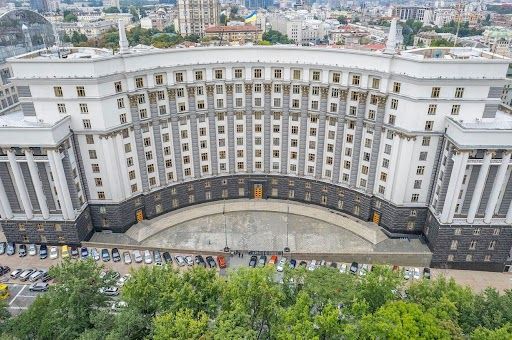
Kyiv, September 2021, Photo credit: KyivMax
Intelligence Summary
A series of leadership transitions and deaths have reshaped political dynamics across several key states, each with implications for regional stability and international alignments. In the United States, Senator Lindsey Graham, aged 71, died suddenly after a brief illness according to major media organizations in the United States. Graham, a long‑time Republican from South Carolina and a close ally of President Donald Trump, had been one of Washington’s most outspoken advocates of military interventionism. His death removed a major congressional voice supporting aggressive U.S. foreign policy toward Iran, Russia, and other adversaries. Graham had recently met Ukrainian President Volodymyr Zelenskyy in Kyiv on July 11 to reaffirm U.S. backing for Ukraine’s defense against Russia, marking at least his tenth visit to the country. He was also known for his calls for regime change in Iran and for encouraging Gulf states such as Saudi Arabia and the United Arab Emirates to join U.S.‑Israeli military operations against Tehran.
Graham’s death came amid ongoing U.S.‑Iran hostilities and a volatile Middle East environment. He had previously claimed to have coordinated with Israeli intelligence officials, including the Mossad, and to have advised Prime Minister Benjamin Netanyahu on lobbying the Trump administration for joint military action against Iran. His advocacy for Israel extended to controversial statements endorsing the use of overwhelming force in Gaza and defending the 2018 U.S. embassy move to Jerusalem. Israel’s Defense Ministry publicly expressed sorrow at his passing, describing him as a steadfast supporter during Israel’s wartime crises.
In Ukraine, Prime Minister Yulia Svyrydenko resigned on July 12 as President Zelenskyy announced a broader government reshuffle. Svyrydenko, who had served since July 2025 after previously leading the Economy Ministry, stated that she remained ready to serve in a new capacity and had discussed next steps with the president. Zelenskyy said the reshuffle was part of a shift in political strategy and that each foreign‑policy priority would be assigned to a senior official with relevant experience. The president also signaled forthcoming changes in law‑enforcement leadership. The resignation coincided with intensified cross‑border hostilities: Ukrainian drone strikes targeted Russia’s Syzran Oil Refinery in the Samara region, damaging industrial facilities and injuring civilians, while Russian forces retaliated with missile attacks on Odesa and Chornomorsk.
In Syria, the newly established transitional parliament convened its first session in Damascus on July 12 under President Ahmed al‑Sharaa, who had led the rebel coalition that overthrew Bashar al‑Assad in December 2024. The 210‑member People’s Assembly, composed of two‑thirds elected representatives and one‑third presidential appointees, was tasked with drafting a new constitution and laying the groundwork for democratic governance after fourteen years of civil war that killed more than half a million people. Al‑Sharaa urged lawmakers to prioritize national unity, economic recovery, and institutional reform. The United Nations’ Deputy Special Envoy Claudio Cordone described the session as a milestone in Syria’s political transition and pledged international support for the process.
Meanwhile, Qatar announced the death of former Emir Sheikh Hamad bin Khalifa Al Thani at age 74 on July 12. Sheikh Hamad, who ruled from 1995 to 2013, was widely credited with transforming Qatar into a major global energy and diplomatic actor. Condolences poured in from across the world, including from the Arab League, the United Nations, and leaders of Egypt, India, Italy, Turkey, and the United Kingdom. Regional leaders such as Egypt’s President Abdel Fattah el‑Sisi and Turkey’s President Recep Tayyip Erdogan emphasized his role in promoting Arab unity and strengthening bilateral partnerships. Hamas and Lebanon’s Prime Minister Nawaf Salam highlighted his support for the Palestinian cause, while UN Secretary‑General Antonio Guterres called him a transformative leader.
Together, these developments reflected a moment of leadership flux across multiple theaters of strategic importance. The United States lost a key foreign‑policy hawk; Ukraine entered a new phase of political reorganization amid ongoing war; Syria advanced its post‑conflict transition; and Qatar faced a generational shift in its ruling legacy. Each event carried implications for regional alignments, energy diplomacy, and the balance of influence among major powers.
Why it Matters
The convergence of leadership changes in the United States, Ukraine, Syria, and Qatar in July 2026 underscores how political transitions can reshape the strategic environment across interconnected regions. Senator Lindsey Graham’s death removes one of Washington’s most consistent advocates of military assertiveness. His influence extended beyond domestic politics: he was instrumental in sustaining congressional support for Ukraine’s defense funding and in reinforcing U.S.‑Israeli coordination against Iran. Without his lobbying, the U.S. Senate may experience a recalibration of priorities, potentially softening the legislative drive for expanded military engagement in the Middle East. This could affect deterrence dynamics with Iran and alter the tempo of U.S. support for Israel’s ongoing operations.
Graham’s passing also coincides with a period of heightened U.S.‑Iran confrontation and global energy insecurity. His calls for Gulf states to join the fight against Tehran reflected a broader U.S. strategy of burden‑sharing among regional partners. The absence of his voice may reduce congressional pressure on Saudi Arabia and the UAE to take direct military action, potentially easing regional escalation. His death therefore introduces uncertainty into the alignment between Washington and its Middle Eastern allies at a time when the Strait of Hormuz remains contested and energy markets volatile.
In Ukraine, the resignation of Prime Minister Svyrydenko signals internal political adaptation and the strain of prolonged conflict. Her departure, framed as part of a strategic realignment, suggests Kyiv’s intent to consolidate foreign‑policy management and maintain Western engagement despite donor fatigue. The timing of the reshuffle, coinciding with intensified drone warfare against Russian energy infrastructure, highlights the intersection of domestic governance and military strategy. Ukraine’s attacks on refineries deep inside Russia demonstrate its continued reliance on asymmetric tactics to offset battlefield disadvantages, while Moscow’s retaliatory strikes on Odesa emphasize the enduring vulnerability of Ukraine’s export corridors. Leadership continuity in Kyiv will be critical to sustaining coordination with Western partners and managing the economic consequences of the war.
Syria’s parliamentary inauguration under President al‑Sharaa represents a fragile and symbolically important step toward post‑conflict normalization. The new assembly’s mandate to draft a constitution and rebuild institutions could open limited space for international engagement, particularly from the United Nations and regional actors seeking stability along the Levantine corridor. However, the country’s economic devastation and sectarian divisions remain severe, and the balance between reform and authoritarian continuity will determine whether Syria re‑enters the regional diplomatic mainstream or remains a locus of instability.
The death of Qatar’s former Emir Sheikh Hamad bin Khalifa Al Thani closes a chapter in Gulf leadership that shaped the region’s modern energy and foreign‑policy architecture. His tenure established Qatar as a global LNG powerhouse and a mediator in regional conflicts. The extensive international condolences, from Western capitals, Arab neighbors, and multilateral organizations, reflect Qatar’s entrenched diplomatic network and its role as a bridge between Western and Islamic worlds. The transition reinforces the continuity of Emir Tamim bin Hamad Al Thani’s leadership but also invites renewed scrutiny of Qatar’s foreign‑policy orientation amid regional polarization over the U.S.‑Iran conflict.
Collectively, these leadership shifts illustrate how personal political trajectories intersect with structural geopolitical trends. The U.S. loses a hawkish policymaker at a time of contested deterrence; Ukraine recalibrates its wartime governance; Syria attempts institutional reconstruction; and Qatar experiences generational consolidation. Each case affects geopolitical competition: Washington’s internal dynamics influence NATO cohesion; Kyiv’s stability shapes European security; Damascus’s transition affects Russian and Iranian leverage; and Doha’s continuity impacts Gulf energy diplomacy. For analysts, these developments highlight the importance of tracking leadership succession as a variable in strategic forecasting, particularly when multiple transitions occur simultaneously across interlinked theaters.
Stay Informed. Stay Ahead.