Moscow and Beijing Confront Middle East Escalation
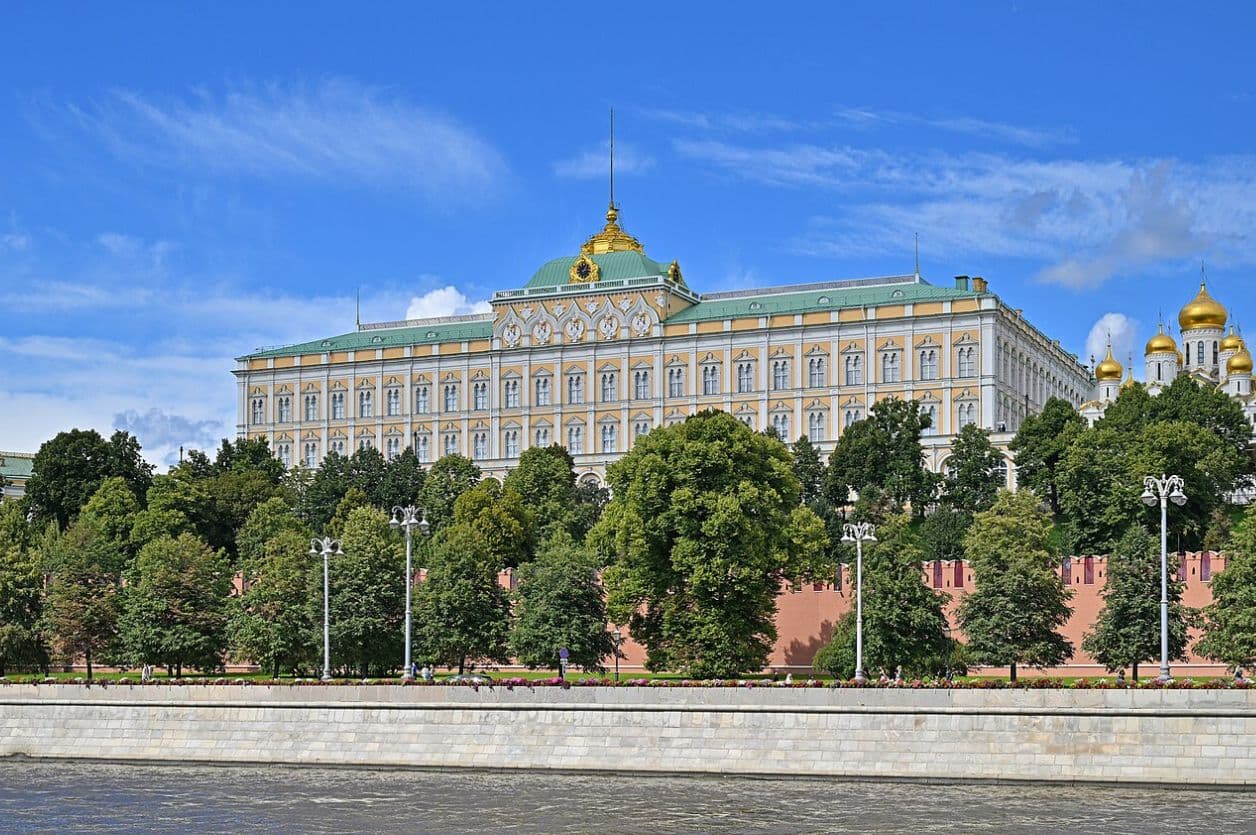
Moscow. Grand Kremlin Palace, Photo credit: Yuri D.K.
Intelligence Summary
Russia treated the US–Israeli strikes on Iran and the reported killing of Iran’s Supreme Leader Ayatollah Ali Khamenei as a major escalation with implications for sovereignty norms and regime security. Russian commentary described discomfort in Moscow that leadership decapitation tactics used against Iran could be attempted against Russia despite its nuclear arsenal. Russian strategic thinking was framed through the precedent of the 2011 Libya intervention and the killing of Muammar Gaddafi, which was presented as a formative event shaping President Vladimir Putin’s threat perceptions and later domestic crackdowns.
Russia’s near-term posture combined diplomatic outreach to Gulf monarchies with a stated preference for de-escalation and a return to political processes. The Kremlin stated that Putin held telephone calls on Monday with UAE President Sheikh Mohamed bin Zayed Al Nahyan, Qatar’s Emir Tamim bin Hamad Al Thani, Bahrain’s King Hamad bin Isa Al Khalifa in his capacity as chair of the Gulf Cooperation Council, and later Saudi Crown Prince Mohammed bin Salman Al Saud. The call readouts emphasized an immediate ceasefire and a return to political and diplomatic tracks, while also highlighting risks of conflict expansion and involvement of additional states. The UAE leader emphasized that Iranian retaliatory strikes had affected the UAE with damage and threats to civilians, and stressed UAE territory was not being used as a staging ground for attacks on Iran. Putin expressed readiness to convey UAE concerns to Tehran and to provide possible assistance to stabilize the situation. The Saudi Crown Prince indicated Russia could play a stabilizing role given its relations with Iran and Gulf states.
Multiple constraints on Russian support for Iran were described, including limited capacity to materially assist and an informal nonattack understanding with Israel, alongside Israel’s refusal to supply key weapons systems to Ukraine or join anti-Russian sanctions. Israel’s non-participation in Western sanctions was described as enabling it to function as a safe haven for members of the Russian oligarchy with close links to the country. Russia’s interest in maintaining working relations with the Trump administration was described as another factor discouraging overt alignment with Tehran.
China publicly called for de-escalation and diplomacy while linking the conflict to sovereignty principles and energy security exposure. On March 2, 2026, Chinese Foreign Ministry spokeswoman Mao Ning called for an immediate cessation of military operations and dialogue to prevent spillover as the conflict entered a third day. She stated one Chinese citizen had been killed in Tehran, and said the foreign ministry instructed the Chinese embassy in Iran to assist the individual involved and the family. Ning also said that China was not informed in advance about US military action, and said Beijing and Moscow urged the UN Security Council to hold an emergency meeting. More than 3,000 Chinese nationals had left Iran as of March 2, and referenced prior warnings against travel to Iran due to the security situation.
Chinese officials condemned the killing of Khamenei as a serious violation of Iran’s sovereignty and security and as inconsistent with UN Charter principles, and warned against major powers attacking other countries based on military superiority. Chinese Foreign Minister Wang Yi raised the issue in a Sunday phone call with Russian Foreign Minister Sergey Lavrov, describing leadership killing and incitement to regime change as unacceptable. China’s energy exposure was described in terms of Hormuz disruption and Iranian oil flows, including estimates that up to 90 percent of Iranian oil production is exported to China via third countries. Since April 2025, Iranian oil exports have been settled in renminbi due to Iran’s exclusion from SWIFT. Commercial traffic through the Strait of Hormuz was described as virtually halted since the strikes began over the weekend, with the strait carrying about 20 million barrels per day, around 20 percent of global oil consumption, and around half of that going to China. China’s longer-term ties with Iran were also framed through Iran’s membership in the Shanghai Cooperation Organization since 2023 and BRICS+ since 2024.
Separately, Russian battlefield momentum in Ukraine was described as continuing across multiple axes while global attention focused on the Middle East, including reported advances in Kharkiv, Slovyansk-area fighting around Krasnyi Lyman, movement in the Pokrovsk direction, and advances in Sumy with reported gains up to 600 meters in a day. The same account linked the broader context to European energy politics, citing Slovak Prime Minister Robert Fico’s stated intent to meet European Commission President Ursula von der Leyen regarding the Druzhba pipeline situation and Kyiv offering March 6 or 9 dates for talks in Ukraine.
Why it Matters
This development shows how a major Middle East war can rapidly reshape global and regional competition without any formal change in alliances. Russia and China both used sovereignty and international law language, but their operational priorities diverged. Moscow’s immediate focus was crisis management with Gulf leaders who host major US bases, while preserving room to maneuver with Israel and Washington. Beijing’s focus was de-escalation messaging paired with urgent risk management for citizens and energy flows.
For Russia, the diplomatic phone campaign with the UAE, Qatar, Bahrain, and Saudi Arabia signals a bid to position itself as a necessary interlocutor across rival camps. That posture can generate leverage even if Russia provides no material support to Iran. It also helps Moscow protect relationships with Gulf states that are directly exposed to Iranian retaliation and to the regional economic shock. The UAE’s emphasis that its territory was not used as a staging ground highlights a key escalation risk: Gulf governments may be struck regardless of their declared neutrality if US basing and regional air defense operations are perceived as enabling attacks. Russia’s offer to convey concerns to Tehran suggests an attempt to insert itself into deconfliction channels that could reduce spillover and increase Moscow’s diplomatic relevance.
Russia’s constraints are equally instructive for students of alliance politics. The described informal understanding with Israel, Israel’s stance on sanctions, and the desire not to disrupt ties with the Trump administration illustrate how secondary relationships can cap escalation choices. Even if Moscow benefits from higher oil and gas prices and from US munitions being diverted away from Ukraine, overt support to Tehran could impose costs that outweigh those gains. This is a classic example of opportunistic neutrality: extracting strategic advantage from an adversary’s distraction while avoiding commitments that trigger countervailing pressure.
China’s position highlights a different vulnerability profile. Beijing’s public condemnation of leadership killing and emphasis on UN Charter principles supports its broader narrative against unilateral force. However, the same crisis exposes China’s dependence on Gulf energy and on a maritime chokepoint it does not control. The described near-halt in commercial traffic through Hormuz and the scale of oil volumes involved translate quickly into macroeconomic risk. China’s evacuation figures and the reported death of a Chinese citizen in Tehran show that overseas citizen protection becomes a real-time driver of diplomacy, not a secondary concern.
The financial and sanctions details matter because they show how war stress-tests alternative economic infrastructure. Settlement of Iranian oil in renminbi due to SWIFT exclusion indicates a sanctions-adaptation pathway that can deepen asymmetric dependence. In a prolonged conflict, a weakened Iran could become more reliant on Chinese purchasing, logistics, and payment channels, increasing Beijing’s leverage. At the same time, a collapse of the Iranian state or a major reorientation of Tehran’s external alignment would threaten China’s energy access and connectivity ambitions tied to overland corridors.
The Ukraine linkage underscores the global opportunity costs created by simultaneous crises. The described Russian advances across multiple Ukrainian sectors, paired with European disputes over the Druzhba pipeline, illustrate how attention and political bandwidth can be reallocated. Even if the battlefield claims are contested, the strategic logic is clear: a Middle East war can dilute European unity, complicate energy politics, and reduce the coherence of support for Ukraine. That dynamic is a central mechanism of great-power competition: forcing rivals to triage commitments across theaters.
Overall, this crisis demonstrates how major wars create diplomatic markets. Russia seeks mediator status and strategic relief in Europe. China seeks stability to protect energy and reputation, while using legal principles to contest US legitimacy. Both are maneuvering for advantage under severe uncertainty.
Key Actors
- Russia
- China
- Iran
- Gulf Cooperation Council states (UAE, Qatar, Bahrain, Saudi Arabia)
- United States
- Israel
Stay Informed. Stay Ahead.