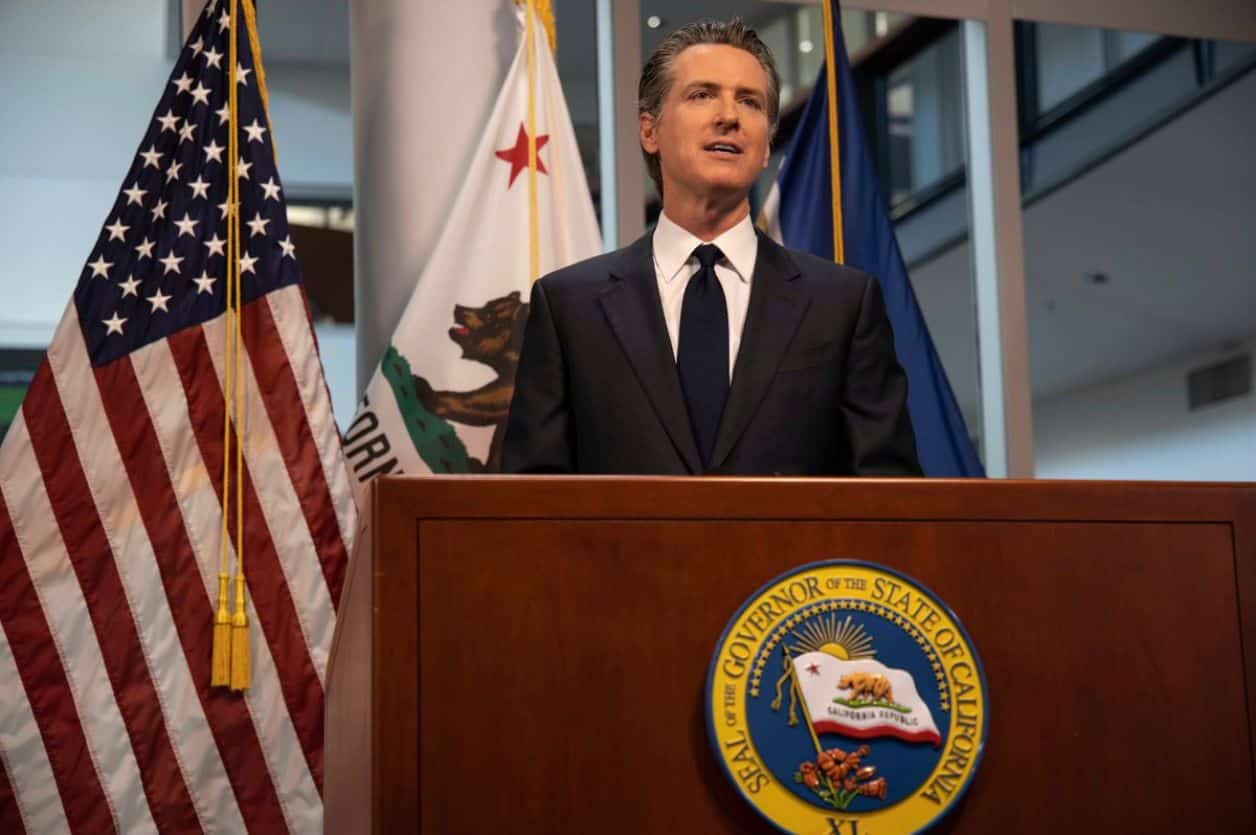
On June 15, 2026, California Governor Gavin Newsom publicly stated that the United States Department of Justice had opened an investigation into him and his wife, Jennifer Siebel Newsom, which he described as politically motivated and directed by President Donald Trump. Newsom, a Democrat and prominent critic of the president, said that federal agents had contacted his friends, family members, and former employees in recent days, seeking interviews and records as part of the inquiry. He alleged that the investigation was an attempt to find wrongdoing where none existed and that it was retaliation for his potential candidacy in the 2028 presidential election.
The Department of Justice, led by Attorney General Todd Blanche, did not confirm or deny the existence of the investigation. Newsom claimed that the department was abusing the grand jury process and that the probe extended to his wife’s nonprofit organization, which promotes women’s equality. He further accused the administration of using federal law enforcement to target political opponents, citing previous investigations into New York Attorney General Letitia James, former FBI Director James Comey, Senator Adam Schiff, and Minnesota Governor Tim Walz, all of whom had publicly opposed Trump.
According to a source familiar with the matter, several investigations had been ongoing for roughly a year, originating from federal prosecutors in Sacramento, California, and involving whistleblowers and government sources. The same source indicated that one of the investigations concerned Siebel Newsom’s taxes, while another related to a former chief of staff to the governor. That former aide, Dana Williamson, pleaded guilty in May 2026 to conspiracy and fraud charges in a separate campaign finance case that did not implicate Newsom.
Newsom’s office stated that Williamson’s conduct was unrelated to the governor and that the current investigations were politically driven. Federal law enforcement officers in Sacramento were reported to have been conducting multiple inquiries into the governor’s network since 2025. The White House and the Department of Justice declined to comment on the allegations.
In his public statements, Newsom accused President Trump of corruption and of using the presidency for personal enrichment, including alleged financial dealings involving foreign governments and cryptocurrency transactions. He also referenced a broader federal “Fraud Investigation of California” launched earlier in 2026, which targeted alleged misuse of federal funds in state programs, including homelessness and healthcare initiatives. Federal prosecutors claimed that Los Angeles County accounted for 18 percent of national home healthcare billing and that up to $3.5 billion in potential fraud had been identified, though these claims were not directly tied to Newsom.
Newsom’s announcement came amid a pattern of federal investigations into state-level Democratic officials and former Trump critics, reinforcing perceptions of politicized law enforcement. The governor, who leaves office in January 2027 due to term limits, has been increasingly active on social media, using his platform to criticize Trump’s policies and leadership style. His public confrontation with the president has elevated his national profile and positioned him as a potential contender in the next presidential election cycle.