Palestinian Recognition Surges at UN, Dividing Allies
Intelligence Summary
In September 2025, a wave of Western nations formally recognized Palestinian statehood, marking a significant diplomatic shift at the United Nations General Assembly (UNGA). France, under President Emmanuel Macron, announced its recognition during a high-level summit co-hosted with Saudi Arabia in New York on September 22, 2025. Macron declared that France recognized Palestine as part of a renewed push for a two-state solution, framing it as the only viable path to peace, a necessary step to preserve the possibility of coexistence between Israel and Palestine.
France was joined by Belgium, Luxembourg, Malta, Andorra, Monaco, and San Marino, which also announced recognition at the summit. This followed earlier announcements by the United Kingdom, Canada, Australia, and Portugal on September 21, 2025. Spain, Norway, and Ireland had already recognized Palestine in 2024, with Spain also imposing sanctions on Israel. These states join the majority of the international community, in addition to the more than 145 UN member states that already recognize Palestine, representing over 80 percent of the international community.
The recognitions came amid Israel’s ongoing military campaign in Gaza, which has reportedly killed more than 65,000 Palestinians since October 2023. The humanitarian crisis has worsened, with famine officially declared in Gaza City and expected to spread southward. On September 22, 2025, it is reported that Israeli attacks killed at least 61 Palestinians and wounded 220 in 24 hours, while two hospitals in Gaza City were forced out of service due to Israeli strikes.
Palestinian President Mahmoud Abbas addressed the UN summit by video after the United States revoked his visa. He condemned both Hamas’s October 7, 2023 attack and Israel’s ongoing military actions, while calling for a permanent ceasefire and reaffirming the Palestinian Authority’s commitment to a two-state solution. Abbas also announced reforms, including ending payments to families of Palestinians killed or imprisoned by Israel, a longstanding demand from Israel and the U.S.
The Palestinian Authority hailed France’s recognition as historic and courageous, while urging other nations to follow suit. Palestinian Foreign Minister Varsen Aghabekian emphasized that recognition would not immediately change realities on the ground but sent a clear message that occupation could not continue indefinitely.
Israel strongly opposed the recognitions. Prime Minister Benjamin Netanyahu declared that a Palestinian state would never exist west of the Jordan River and warned that recognition rewarded Hamas. Israeli Ambassador to the UN Danny Danon dismissed the summit as a “circus” and suggested Israel might annex parts of the West Bank in retaliation. Israeli officials also hinted at punitive measures against France, including closing its consulate in Jerusalem or limiting intelligence cooperation. Netanyahu is expected to finalize Israel’s response after meeting U.S. President Donald Trump at the White House, which is expected to take place next week.
The United States also opposed the recognitions. White House Press Secretary Karoline Leavitt reiterated that Trump viewed the recognitions as a reward to Hamas. U.S. Secretary of State Marco Rubio criticized the moves, warning they would embolden Hamas and complicate efforts to end the war.
At the UN, Secretary-General Antonio Guterres welcomed the recognitions, stressing that Palestinian statehood was a right, not a reward, and warning that without a two-state solution there would be no peace in the Middle East. He condemned both Hamas’s October 7 attack and Israel’s collective punishment of Palestinians, while urging an immediate ceasefire and unrestricted humanitarian access to Gaza.
Saudi Arabia’s Foreign Minister Prince Faisal bin Farhan Al Saud supported the recognitions, calling the two-state solution the only path to lasting peace and condemning Israel’s ongoing aggression in Gaza and the West Bank. Qatar also welcomed the recognitions, despite being bombed by Israel earlier in September while mediating between Israel and Hamas.
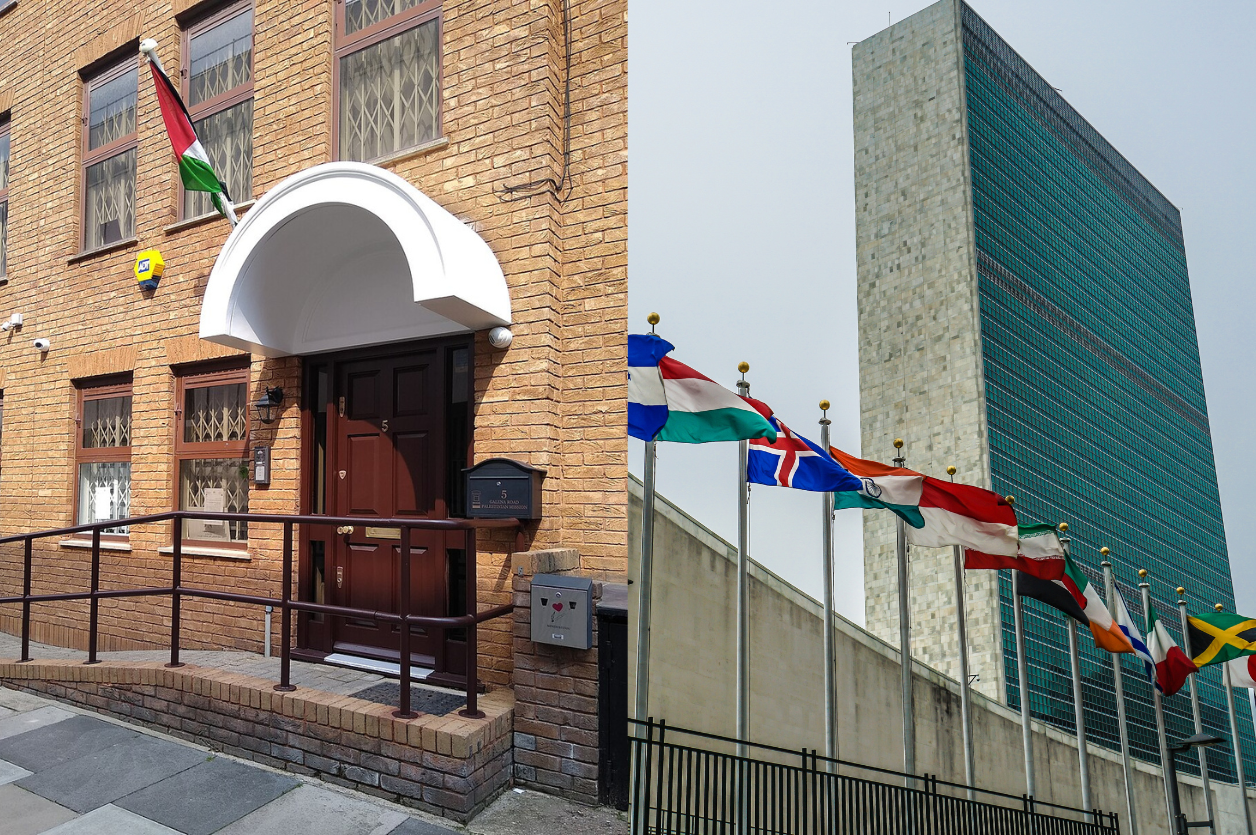
Public demonstrations accompanied the diplomatic moves. In London, the Palestinian flag was raised outside the newly designated Palestinian embassy following the UK’s recognition, this was accompanied by a speech from Palestinian Ambassador to the UK, Husam Zomlot. Zomlot highlighted the importance of the moment and also brought attention to the ongoing suffering in Gaza and the West Bank. In Italy, more than 20,000 people joined pro-Palestinian protests and strikes in solidarity with Gaza.
Why it Matters
The surge in recognition of Palestinian statehood by major Western powers represents a profound shift in the geopolitical landscape of the Middle East and global diplomacy. For decades, Western governments withheld recognition, arguing that Palestinian statehood should emerge only through direct negotiations with Israel. The coordinated moves by France, the UK, Canada, Australia, and others mark a break from this precedent, signaling growing frustration with Israel’s military campaign in Gaza and its settlement expansion in the West Bank.
Strategically, this development isolates Israel and the United States on the international stage. With over 80 percent of UN member states now recognizing Palestine, the legitimacy of Israel’s occupation is increasingly challenged. This undermines Israel’s diplomatic leverage and places Washington in a defensive position, as it continues to veto Palestinian membership at the UN Security Council. The widening gap between the U.S. and its European allies on this issue could strain transatlantic relations, particularly as European leaders frame recognition as a matter of international law and human rights.
Saudi Arabia’s co-hosting of the summit with France highlights Riyadh’s ambition to position itself as a central diplomatic actor in the Middle East, balancing its ties with Washington while appealing to Arab and Muslim constituencies. Qatar’s endorsement of the recognitions, despite being targeted by Israeli strikes, underscores the regional contest over mediation roles. These dynamics suggest that Middle Eastern powers are recalibrating their strategies in light of shifting Western positions.
For Israel, the recognitions pose both diplomatic and security challenges. Netanyahu’s threats of annexation in the West Bank reflect an attempt to deter further international momentum, but such moves risk deepening Israel’s isolation and provoking regional backlash. The possibility of Israel reducing intelligence cooperation with France or expelling diplomats indicates that the fallout could extend into security and counterterrorism domains, complicating Western coordination in the region.
The humanitarian crisis in Gaza amplifies the urgency of these diplomatic shifts. With over 65,000 Palestinians killed and famine spreading, recognition of Palestinian statehood is framed by many leaders as a moral imperative. This recognition of moral urgency strengthens the Palestinian Authority’s diplomatic standing, even as it faces internal legitimacy challenges. Abbas’s reforms, such as ending payments to families of militants, are designed to reassure Western governments and differentiate the Palestinian Authority from Hamas, but skepticism remains among Palestinians who view the Palestinian Authority as corrupt and ineffective.
The U.S. opposition to recognition reflects its alignment with Israel but risks diminishing its credibility as a mediator. By revoking Abbas’s visa and dismissing recognition as a reward to Hamas, Washington reinforces perceptions of bias, which could push more states to pursue independent diplomatic initiatives outside U.S. frameworks. This could weaken U.S. influence in the Middle East at a time when it is already stretched by competition with Russia and China.
The recognitions also carry implications for international law and multilateral institutions. By framing Palestinian statehood as a right rather than a reward, UN Secretary-General Guterres and European leaders are challenging the narrative that statehood must be conditional on Israeli approval. This reframing could embolden other movements for self-determination and reshape debates about sovereignty and occupation in international forums.
Finally, the recognitions have domestic political consequences. In Europe, they respond to public pressure amid mass protests against Israel’s actions in Gaza. In Israel, they intensify pressure on Netanyahu from both his far-right coalition, which demands annexation, and from international actors threatening diplomatic consequences. In the U.S., they highlight the divergence between Trump’s administration and key allies, potentially influencing domestic debates about America’s global role.
In sum, the surge in recognition of Palestinian statehood is not merely symbolic. It reflects a realignment of international diplomacy, challenges U.S. and Israeli dominance over the peace process, and underscores the growing role of humanitarian imperatives in shaping state behavior. The long-term impact will depend on whether recognition translates into concrete measures, such as sanctions, aid mechanisms, or new peace initiatives, but the momentum has already altered the strategic environment in which Israel, Palestine, and their allies operate.
Key Actors
- France
- Saudi Arabia
- Palestine
- Israel
- United States
- United Nations