Russia, China, and Europe Reposition Amid Expanding Iran War
Intelligence Summary
The recent outbreak of the U.S.-Israeli war with Iran has triggered a cascade of diplomatic and strategic realignments across major powers. Russia, China, and European states each moved to secure their interests amid the escalating conflict and energy disruptions. On March 10, Kremlin spokesperson Dmitry Peskov stated that President Vladimir Putin’s proposals to mediate the Iran conflict remained active, emphasizing that Moscow had offered several options for de-escalation even before the military phase began. Putin had spoken by phone with U.S. President Donald Trump the previous day, presenting ideas to end the war quickly. The Kremlin confirmed that Russia was ready to assist diplomatically but required mutual understanding among involved parties. The same report noted that Trump’s envoy, Steve Witkoff, had asked Russia not to provide intelligence to Iran after reports that Moscow was supplying targeting data to Tehran. Peskov declined to confirm or deny these claims, but acknowledged that communication channels between Witkoff and Russian officials remained open for sensitive exchanges.
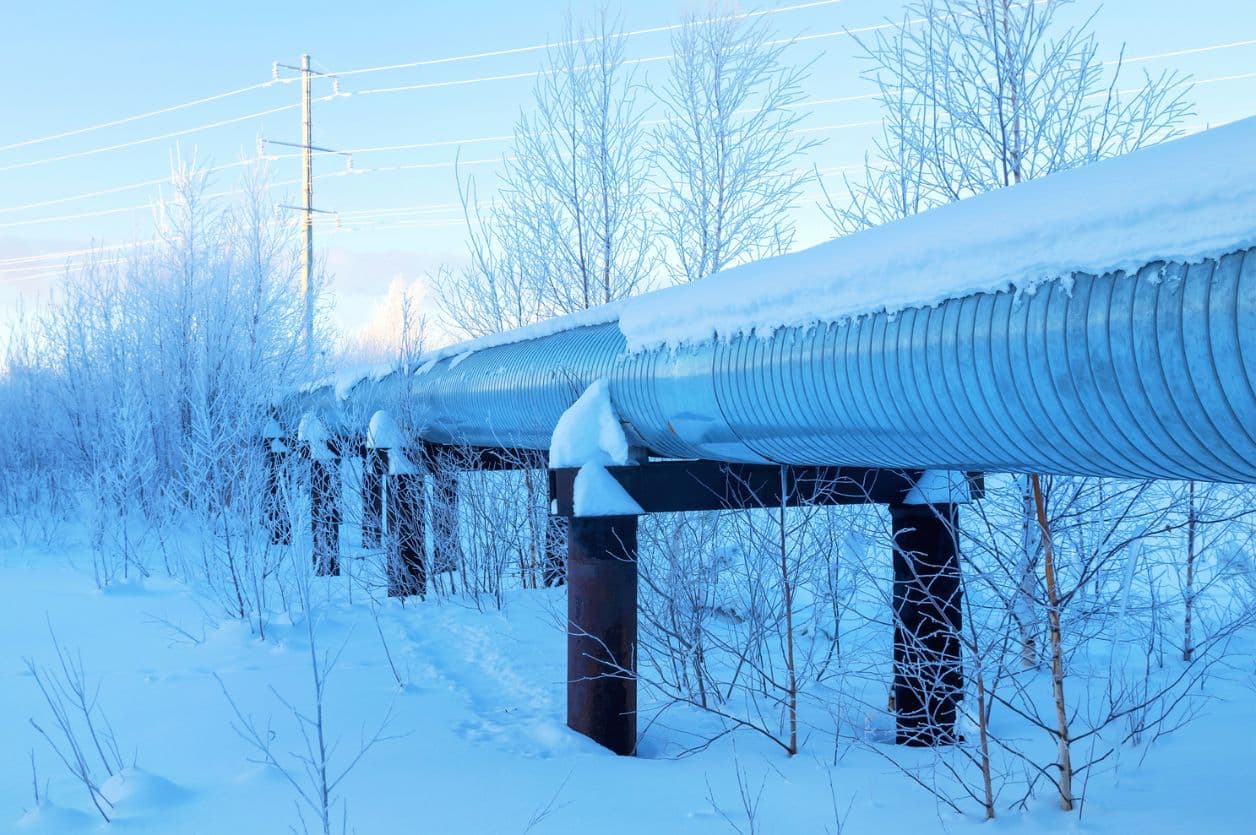
Simultaneously, China accelerated its energy diversification strategy in response to the conflict’s disruption of maritime trade through the Strait of Hormuz. A draft of China’s 2026–2030 development plan submitted to the National People’s Congress included provisions to advance preparatory work on new gas pipelines from Russia, interpreted as the Power of Siberia 2 project. The pipeline, agreed upon during Putin’s 2025 visit to Beijing, is designed to deliver up to 50 billion cubic meters of gas annually from western Siberia to northern China via Mongolia. The draft also referenced the China-Russia Far East Natural Gas Pipeline, built by Gazprom and CNPC, which is expected to begin operations in January 2027 with a capacity of 12 billion cubic meters. These projects gained urgency as fighting in the Middle East paralyzed the Strait of Hormuz, through which roughly 18 percent of China’s LNG imports from Qatar and 5 percent from the UAE typically transit. Russian officials, including Deputy Prime Minister Aleksandr Novak, confirmed that Moscow would redirect LNG supplies from Europe to Asia-Pacific markets, including China, as part of a broader shift in energy trade patterns.
In Europe, the conflict reinforced trends toward military rearmament and strategic autonomy. According to the Stockholm International Peace Research Institute (SIPRI), European arms imports tripled between 2021 and 2025 compared to the previous five-year period, making Europe the world’s largest arms-importing region with 33 percent of global imports. Poland accounted for 17 percent of European NATO imports, an 852 percent increase over the previous period, while the United Kingdom and the Netherlands also expanded procurement. The United States remained the largest supplier, providing 42 percent of global arms deliveries, but European states simultaneously increased their own exports by 36 percent, accounting for 28 percent of the global market. The European Union allocated 150 billion euros to its Security Action for Europe (SAFE) program, offering low-cost loans for intra-EU weapons purchases, and committed an additional 90 billion euros in aid to Ukraine, much of which would circulate back into European defense industries.
The war also exposed divisions within the European Union over sanctions and foreign policy alignment. Russian investment envoy Kirill Dmitriev described EU sanctions on Russian energy as a strategic blunder, arguing that the Iran war had driven oil prices above $100 per barrel and revealed Europe’s dependence on Russian energy. Hungarian Foreign Minister Peter Szijjarto publicly urged the EU to lift its ban on Russian oil and gas imports, warning that the closure of the Strait of Hormuz and Ukraine’s suspension of the Druzhba pipeline endangered European energy security. Hungarian Prime Minister Viktor Orban echoed this position in a letter to European Commission President Ursula von der Leyen, accusing Brussels of prioritizing ideology over citizens’ welfare.
Von der Leyen, speaking at an EU ambassadors’ conference on March 9, refrained from condemning the U.S.-Israeli strikes on Iran and instead framed the conflict as an opportunity for a “free Iran.” Her remarks drew criticism from EU diplomats for perceived overreach and lack of coordination with the bloc’s foreign policy chief. She used the occasion to argue that Europe must project power more assertively and invest more heavily in defense, questioning whether consensus-based decision-making remained viable. Russian officials condemned the U.S.-Israeli strikes as violations of international law and accused the EU of militarization through initiatives such as ReArm Europe and defense spending targets approaching 5 percent of GDP.
Parallel to these developments, an opinion piece published on March 9 argued that the United States’ unilateral actions—withdrawal from 66 international organizations, creation of a new “Board of Peace,” and military interventions in Iran and Venezuela—demonstrated the collapse of the post-1945 order. The author proposed relocating the UN headquarters from New York and diversifying its funding base to reduce dependence on Washington, suggesting that Europe, China, and emerging economies should assume greater responsibility for sustaining multilateralism.
Why it Matters
The diplomatic and strategic shifts observed in March 2026 illustrate a profound reconfiguration of global power relations under the pressure of simultaneous wars and energy crises. Russia’s mediation proposals and its dual role as both a belligerent in Ukraine and a potential broker in Iran highlight Moscow’s attempt to assert itself as a central diplomatic actor despite Western isolation. The Kremlin’s willingness to engage Washington directly, even amid accusations of intelligence sharing with Tehran, underscores the persistence of backchannel diplomacy as a stabilizing mechanism in multipolar conflict environments.
China’s acceleration of pipeline projects with Russia demonstrates how energy security concerns are driving long-term structural realignments. By deepening its reliance on overland gas routes, Beijing is insulating itself from maritime chokepoint vulnerabilities such as the Strait of Hormuz. This shift not only strengthens the Sino-Russian strategic partnership but also weakens the leverage of Western sanctions and maritime control. The redirection of Russian LNG from Europe to Asia represents a tangible rebalancing of global energy flows, with implications for both European energy resilience and the broader architecture of global trade.
Europe’s simultaneous militarization and internal fragmentation reveal the tension between strategic autonomy and alliance dependence. The surge in arms imports and exports, coupled with the SAFE program’s intra-EU financing, signals a deliberate effort to build a self-sustaining defense industrial base. Yet the continued dominance of U.S. suppliers and the political divisions over sanctions policy expose the limits of European unity. Hungary’s calls to lift energy sanctions and von der Leyen’s controversial rhetoric on Iran illustrate how divergent national interests and leadership ambitions complicate the EU’s collective foreign policy.
The EU’s muted response to the U.S.-Israeli war on Iran and its focus on defense integration rather than diplomacy suggest a shift from normative power to hard power orientation. This evolution aligns with von der Leyen’s argument that Europe must project power more assertively, but it also risks eroding the EU’s credibility as a mediator grounded in international law. Russia’s criticism of the EU’s militarization and its invocation of the UN Charter highlight the competing narratives of legitimacy shaping the emerging order.
The opinion advocating for a post-American multilateralism captures the broader systemic consequence of these trends. As the United States withdraws from international institutions and pursues unilateral interventions, other powers are compelled to fill the vacuum. The proposal to relocate the UN headquarters and diversify its funding base reflects a growing recognition that global governance must adapt to a world no longer anchored by U.S. leadership. This sentiment resonates with the energy and security realignments observed across Eurasia, where regional powers are constructing alternative frameworks of cooperation.
Taken together, these developments mark a transition toward a fragmented but multipolar order defined by pragmatic alignments, energy securitization, and competitive militarization. The Iran war has acted as a catalyst, exposing the fragility of existing alliances and accelerating the formation of new ones. For intelligence and policy professionals, the key takeaway is that strategic competition is no longer confined to traditional superpower rivalries but is now embedded in the infrastructure of energy, technology, and institutional legitimacy. The interplay between military escalation, economic leverage, and diplomatic repositioning will shape the international environment for years to come.
Key Actors
- Russia
- China
- European Union
- United States
- Iran
- United Nations
Stay Informed. Stay Ahead.