
Evolving Russian Tactics Expose Gaps in Ukraine’s Defense and European Preparedness
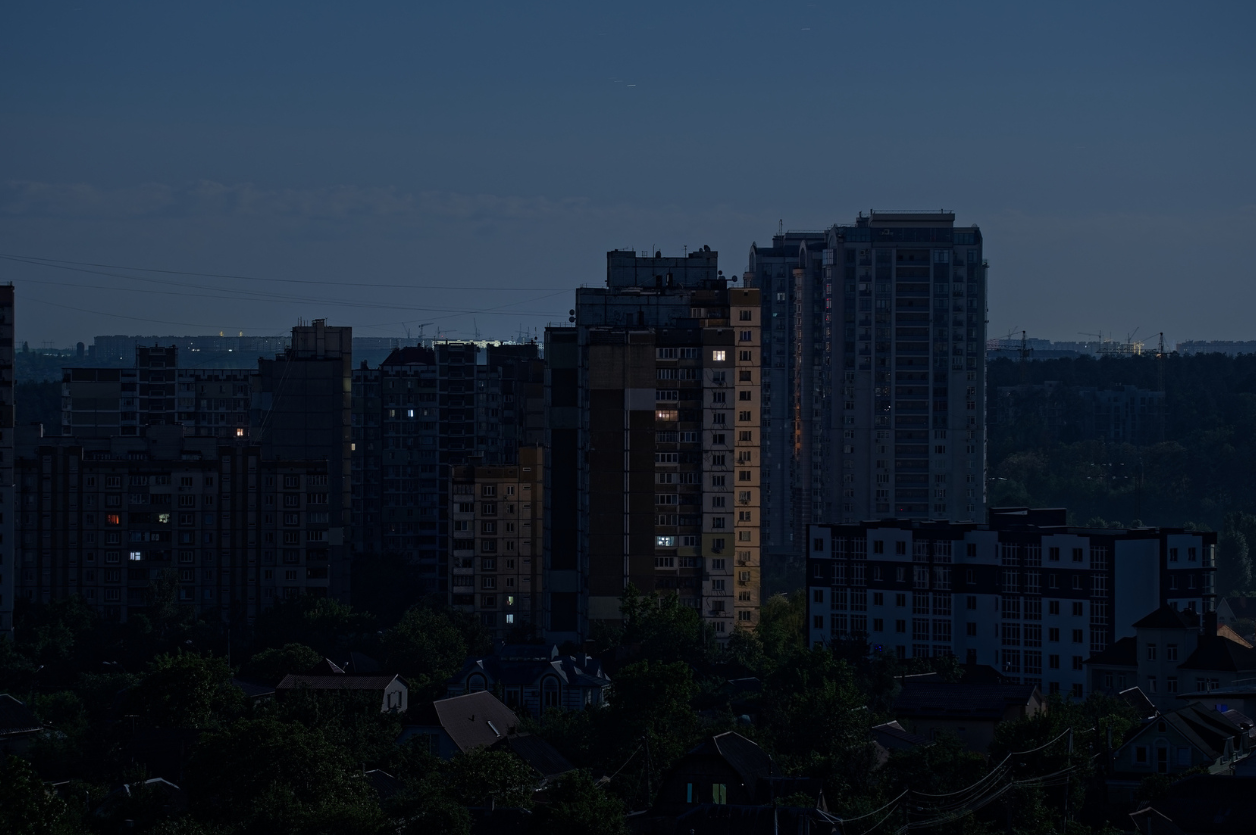
Photo credit: iStock.com/Oleksii Maznychenko
Intelligence Summary
In mid-October 2025, Russia intensified its campaign against Ukraine’s energy and industrial infrastructure, marking a new phase in the conflict. On October 10, Russian forces launched a large-scale strike involving 465 drones and 32 missiles that destroyed a major transformer at Kyiv’s Thermal Station 5, leaving much of the capital without power and water for most of the day. The attack also halted one of Kyiv’s subway lines for several hours, disrupting transport across the Dnipro River. Ukrainian Energy Minister Mykola Kolesnik reported that Russia had conducted more than six strikes on natural gas delivery facilities in early October alone, targeting gas mines, pipelines, and underground reservoirs. The Ministry announced plans to increase gas imports from Europe to compensate for the damage.
The strikes demonstrated a shift in Russian tactics. Modified drones now fly faster and at higher altitudes, diving steeply to avoid being intercepted, while missiles have been reprogrammed to deviate from predictable flight paths. According to the Centre for Information Resilience, these changes reduced Ukraine’s interception rate from 37 percent in August to 6 percent in September. The attacks have also caused severe civilian casualties, including 22 deaths in an August 28 strike on a Kyiv apartment building near a drone factory. Corruption scandals have further undermined Ukraine’s defense of its energy grid, with anti-corruption agencies uncovering a scheme that inflated anti-drone installation costs by up to 30 percent, leading to several arrests.
Recent reports indicate that as of today, October 21, Russian forces have attacked Ukraine’s Kherson region, killing one person and injuring three, and struck a coal enrichment plant in Dnipropetrovsk. A separate assault on Chernihiv cut power to areas near the decommissioned Chernobyl nuclear plant. Ukrainian forces reported heavy clashes in Pokrovsk, while Russian attacks on Belgorod killed two civilians. Concurrently, Russian forces advanced in several directions, capturing Poltavka, Pleshcheyevka, and parts of Pokrovsk, and cutting off Ukrainian supply routes north of the city. As of October 20, Russian troops have reportedly taken Molodetskoe and advanced in the directions of Liman and Dobropolye. As a result of the ongoing incidents, an estimated 1,600 Ukrainian troops have been killed.
Diplomatic activity has also coincided with the fighting. U.S. President Donald Trump stated on October 20 that Ukraine could still win the war but expressed doubt it would, while Secretary of State Marco Rubio discussed a “durable resolution” with Russian Foreign Minister Sergey Lavrov. French President Emmanuel Macron insisted that Ukraine and European states should be included in any discussions between Trump and Putin planned in Budapest, while Ukrainian President Volodymyr Zelenskyy sought an invitation to participate. Zelenskyy also confirmed ongoing negotiations with U.S. defense firms to secure Patriot air defense systems.
European security services reported a surge in Russian espionage and sabotage. Polish authorities arrested eight individuals, including three Ukrainians, accused of planning attacks and transporting explosives across Poland and Romania under the direction of Russian intelligence. Romania’s intelligence agency alleged this prevented new sabotage acts by two Ukrainian citizens allegedly coordinated by Russian operatives. Polish officials stated that 55 people had been arrested for espionage or sabotage since early 2022. Recent drone incursions over Belgium, Denmark, and Germany have also prompted temporary airport closures, leading the EU to propose a “drone wall” along its eastern borders.
Russian intelligence chief Sergey Naryshkin claimed that Western Europe was preparing for war with Russia, citing the EU’s $937 (€800) billion defense spending plan through 2030 and accusing European leaders of “Russophobia”. He argued that the EU’s defense spending and NATO’s reinforcement of forces on the continent were signs of preparation for a larger conflict. Russian Foreign Ministry spokesperson Maria Zakharova accused European government leaders of escalating the war through reckless policies.
Meanwhile, the EU is struggling to meet its pledge to deliver two million artillery shells to Ukraine, currently falling short by 300,000 rounds, according to EU foreign policy chief Kaja Kallas. She called for the redistribution of funds to close the gap. Investigative reports indicate that this is likely a result of delays and quality issues in the Czech-led procurement initiative.
Across the broader European region, tensions rose as Russian drones and aircraft repeatedly violated European airspace, which analysts described as a sign of the war extending beyond Ukraine. European leaders, including German Chancellor Friedrich Merz, suggested that Europe was neither fully at peace nor at war. Infrastructure projects such as the newly opened Via Baltica highway linking Poland and the Baltic states were framed by Polish President Karol Nawrocki, as both economic and defense assets. The Via Baltica highway enhances NATO’s ability to move forces through the vulnerable Suwalki Gap.
Why it Matters
The escalation of Russian strikes on Ukraine’s energy infrastructure illustrates a strategic shift toward attrition, aimed at undermining both civilian resilience and industrial capabilities. The attack on Kyiv’s Thermal Station 5 and the targeting of gas facilities indicate a coordinated effort to weaponize winter conditions, forcing Ukraine to divert resources from the front to domestic survival. The reported drop in drone interception rates from 37 to 6 percent underscores the evolving sophistication of Russian missile and drone technology, challenging Western-supplied air defense systems and exposing gaps in Ukrainian defense technologies.
The corruption scandal surrounding anti-drone defenses further weakens Ukraine’s ability to protect its critical infrastructure, highlighting the persistent vulnerabilities that Russia exploits through hybrid warfare. The combination of internal weaknesses and external pressure from sustained bombardment continues to reinforce the dual crisis of capacity and credibility for Kyiv.
On the battlefield, Russian territorial gains in Pokrovsk, Kupyansk, and Liman suggest incremental and costly advances. The reported Ukrainian losses of over 1,600 troops, if accurate, reflect the intensity of current operations. However, these tactical movements occur within a broader strategic stalemate, as neither side has achieved a decisive breakthrough.
Simultaneous diplomatic maneuvers including Trump’s cautious remarks, Rubio’s discussion with Lavrov, and Macron’s insistence on European participation in peace talks, illustrate a fragmented international approach to conflict resolution. The proposed Budapest summit could redefine the diplomatic landscape, but the exclusion of Ukraine or European allies risks legitimizing Russian leverage.
The arrests in Poland and Romania reveal the expanding scope of Russian hybrid operations across Europe. The use of Ukrainian nationals in sabotage networks demonstrates Moscow’s capacity to exploit cross-border vulnerabilities. The EU’s response, including the proposed “drone wall,” signals recognition that the conflict’s frontlines now extend deeper into European territory. These developments align with Naryshkin’s assertion that Europe is preparing for war, though his framing could serve Russian propaganda objectives. Nonetheless, the EU’s €800 billion defense plan and NATO’s reinforcement of eastern defenses confirm a tangible militarization of the continent.
The EU’s shortfall in ammunition deliveries exposes structural weaknesses in Europe’s defense-industrial base. The 300,000-shell deficit and procurement inefficiencies undermine Ukraine’s battlefield sustainability and highlight the limits of European rearmament despite political commitments. This logistical gap likely reinforces Russia’s belief that time favors its current attritional strategy.
In a broader European context, analytical reporting suggests that the war has extended beyond the immediate region. Airspace violations, cyber operations, and sabotage are not peripheral acts but integral components of Moscow’s campaign to erode European unity and deterrence credibility. The opening of the Via Baltica highway through the Suwalki Gap demonstrates NATO’s countervailing efforts to harden logistical routes and ensure rapid reinforcement of the Baltic states, a region long identified as critical.
Strategically, the convergence of conventional warfare in Ukraine and hybrid operations across Europe signifies a transition from localized conflict to systemic confrontation. The war now tests not only Ukraine’s endurance but also Europe’s capacity to sustain collective defense under conditions of economic strain and political fragmentation. The outcome will shape the future of European security architecture, determining whether deterrence can be maintained without direct NATO-Russia confrontation.
Key Actors
- Russian Federation
- Ukraine
- European Union
- NATO
- United States
- Poland and Romania
- Baltic States