
Russia and Ukraine: Escalation Ahead of Geneva
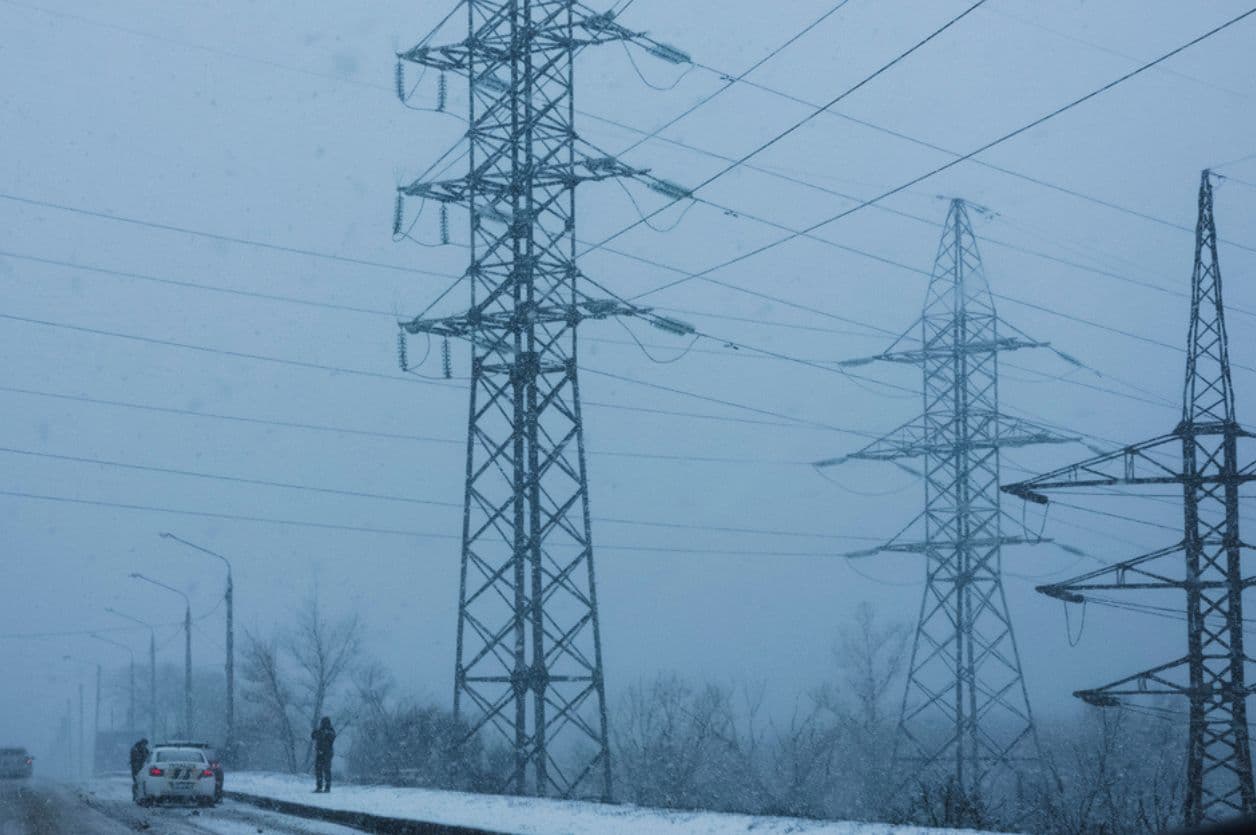
Ukraine power line crossing Jan 2026. Photo credit: iStockPhoto.com/ArtGvozdkov
Intelligence Summary
Between February 14 and 17, 2026, the Russia-Ukraine conflict entered a new phase of simultaneous battlefield escalation and diplomatic maneuvering ahead of trilateral talks in Geneva. Ukrainian forces recaptured 201 square kilometers of territory between February 11 and 15, exploiting a temporary Starlink communications outage that disrupted Russian command links. The Ukrainian Air Force reported intercepting 62 Russian long-range strike drones and six missiles overnight, while Russia’s Ministry of Defense claimed to have destroyed 345 Ukrainian drones and captured the settlements of Pokrovka and Minkivka in eastern Ukraine.
In the Kharkiv region, Russian troops advanced through the forests near Starytsia and Symynivka, using heavy flamethrower systems against Ukrainian positions. The 34th Guards Mountain Brigade captured Pokrivka and nearby forested areas, reducing the distance to Krasnopillia to roughly three kilometers. Russian forces also advanced in the Sumy, Slaviansk, and Kostiantynivka directions, employing small assault groups to probe Ukrainian defenses. In Zaporizhzhia, Ukrainian units launched a large-scale counterattack on a 20-kilometer front, breaking through into Plavni and complicating Russian positions in Prymorske and Stepnohirsk.
Russian forces continued extensive air and missile operations. On February 16, the Russian Ministry of Defense reported strikes on 152 Ukrainian targets, including energy and transport infrastructure, drone storage areas, and foreign mercenary positions. Russian air defenses claimed to have intercepted eight HIMARS projectiles and 345 Ukrainian drones in the same period. Combat footage released that day showed Geran-type suicide drones and thermobaric rocket launchers striking Ukrainian fortifications in Kharkiv and Tokarevka.
On the eve of the Geneva talks, Ukraine launched a massive drone offensive on Russia’s Bryansk region, reportedly deploying over 400 UAVs. Russian air defenses shot down 229 drones, but the 750 kV Novobryanskaya substation was severely damaged, leaving five municipalities without power. Simultaneous strikes hit Belgorod’s Luch thermal power plant and other energy facilities. Russia responded with 62 drone strikes, including the use of Zircon hypersonic missiles against the Kyivska-750 substation near Makariv, marking the fifth recorded Zircon use since January.
Both sides sustained heavy infrastructure losses. Russian strikes targeted energy and logistics hubs in Kharkiv, Dnipropetrovsk, Chernihiv, Zaporizhzhia, Sumy, Kherson, and Kyiv, while Ukrainian forces attacked oil terminals in Krasnodar and Taman, causing fires over 2,200 square meters in area. Ukrainian President Volodymyr Zelensky warned that continued Russian attacks on energy infrastructure would complicate any peace agreement.
Diplomatic activity intensified as Rustem Umerov, head of Ukraine’s negotiating team, arrived in Geneva for trilateral talks with the United States and Russia. The Russian delegation, led by Vladimir Medinsky and including Deputy Foreign Minister Mikhail Galuzin and military intelligence chief Igor Kostyukov, was tasked with discussing territorial issues and broader demands. Kyiv reportedly planned to propose an “energy truce” to halt strikes on power infrastructure, while Moscow indicated willingness to suspend attacks only on election day if Ukraine held national elections under UN supervision.
Domestically, Ukraine’s anti-corruption agencies detained former Energy Minister German Galushchenko while he attempted to leave the country. He was charged with laundering $100 million in kickbacks from state nuclear firm Energoatom through offshore structures in Anguilla and the Marshall Islands. The National Anti-Corruption Bureau of Ukraine (NABU) and the Specialized Anti-Corruption Prosecutor’s Office (SAPO) alleged that Galushchenko’s family benefited from the funds, which were used for Swiss tuition payments and offshore investments. The case, known as Operation Midas, expanded to include multiple former officials and business associates.
At the Munich Security Conference, Zelensky urged Western leaders to intensify sanctions on Russia’s energy sector and expel Russian nationals from Western countries. His remarks coincided with reports of a conscription crisis and widespread blackouts in Ukraine. The conference also revealed divisions among Western allies: some European leaders advocated rearmament and long-term confrontation with Russia, while others, including France, signaled the need for eventual negotiations.
Why it Matters
The February 2026 escalation underscores the convergence of military, diplomatic, and internal political pressures shaping the Russia-Ukraine conflict. The simultaneous intensification of drone warfare and the resumption of Geneva talks illustrates a dual-track strategy by both sides: demonstrating battlefield strength to influence diplomatic outcomes. Ukraine’s recapture of 201 square kilometers, aided by Russian communication disruptions, highlights the growing role of electronic warfare and satellite systems in determining tactical outcomes. The reported Starlink outage suggests vulnerabilities in command-and-control networks that could have strategic implications for both sides.
The mutual targeting of energy infrastructure represents a shift toward systemic economic warfare. The Ukrainian drone assault on Bryansk and Belgorod, followed by Russian Zircon strikes on Kyiv’s power grid, indicates that both sides are using energy systems as leverage in negotiations. The use of hypersonic missiles and thermobaric weapons demonstrates Russia’s intent to maintain technological superiority and psychological pressure. These attacks also expose the fragility of Ukraine’s energy resilience during winter, amplifying humanitarian and political stress.
The Geneva talks, involving senior Russian intelligence and diplomatic figures, signal that Moscow seeks to formalize territorial control while testing Western unity. Kyiv’s proposal for an “energy truce” reflects both desperation to stabilize civilian infrastructure and an attempt to frame negotiations around humanitarian principles. Moscow’s counterproposal, linking ceasefire conditions to externally supervised elections, suggests a strategy to legitimize its territorial gains while undermining Ukrainian sovereignty.
The corruption scandal surrounding former Energy Minister Galushchenko compounds Ukraine’s diplomatic vulnerability. The exposure of a $100 million laundering network tied to the energy sector undermines Kyiv’s credibility with Western donors and complicates its EU accession ambitions. The timing of the arrest, coinciding with Geneva preparations, may reflect internal power struggles or external pressure to demonstrate accountability. The case also highlights the intersection of wartime governance, energy management, and Western conditionality for continued aid.
At the Munich Security Conference, Western discourse revealed widening transatlantic fractures. European leaders’ calls for rearmament and autonomy contrast with Washington’s cautious tone, suggesting uncertainty about long-term U.S. commitment. Zelensky’s confrontational rhetoric toward Russian nationals and his appeals for expanded sanctions reveal frustration with perceived Western fatigue. The absence of substantive discussion on Ukrainian corruption or accountability at Munich further illustrates selective prioritization within Western policy circles.
Strategically, the February escalation demonstrates that neither side is prepared for de-escalation. Russia’s use of advanced missile systems and Ukraine’s large-scale drone offensives indicate continued adaptation and escalation dominance. The conflict’s evolution into a sustained energy and infrastructure war risks regional spillover, particularly as attacks on oil terminals and pipelines affect European energy security. The involvement of Hungary and Slovakia in disputes over disrupted Russian oil flows through Ukraine further underscores how the war’s economic dimensions are fracturing European unity.
In intelligence terms, the conflict now integrates conventional warfare, cyber-electronic disruption, and financial corruption as interlinked domains. The combination of battlefield advances, energy sabotage, and internal political purges suggests that both Moscow and Kyiv are preparing for a protracted confrontation shaped as much by internal legitimacy as by external military success.
Key Actors
- Ukraine
- Russia
- United States
- European Union
- NABU and SAPO (Ukraine)
Stay Informed. Stay Ahead.