
Saudi-Houthi Escalation Tests Limits of U.S. Involvement

Sep 22 / Steven A. Smith, PhD
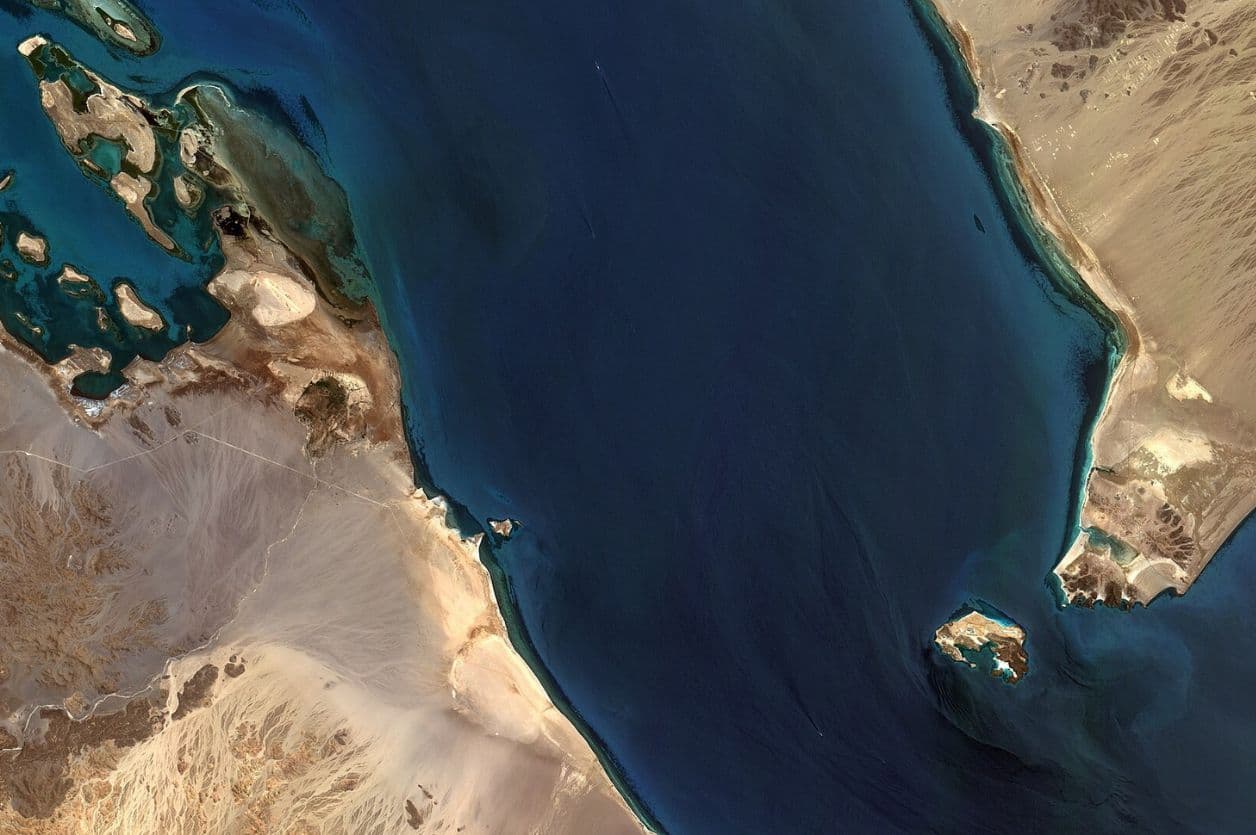
Bab al-Mandab Strait, June 2018. Photo credit: Oton Barros / INPE

Intelligence Summary

Ansar Allah, commonly known as the Houthis, launched a missile and drone attack targeting Riyadh, marking the first reported strike on the Saudi capital since the recent renewal of fighting. Saudi Arabia responded with continued airstrikes in Yemen. The exchange follows a broader Houthi offensive along Yemen’s Red Sea coast toward the Bab al-Mandab Strait, where Saudi-backed pro-government forces and Houthi fighters are contesting ground and access to a major maritime chokepoint.


Houthi authorities said Saudi airstrikes in al-Jawf province killed four civilian workers and injured three others after hitting communications towers. The Houthi military spokesman also claimed that Saudi aircraft conducted 28 strikes in 24 hours across Taiz, al-Jawf, and Marib, bringing the claimed total since the latest Saudi escalation to 760. These casualty and strike figures have not been independently confirmed. Separately, Saudi operations along the Red Sea coastal plain have reportedly involved hundreds of airstrikes as Houthi forces consolidate recently seized positions.


The United States has not publicly committed to direct military intervention against the Houthis. President Donald Trump discussed the Houthi advances with Yemeni President Rashad al-Alimi on September 20, after al-Alimi requested U.S. support for his Saudi-backed government. Two officials familiar with the call said Trump made no direct pledge of military support. Trump has also said that Washington remains in contact with the Houthis and that the group has agreed not to target U.S. shipping. This stance is distinct from Saudi requests for U.S. military backing, which Trump has reportedly rebuffed.


The escalation is producing a rapidly worsening humanitarian effect. More than 120,000 Yemenis are estimated to have been displaced by the renewed fighting along the Red Sea coast, while more than 3,000 people have reached Djibouti in recent days after crossing the Bab al-Mandab by boat. The conflict has therefore broadened beyond localized military exchanges into a renewed displacement crisis affecting Yemen’s coast and neighboring Djibouti in the Horn of Africa.

Why It Matters

The Riyadh attack changes the escalation dynamic by demonstrating that the conflict can directly threaten Saudi Arabia’s political and economic center. Saudi airstrikes may impose costs on Houthi military positions and infrastructure, but the Houthi ability to target Riyadh raises the political cost of a prolonged Saudi air campaign. The exchange also increases the possibility that each side will treat restraint as inviting further pressure, making a return to the previous truce conditions more difficult.


Washington’s limited public posture is consequential because it constrains the Saudi-backed side’s options while preserving U.S. freedom of action. Trump’s refusal to make a direct military commitment, combined with his stated communication with the Houthis, suggests that the United States is seeking to avoid becoming an overt belligerent even as it remains engaged with regional partners. Some reports claim the United States continues to provide Saudi Arabia targeting and intelligence support. The distinction matters because indirect U.S. support can assist Saudi operations without providing the security guarantee Riyadh and the Yemeni government are seeking.


The fighting also creates significant maritime and economic risk because Houthi advances have reached key areas near the Bab al-Mandab Strait. The group’s reported current blockade is limited to Saudi shipping, rather than all commercial traffic, but its proximity to the strait gives it potential leverage over Red Sea transit. Any expansion in the blockade’s scope, or attacks affecting non-Saudi commercial vessels, could transform a Saudi-Houthi confrontation into a wider shipping-security crisis. The principal indicator is whether Houthi maritime restrictions remain limited or broaden in response to Saudi airstrikes or a change in U.S. military involvement.


The humanitarian consequences may also affect the conflict’s durability. Large-scale displacement from the coastal fighting imposes pressure on Djibouti and international humanitarian systems, while civilian casualties and destruction deepen local insecurity regardless of which side gains territory. For the parties, military gains near the coast may provide leverage, but they also increase the burden of holding contested positions under air attack and civilian flight. The pace of Houthi territorial consolidation, the scale and targets of Saudi strikes, and any U.S. shift from diplomatic contact to overt military support will determine whether this confrontation stabilizes or develops into a wider regional escalation.

Stay Informed. Stay Ahead.

The global landscape changes daily, don't get left behind.
Thank you!