Saudi, Pakistani, Turkish Officials Engage Iran

Oct 26 / Steven A. Smith, PhD
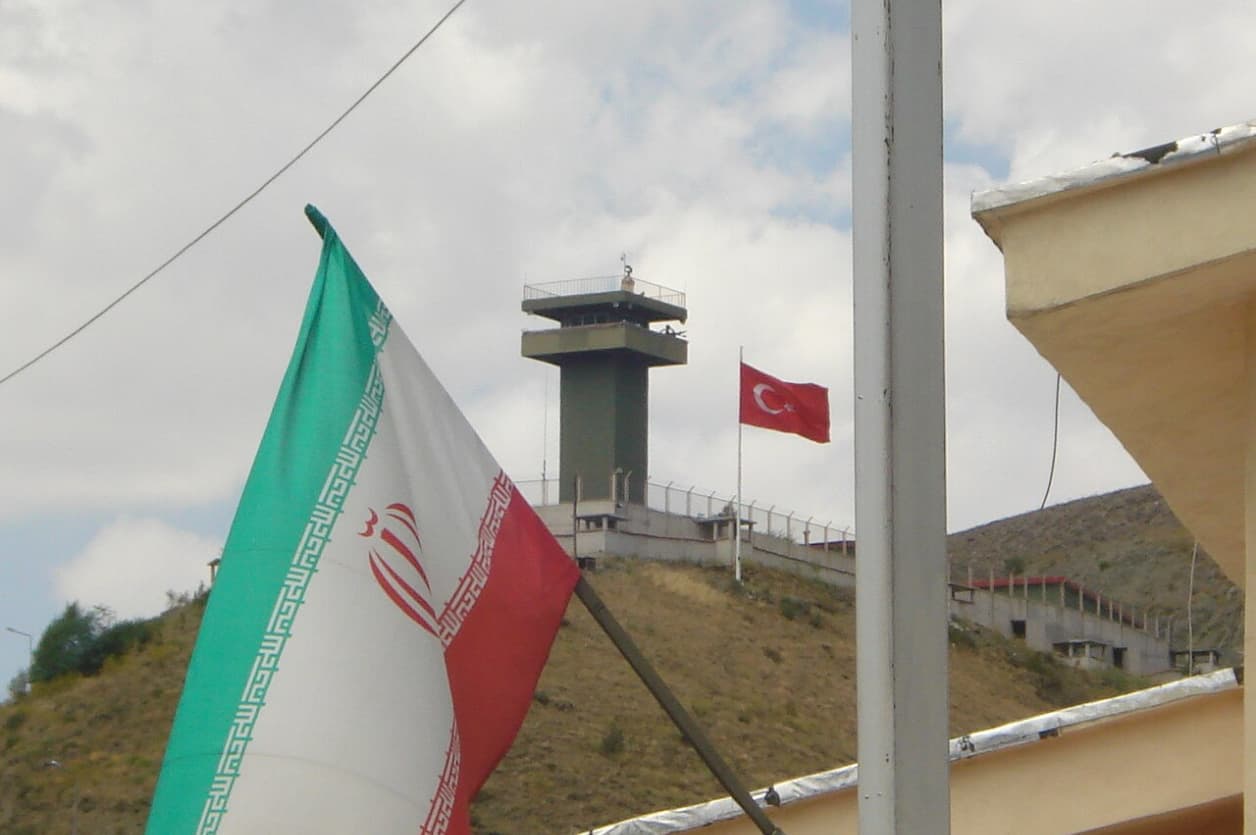
2 national flags at the Iran-Turkey border, 2012. Image credit: Sina 0461

Intelligence Summary

Senior officials from Saudi Arabia, Pakistan, and Turkiye met Iranian leaders in Tehran on October 26 for the first joint contact between Iran and the three signatories of the Mecca Joint Defence Agreement. Saudi Defense Minister Khalid bin Salman, Pakistani army chief General Asim Munir, and Turkish intelligence chief Ibrahim Kalin met President Masoud Pezeshkian and Iran’s Supreme National Security Council secretary, Mohsen Rezaei. Iranian state television said the parties agreed to continue discussions on regional peace, security, and cooperation.


The visit occurred amid two related crises: 1) heightened US-Iran tensions and continued Houthi missile and 2) drone attacks on Saudi Arabia. Saudi Deputy Minister for Public Diplomacy Rayed Krimly described the delegation’s purpose as supporting de-escalation, dialogue, and mediation efforts by Qatar and Pakistan. The talks followed weeks of Houthi attacks and Saudi interceptions, including another reported missile and drone barrage on October 25. Earlier in October, Mecca pact ministers meeting in Riyadh agreed to enable rapid deployment of military forces and capabilities in Saudi Arabia.


The Mecca pact, signed in August by Saudi Arabia, Pakistan, and Turkiye, treats an armed attack on one member as an attack on all members and commits the parties to use necessary means against threats to each other’s sovereignty and territorial integrity. The pact nevertheless has not produced direct military intervention in Yemen. Analysts assess that Turkiye and Pakistan are unlikely to commit ground forces there, despite Riyadh’s increasing security pressure from Houthi attacks.


The Tehran meeting also took place while US-Iran diplomacy remained stalled. Iranian officials have said Tehran will not negotiate an end to the conflict with Washington unless its demands are met, which include lifting the US naval blockade on Iranian southern ports. Washington seeks unobstructed maritime transit through the Strait of Hormuz, restraint on Iran’s nuclear program, and international inspection of highly enriched uranium. Iran’s authorities have framed the Tehran discussions as an effort to build security from within the region, rather than through external intervention.
Why It Matters

The meeting creates an unusual diplomatic channel linking Iran directly to a new Saudi-centered security arrangement whose members have pledged mutual support. Its immediate value is likely to be crisis management rather than a durable settlement. Saudi Arabia faces direct pressure from Houthi attacks, while Pakistan and Turkiye have relationships with Riyadh and retain channels to Tehran. Their presence gives Iran an opportunity to address Saudi security concerns without engaging the United States directly. It also gives Riyadh’s partners a forum to press Tehran on the regional effects of the confrontation.


The most plausible near-term outcome is a limited understanding related to Yemen and Saudi security, rather than progress on the underlying US-Iran dispute. Iran has incentives to avoid a wider confrontation, but the Houthis retain their own decision-making calculus and Iranian influence over them is not absolute. Equally, Saudi Arabia’s allies face limits on what they can deliver. Neither Turkiye nor Pakistan appear positioned to provide the ground intervention that a Yemen campaign would require. This constrains the Mecca pact’s practical military utility while increasing the value of diplomatic pressure and defensive support.


The talks may also test whether the Mecca pact functions primarily as a collective-defense signal or can become a vehicle for coordinated crisis diplomacy. The alliance’s collective-defense language raises the political cost of continued attacks on Saudi territory, yet its members have different exposure to escalation and have not publicly defined a common military response. Their decision to engage Tehran collectively suggests that managing the threat to Saudi Arabia may be more feasible through mediation and deterrent signaling than through direct intervention.


The principal risk remains that regional diplomacy cannot offset the unresolved US-Iran confrontation. A renewed US strike campaign could prompt Iranian retaliation against regional states and infrastructure and disruption around the Strait of Hormuz would affect a maritime route that previously carried about one-fifth of global oil and liquefied natural gas flows. Indicators of meaningful progress will include whether Saudi Arabia, Pakistan, and Turkiye publicly confirm a negotiating framework; whether Houthi attacks on Saudi targets decline; and whether the parties produce practical arrangements on maritime security and crisis communications.

Stay Informed. Stay Ahead.

The global landscape changes daily, don't get left behind.
Thank you!