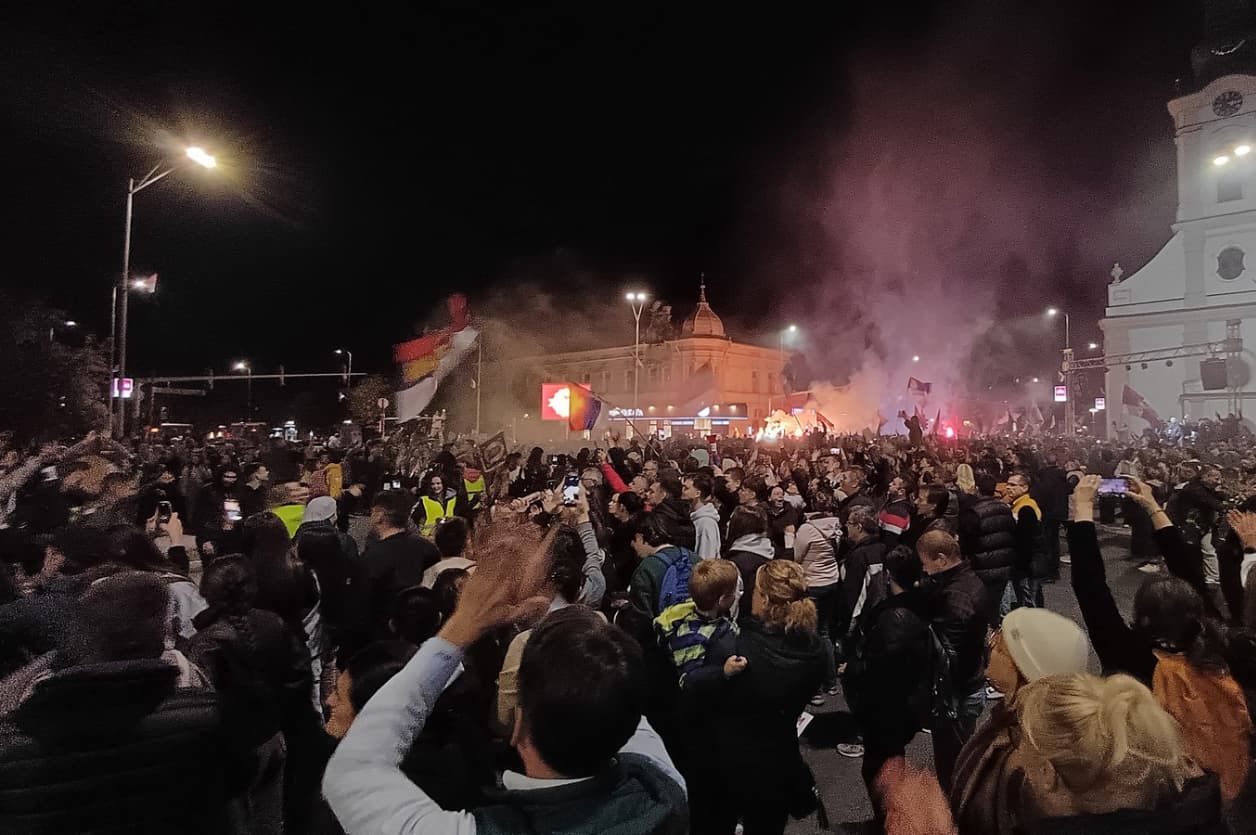
Serbia’s Student Movement Defeats Vucic
Image credit: ImStevan
Intelligence Summary
Serbia’s student-led opposition movement, the Student List, defeated Aleksandar Vucic’s Serbian Progressive Party, or SNS, in a snap parliamentary election held on October 25. With most polling stations counted, the Republic Election Commission reported that the Student List had won about 52.5 percent of the vote, compared with about 39.3 percent for the SNS. Vucic conceded defeat, ending more than a decade in which he and the SNS dominated Serbian politics. Turnout reached nearly 69 percent, the highest level in more than three decades.
The victory grew from nearly two years of protests following the 2024 collapse of a railway station canopy in Novi Sad that killed 16 people. Protesters linked the disaster to alleged corruption, inadequate construction standards, political patronage, and lack of accountability. Authorities and the SNS denied corruption allegations. What began as student blockades and marches expanded into a broad anti-government movement involving teachers, farmers, professionals, and other groups. The Student List translated that coalition into an electoral campaign built around anti-corruption measures, institutional independence, media freedom, employment, education, and living standards.
Preliminary projections indicate that the Student List could secure about 140 seats in the 250-seat National Assembly, exceeding the 126 seats needed for a majority and allowing it to form a government without coalition partners. The movement did not designate a prime ministerial candidate during the campaign, emphasizing its collective character. Ilija Srdanovic, a physician and professor who headed its candidate list, is viewed as a likely contender, but ministerial appointments remain unresolved.
The transition will unfold alongside a separate presidential contest. Vucic resigned as president after calling the snap election, and parliamentary speaker Ana Brnabic is serving temporarily in the role. An extraordinary presidential election must be held by December 27. The incoming parliamentary majority must first be constituted after final results are declared, and the new government must then be formed within the prescribed 90-day period.

Why It Matters
The result represents a major shift in Serbian politics because a movement formed outside established party structures has displaced the SNS from parliamentary control. A projected majority gives the Student List unusual room to pursue its program without dependence on coalition bargaining. It also creates clear accountability. Voters who mobilized around corruption, public safety, and institutional reform will be able to judge whether a diverse protest movement can convert electoral legitimacy into governing capacity.
Institutional reform is likely to be the central test. The Student List has pledged to curb political control over public enterprises, strengthen media freedom, and reinforce the independence of state institutions. These objectives directly challenge practices that its supporters associate with the prior system, while the SNS rejects the allegations of corruption and democratic erosion. The practical difficulty will lie less in winning parliamentary votes than in selecting credible personnel and implementing reforms across institutions shaped during more than a decade of SNS rule.
The election may improve Serbia’s prospects for engagement with European institutions, which have linked the country’s EU path to rule-of-law, media, anti-corruption, and democratic reforms. European Commission leaders have welcomed the result and signaled readiness to support such reforms. However, the outcome does not establish a settled foreign-policy direction. Vucic had pursued EU candidacy while maintaining close relations with Russia and declining to impose sanctions over the war in Ukraine. Moscow has publicly expressed hope that the new leadership will preserve cooperation, but the Student List’s stated program in the material provided focuses principally on domestic reform and improved relations with neighboring states.
The near-term political risk is concentrated in the transition. The Student List’s breadth helped it mobilize anti-government voters, but its decentralized organization and lack of an announced governing team leave important decisions open, particularly over the prime minister, interior, finance, and justice portfolios. The upcoming presidential election adds a second national contest before the new government is fully established. The principal indicators will be the choice of prime minister and key ministers, the pace of government formation, and whether the movement maintains cohesion once it must make concrete policy and personnel decisions.
Stay Informed. Stay Ahead.