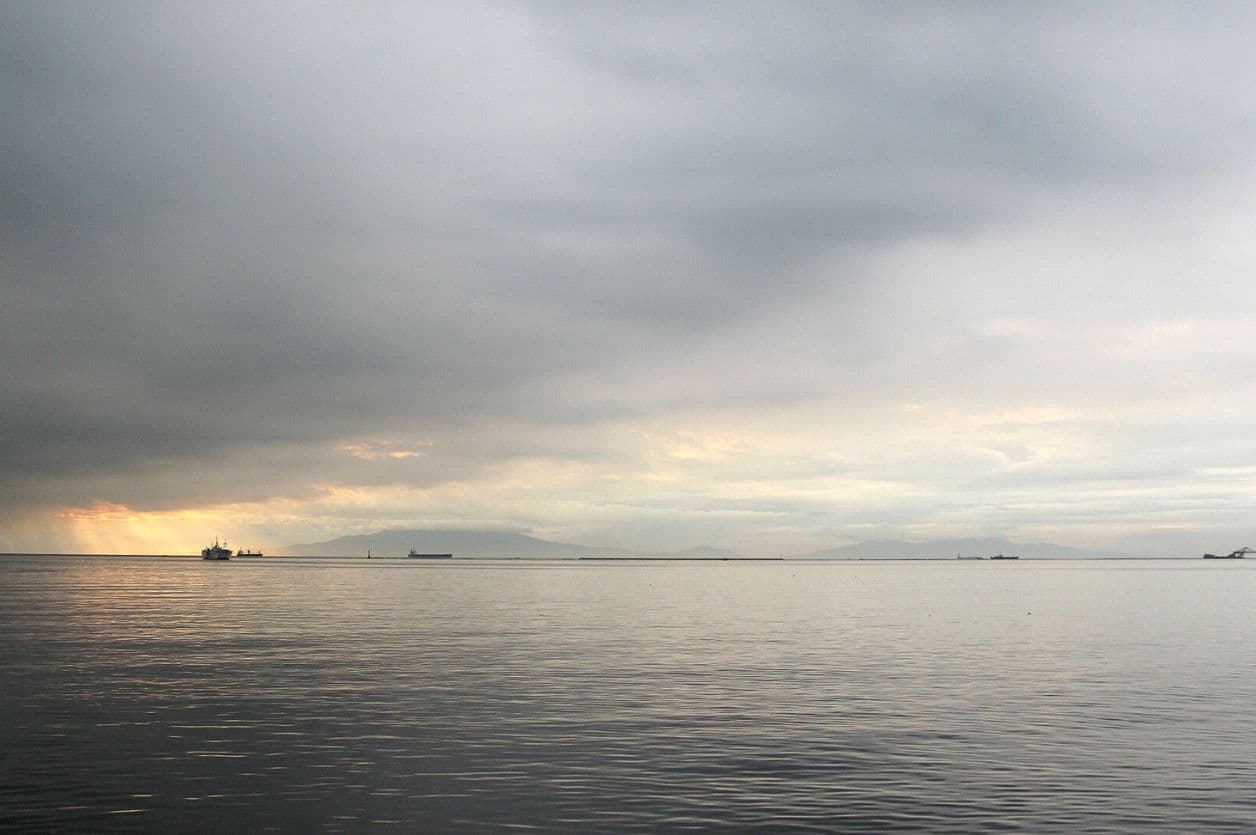
The Philippines concluded five days of joint maritime drills with the United States and Japan in the South China Sea on July 25, 2026. The exercise, held from July 21 to 25, was the 17th Multilateral Maritime Cooperative Activity. The Armed Forces of the Philippines said the drills brought together warships, coast guard vessels, surveillance aircraft, and fighter aircraft. Participants practiced communications, replenishment at sea, and division tactics intended to improve maritime interoperability. The Philippine military did not disclose the precise location of the drills.
The drills came amid renewed confrontations between Philippine and Chinese vessels at Scarborough Shoal and Second Thomas Shoal. The confrontations also followed the 10th anniversary of the 2016 South China Sea arbitral ruling, which rejected the legal basis of China’s nine-dash line claim. Beijing continues to reject the ruling.
On July 24 and 25, Philippine authorities said the China Coast Guard used water cannons against Philippine coast guard and fisheries vessels delivering fuel and provisions to Filipino fishing boats near Scarborough Shoal. The water cannons struck both government vessels. A Chinese coast guard ship also came within about seven meters of a Philippine fisheries vessel, creating a risk of collision. Philippine officials called the actions dangerous and unlawful. China offered a different account, accusing Philippine vessels and fishing boats of entering the area illegally and ignoring repeated warnings. Its coast guard said it responded with blocking maneuvers and water cannons.
Scarborough Shoal lies within the Philippines’ 200-nautical-mile exclusive economic zone, about 200 kilometers west of Luzon and 874 kilometers from China’s Hainan Island. China has effectively controlled the shoal since a 2012 standoff. The China Coast Guard regularly stations vessels around the atoll and has repeatedly sought to restrict Filipino fishermen’s access to the lagoon. The Scarborough incidents followed a July 20 confrontation near the BRP Sierra Madre outpost at Second Thomas Shoal. Philippine and Chinese personnel exchanged blows, and the Philippines said one of its personnel suffered a head injury after being struck with a baton by a China Coast Guard member. China accused the Philippines of entering waters claimed by Beijing, attempting to ram a Chinese patrol boat, and spreading false information about the incident.
During ASEAN foreign ministers’ meetings in Manila, U.S. Secretary of State Marco Rubio described China’s South China Sea actions as disturbing and reaffirmed U.S. support for the Philippines as a treaty ally. The July 20 confrontation also revived disputes over a provisional understanding reached in June 2024 intended to reduce misunderstandings during resupply missions to the BRP Sierra Madre, with Beijing accusing Manila of violating terms that were not published. The Philippine Department of Foreign Affairs said the arrangement did not recognize foreign jurisdiction, require Manila to seek Beijing’s permission for resupply missions, or concede Philippine sovereignty, sovereign rights, or jurisdiction. It cited the 2016 arbitral ruling in support of its position.