
South Korea and China Reshape Asia's Tech Order
Intelligence Summary
On June 29, 2026, South Korean President Lee Jae Myung announced a sweeping national industrial strategy centered on semiconductors and artificial intelligence, positioning the country to consolidate global leadership in advanced technology production. The initiative involves more than 1,000 trillion won, or approximately 648 billion US dollars, in combined public and private investment over the next decade. The plan’s “triple axis” focuses on semiconductors, physical AI, and data centers, with the government pledging to accelerate infrastructure development and regional economic diversification beyond the Seoul metropolitan area.
Industry Minister Kim Jung-kwan detailed that Samsung Electronics and SK Hynix, the world’s two largest memory chipmakers, will invest 800 trillion won (518 billion US dollars) with suppliers to construct two new fabrication plants each in South Korea’s southwest. The southwestern city of Gwangju and South Jeolla Province will contribute between 5 and 20 trillion won (3.2 to 13 billion US dollars) to the projects, while an additional 81 trillion won (52.5 billion US dollars) will fund a chip-packaging cluster in the Chungcheong region near Seoul. The government also announced plans for AI data centers backed by 550 trillion won (356 billion US dollars) in investments from SK Group, GS Group, and Naver, with Science Minister Bae Kyung-hoon projecting a 10-gigawatt AI data center by 2035.
Samsung Chairman Jay Y. Lee confirmed Gwangju as the site for a new chip cluster, while SK Hynix Chairman Chey Tae-won stated that his company was still finalizing its site selection and infrastructure plans. The government expects to double dynamic random-access memory (DRAM) output within five years by accelerating construction of fabrication facilities in the Seoul metropolitan area to the mid-2030s. High-bandwidth memory (HBM) chips, produced by both Samsung and SK Hynix, have become critical to global AI systems, and the expansion aims to secure overwhelming production capacity to meet surging demand.
The initiative has drawn domestic criticism. Opposition lawmakers accused the administration of politically motivated site selection, noting that 85 percent of voters in the Honam region supported Lee in the previous election. The president defended the plan, arguing that the southwest’s underused power resources and available land make it a logical choice for large-scale industrial expansion.
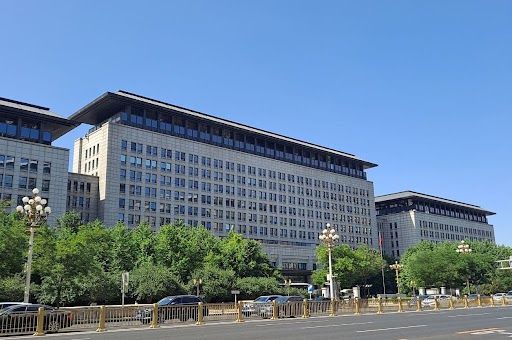
Simultaneously, China announced new export controls targeting Japanese entities, escalating a months-long economic confrontation with Tokyo. On June 29, 2026, Beijing’s Ministry of Commerce blacklisted 20 Japanese organizations, including the National Institute for Defence Studies, Naval Systems Research Center, and Ground Systems Research Center, prohibiting them from receiving dual-use items with potential military applications. Another 20 entities, including Mitsui E&S, Terra Drone, and Hitachi Advanced Systems, were placed on a watch list requiring risk assessments and written assurances that exports would not enhance Japan’s military capabilities.
China’s Commerce Ministry described the measures as lawful and necessary to counter Japan’s “new militarism,” citing Tokyo’s accelerated remilitarization and deployment of offensive weapons. Japan’s Chief Cabinet Secretary Minoru Kihara condemned the move as unacceptable and urged Beijing to revoke the restrictions. The measures follow earlier Chinese sanctions in February 2026 against 40 Japanese entities and coincide with Japan’s deployment of a Type-12 missile launcher on Minamitorishima Island, a remote southern outpost, in response to Chinese military activity near Taiwan.
The export controls are widely interpreted as retaliation for Japanese Prime Minister Sanae Takaichi’s statements suggesting that Japan could intervene militarily if China attempted to seize Taiwan. Takaichi’s administration has increased defense spending to 2 percent of GDP and is pursuing constitutional amendments to expand Japan’s military role. Analysts note that Beijing’s actions demonstrate its willingness to use economic coercion to deter countries from challenging its position on Taiwan and to signal the costs of crossing its strategic red lines.
Why it Matters
The developments in South Korea and China illustrate the intensifying intersection of technology, security, and economic statecraft in Asia’s strategic landscape. South Korea’s trillion-dollar semiconductor and AI initiative represents both an industrial policy and a national security measure. By consolidating domestic chip production capacity, Seoul aims to reduce dependence on foreign supply chains and strengthen its position in the global technology hierarchy. The scale of investment spanning fabrication plants, packaging clusters, and AI data centers, signals a deliberate effort to secure technological sovereignty in a domain tied to defense and intelligence capabilities.
The plan’s emphasis on high-bandwidth memory and DRAM production directly supports the infrastructure underpinning AI and advanced computing, which are critical to civilian and military applications. By doubling DRAM output and expanding fabrication capacity, South Korea positions itself as a central node in the global semiconductor ecosystem, potentially rivaling Taiwan’s dominance. This has implications for alliance dynamics, as the United States and its partners seek to diversify supply chains away from China while maintaining access to advanced chips essential for defense systems, quantum computing, and cyber operations.
Domestically, the initiative also reflects the political economy of industrial policy. The controversy over regional favoritism underscores how strategic technology investments can become instruments of political consolidation. Yet, the southwest’s underutilized energy resources and available land may provide logistical advantages for large-scale industrial expansion. The success of this initiative will depend on whether infrastructure, skilled labor, and supply networks can scale rapidly enough to meet global demand.
China’s export controls against Japan highlight the use of economic tools as instruments of strategic deterrence. By targeting dual-use technologies and defense-linked entities, Beijing is signaling that it will leverage its control over critical supply chains to punish perceived adversaries. The measures serve punitive and preventive purposes: punishing Japan for its alignment with Western security postures on Taiwan and warning other states against similar actions.
Japan’s response—deploying missile systems on remote islands and accelerating defense reforms—illustrates how economic coercion can reinforce rather than deter militarization. The reciprocal escalation between Beijing and Tokyo risks entrenching a cycle of economic and security confrontation that could spill over into broader regional instability. The involvement of European powers, which recently condemned Chinese activities near Taiwan, further internationalizes the dispute and underscores the global stakes of Asia’s technology-security nexus.
Together, these developments reveal a region where industrial policy, defense strategy, and economic coercion are intertwined. South Korea’s investment drive and China’s export controls both reflect a strategic race to control the technologies that will define future power projection, intelligence capabilities, and economic resilience. The convergence of these trends suggests that Asia’s technological competition is not merely commercial but a central front in the reconfiguration of global power.
Stay Informed. Stay Ahead.