NATO Tensions Rise as Spain Refuses Airspace for U.S.-Led Strikes on Iran
Intelligence Summary
Spain has taken the most significant step yet in distancing itself from the United States and Israel’s war on Iran by closing its airspace to all U.S. military aircraft involved in the conflict. On March 30, 2026, Spanish Defense Minister Margarita Robles confirmed that neither the use of Spanish airspace nor the country’s jointly operated military bases would be authorized for any actions related to the war. She described the conflict as profoundly illegal and unjust, reiterating Spain’s opposition to what it views as a unilateral and unlawful campaign
Prime Minister Pedro Sánchez had earlier labeled the war unjustifiable and dangerous, warning that it could lead to humanitarian disaster. His government had already prohibited the use of the Rota and Morón de la Frontera bases in southern Spain for U.S. operations, forcing the relocation of approximately 15 U.S. aircraft to other European bases. The airspace ban extends to U.S. aircraft operating from other NATO countries, including the United Kingdom and France, if they are engaged in missions related to Iran.
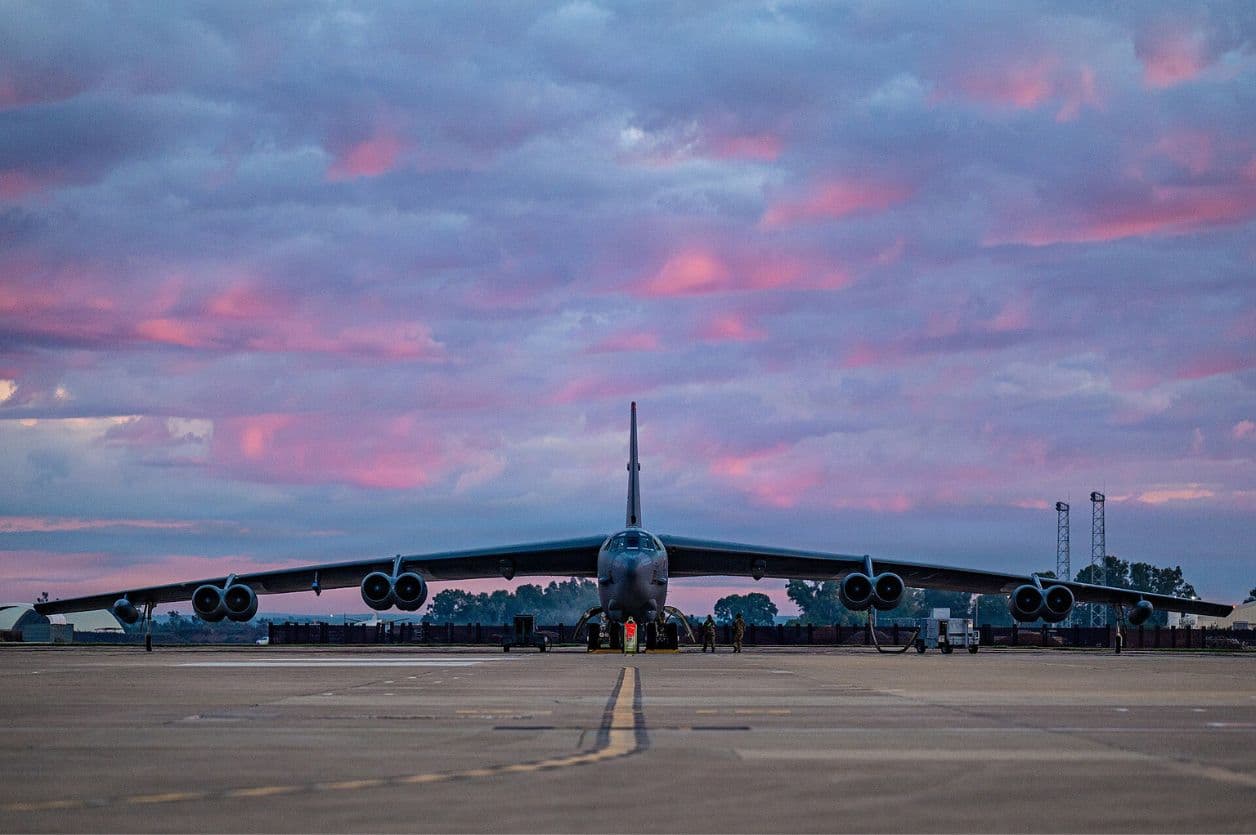
The decision has immediate operational consequences. Long-range U.S. bombers such as B-52s and B-1s flying from the Fairford base in the United Kingdom must now take longer routes to reach targets in the Middle East, reducing efficiency and forcing trade-offs between fuel and payload. Spain’s move represents the most public break with Washington by a major Western ally since the 2003 Iraq invasion, when Madrid had supported U.S. operations despite domestic opposition.
The Spanish government has justified its decision as consistent with international law and its broader policy of non-participation in wars it deems illegal. Economy Minister Carlos Cuerpo stated that Spain would not contribute to a conflict initiated unilaterally and outside the bounds of international law. The government has made limited exceptions for emergency landings and for U.S. aircraft supporting purely European operations unrelated to the Middle East.
The United States has reacted sharply. President Donald Trump threatened to impose trade restrictions on Spain and criticized Madrid for failing to meet NATO’s 5 percent defense spending target. U.S. Secretary of State Marco Rubio described Spain’s actions as deeply disappointing and warned that Washington would re-examine the value of NATO after the war. Rubio’s remarks reflect growing frustration in Washington over what it perceives as a lack of solidarity among NATO allies during a major U.S.-led military campaign.
Despite the dispute, Spain has emphasized that it remains committed to its broader NATO obligations and continues to cooperate with the alliance and the European Union on other security matters. However, Madrid’s defiance has drawn attention to wider divisions within the Western alliance. Many European governments have expressed unease with the U.S. approach to the Iran war, viewing it as a unilateral escalation that risks destabilizing the region and undermining international law.
Parallel to these alliance tensions, Russia has sought to exploit the shifting geopolitical environment. Moscow has increased diplomatic engagement with India and other non-Western partners while observing the U.S.-Israeli campaign. Analysts note that while higher oil prices benefit Russia economically, the war also highlights Moscow’s ability to influence and assist Iran meaningfully. Russian officials have issued statements of concern and attempted to revive proposals for collective security in the Middle East. Reports suggest that Russia may have provided Iran with targeting data for strikes on U.S. assets, though such claims remain unverified.
Overall, Spain’s airspace closure and the subsequent U.S. reaction have crystallized a broader pattern of fragmentation within Western alliances. The dispute underscores diverging interpretations of international law, differing threat perceptions, and competing priorities among NATO members amid a rapidly evolving global conflict landscape.
Why it Matters
Spain’s decision to close its airspace to U.S. military operations marks a pivotal moment in the erosion of Western alliance cohesion. It demonstrates how divergent national interpretations of legality, legitimacy, and strategic necessity can fracture collective defense structures when confronted with unilateral military action. The move challenges the assumption that NATO members will automatically align with U.S. operations, particularly when those operations are perceived as violating international norms.
Strategically, the airspace ban imposes tangible operational constraints on U.S. and allied forces. Longer flight routes for bombers and refueling aircraft reduce sortie efficiency and increase logistical strain, potentially limiting the tempo of operations against Iran. This operational friction illustrates how political decisions by one NATO member can have cascading effects on alliance-wide military planning. It also highlights the vulnerability of U.S. global force projection to political dissent within its own alliance network.
Diplomatically, Spain’s stance signals a reassertion of European strategic autonomy. By refusing to participate in what it deems an illegal war, Madrid positions itself as a defender of international law and multilateralism, contrasting sharply with Washington’s unilateral approach. This divergence could embolden other European states to adopt more independent foreign policies, particularly if public opinion continues to oppose U.S.-led interventions. The precedent may also complicate future NATO consensus-building, as members weigh domestic political costs against alliance solidarity.
The U.S. response, including threats of trade retaliation and calls to re-evaluate NATO’s purpose, underscores the fragility of transatlantic unity. Rubio’s warning that Washington may reconsider NATO’s value reflects a growing sentiment within U.S. political circles that European allies are unreliable partners. Such rhetoric risks deepening mistrust and accelerating debates within Europe about developing alternative security frameworks less dependent on U.S. leadership.
From a great power competition perspective, the rift within NATO provides strategic opportunities for Russia and China. Moscow benefits economically from elevated oil prices and politically from the perception of Western disunity. Although Russia’s direct influence over the Iran conflict remains limited, the weakening of NATO cohesion serves its long-term objective of undermining Western collective power. The Kremlin’s attempts to position itself as a diplomatic actor in the Middle East, even if largely symbolic, aim to exploit the vacuum created by Western discord.
The episode also underscores the interplay between military operations and economic leverage. Trump’s threat to impose trade restrictions on Spain demonstrates how economic tools are increasingly used to enforce alliance discipline. However, such coercive measures risk backfiring by reinforcing European perceptions of U.S. overreach and by accelerating diversification of trade and defense partnerships away from Washington.
In the broader context of international law and norms, Spain’s defiance revives debates about the legality of preventive wars and the limits of alliance obligations. By invoking international law as justification for its refusal, Madrid challenges the notion that alliance membership entails unconditional support for U.S. military initiatives. This could have lasting implications for NATO’s future, particularly if other members adopt similar positions in future conflicts.
Ultimately, the Spain-U.S. dispute encapsulates a larger transformation in the Western alliance system. It reflects the growing difficulty of maintaining unified strategic direction in an era of multipolar competition, domestic political polarization, and contested legitimacy of military interventions. The outcome of this rift will shape not only the trajectory of the Iran conflict but also the future architecture of transatlantic security cooperation.
Stay Informed. Stay Ahead.