Strait of Hormuz Standoff Tests NATO Cohesion
Intelligence Summary
European Union leaders meeting in Brussels on March 16, 2026 rejected United States President Donald Trump’s demand for European military involvement to ensure freedom of navigation in the Strait of Hormuz during the US–Israeli war on Iran. German Foreign Minister Johann Wadephul stated before the meeting that Berlin had no intention of joining military operations during the conflict. Wadephul also called for greater clarity from the United States and Israel on operational goals and whether those goals had been achieved, and he linked any next steps to defining a regional security architecture together with neighboring states. German Defence Minister Boris Pistorius stated that Germany would provide no military participation, and remained prepared to support diplomatic efforts aimed at safe passage through the strait. A spokesman for German Chancellor Friedrich Merz, Stefan Kornelius, stated the conflict had nothing to do with NATO and described NATO as an alliance for territorial defense, adding that a mandate to deploy NATO was lacking.
The United Kingdom aligned with Germany’s position on NATO’s role. Prime Minister Keir Starmer stated that any mission in the Strait of Hormuz would not be, and had never been envisioned to be, a NATO mission, and he emphasized the UK would not be drawn into the wider war. Starmer also described ongoing discussions with the United States and partners in Europe and the Gulf on a viable plan, and indicated decisions had not yet been reached. Starmer pointed to autonomous mine-hunting systems already in the region as a potential UK contribution, with the Royal Navy expected to offer newly developed seaborne drones designed to detect and neutralize mines without putting crews at risk. The UK’s HMS Middleton, a mine countermeasures vessel, was in Portsmouth for major maintenance, leaving no British mine-clearing ship in the region for the first time in decades.
Multiple EU and NATO members expressed skepticism about the feasibility and terms of a rapid naval mission. Dutch Prime Minister Rob Jetten said it would be very difficult to launch a successful mission in the short term. Lithuania and Estonia indicated NATO countries should consider a U.S. request, while cautioning that greater clarity was needed on mission parameters. Estonian Foreign Minister Margus Tsahkna said European allies wanted to understand Trump’s strategic goals and the plan. Greek government spokesman Pavlos Marinakis stated Greece would not engage in military operations in the Strait of Hormuz. Italian Foreign Minister Antonio Tajani stated Italy was not involved in any naval missions that could be extended to the area. Danish Foreign Minister Lars Lokke Rasmussen argued that Europe should keep an open mind on supporting freedom of navigation while not supporting the decision to go to war, and he framed EU planning as needing to support de-escalation. Polish Foreign Minister Radek Sikorski said any request should go through proper channels and referenced NATO Article 4 as a mechanism for consultation if allies believe their security is threatened.
Trump criticized reluctant countries, stating that enthusiasm levels mattered and expressing surprise at the UK’s reluctance. He said Secretary of State Marco Rubio would announce countries willing to aid the United States. Trump also warned in an interview that NATO faced a very bad future if his proposal received no response or a negative response. Former UK Chief of the Defence Staff General Sir Nick Carter stated NATO was created as a defensive alliance and not designed for an ally to initiate a war of choice and oblige others to follow.
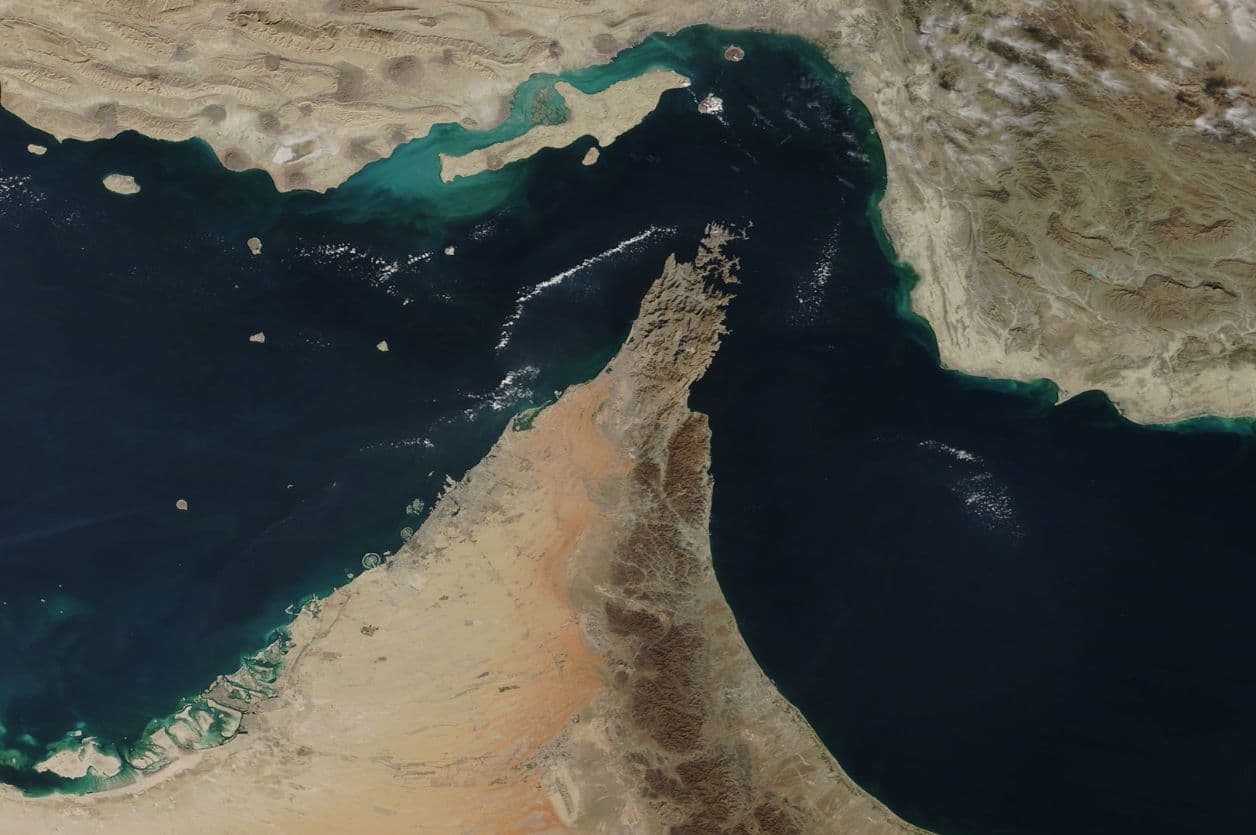
The Strait of Hormuz was described as effectively shuttered due to the war and the threat of Iranian fire, with limited exceptions for vessels carrying Iranian oil to partners such as India and China. EU foreign policy chief Kaja Kallas stated there was no appetite among EU leaders to extend the EU’s Aspides mission to the Strait of Hormuz, despite earlier discussion that extending Aspides could be the fastest way to boost security. Kallas also stated that higher oil prices and the diversion of air defense from Ukraine to the Middle East would benefit Russia. Oil prices were described as having risen above $100 per barrel following the strait’s closure.
Why it Matters
This episode demonstrates a practical and political limit to U.S. alliance leverage in a discretionary regional war, even when the immediate issue is a global economic chokepoint. European leaders separated the principle of freedom of navigation from participation in a campaign they did not initiate, and they treated the U.S. request as insufficiently defined in objectives, end state, and legal basis. That combination matters because it reduces the credibility of rapid coalition formation in future crises, especially when Washington frames participation as a test of alliance loyalty rather than a jointly agreed threat response.
The NATO dimension is strategically significant. Several European statements emphasized NATO’s defensive purpose and the absence of a mandate, while U.S. rhetoric implied alliance consequences for non-participation. This mismatch increases the risk of institutional drift: NATO becomes more politically contested and less operationally available for out-of-area contingencies. Even if NATO is not formally invoked, repeated public disputes can weaken deterrence by signaling disunity to adversaries and uncertainty to partners.
Operational realities reinforce the political reluctance. The Strait of Hormuz problem is not a single-task escort mission. It is a combined threat environment involving mines, fast attack craft, drones, and shore-based missiles. European hesitation reflects not only risk aversion but also capability constraints and readiness gaps, particularly in mine countermeasures. The UK example is instructive: reliance on newly developed autonomous mine-hunting systems, with limited combat testing, highlights how technological substitution is being used to manage risk and manpower constraints. If these systems underperform, the coalition’s ability to reopen sea lanes quickly could be compromised, prolonging the economic shock and increasing pressure for escalation against coastal launch sites.
When leaders signal that deployments require a clear legal framework and a coherent plan, they are also signaling to militaries, parliaments, and publics that open-ended missions are politically unsustainable. That reduces the pool of available contributors and pushes any eventual coalition toward narrower mandates, more restrictive rules of engagement, and slower decision cycles. In a high-tempo maritime fight, slow political authorization can translate into operational vulnerability.
The EU’s Aspides debate shows another constraint: Europe’s existing maritime security tools are tailored to different threat profiles and are modest in scale. Extending a limited Red Sea mission into a far more complex strait environment would require not just a mandate change but a force package redesign, including air defense, electronic warfare, intelligence support, and robust logistics. The lack of appetite to expand Aspides indicates that Europe is prioritizing de-escalation and risk containment over coercive maritime reopening, even as energy prices rise.
European competition with Russia is embedded in the energy and Ukraine linkage. European leaders explicitly connected higher energy prices and air defense diversion to Russia’s strategic benefit. That framing matters because it ties Middle East crisis management to Europe’s primary security theater. If European governments believe participation in the Gulf would degrade air defense availability for Ukraine or homeland requirements, they will resist U.S. requests regardless of alliance politics. This creates a structural tension: Washington seeks burden sharing in the Gulf, while Europe seeks resource concentration closer to home.
Finally, the U.S. approach of publicly grading allies’ enthusiasm and hinting at alliance consequences can be counterproductive. It may harden European positions, increase domestic political costs for cooperation, and encourage minimal, technology-forward contributions rather than meaningful force commitments. The result is a narrower coalition, a higher U.S. operational burden, and a greater chance that reopening the strait becomes tied to escalatory strikes rather than negotiated de-escalation.
Key Actors
- United States
- European Union
- Germany
- United Kingdom
- NATO
- Iran
- France
Stay Informed. Stay Ahead.