
Thailand Cambodia Fighting Tests ASEAN Crisis Management
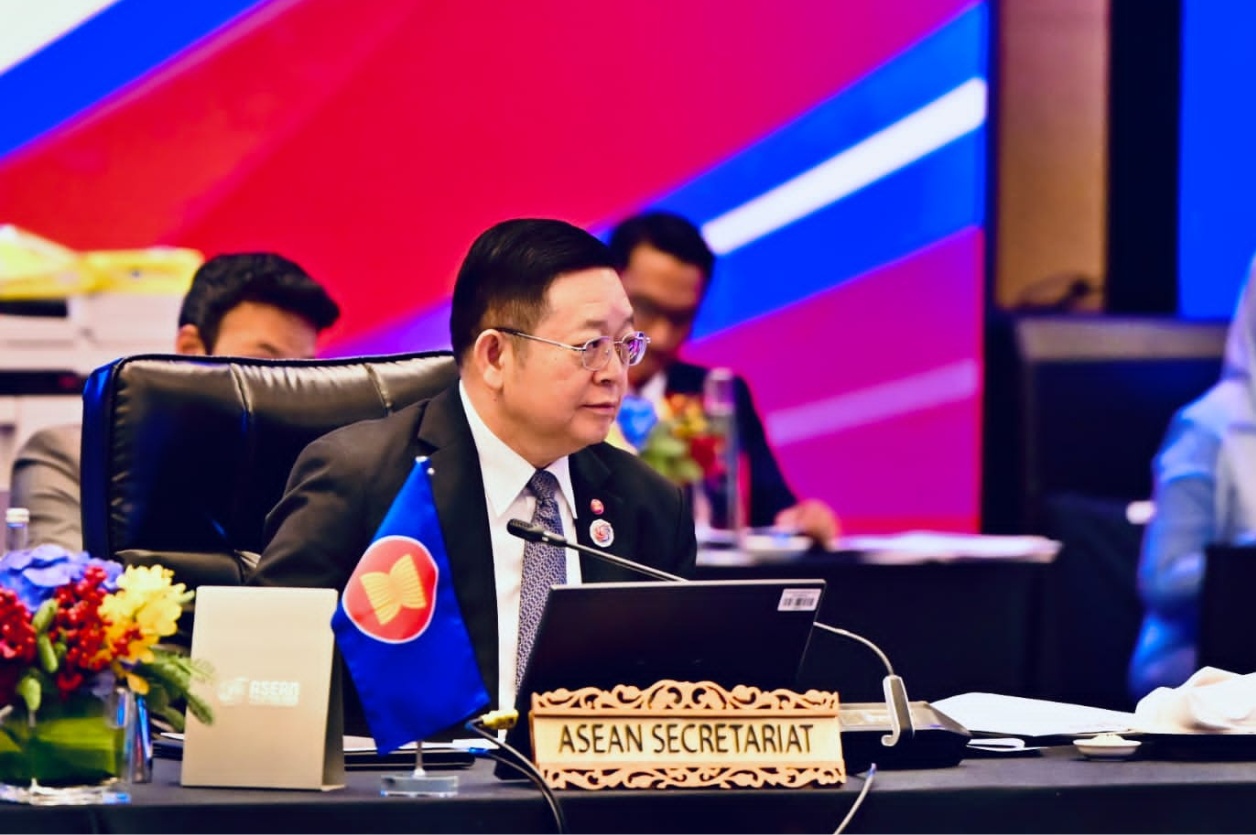
Photo credit: MFA-Malaysia
Intelligence Summary
Renewed fighting between Thailand and Cambodia has escalated into one of the most serious interstate conflicts in Southeast Asia in decades, coinciding with Myanmar’s controversial election following years of civil war. The Thailand-Cambodia clashes resumed on December 8, 2025, after a border skirmish wounded two Thai soldiers. This incident disrupted a ceasefire that had been brokered in July and reaffirmed in October under the Kuala Lumpur Peace Accords. The conflict has since killed at least 40 people and displaced nearly one million civilians on both sides of the border.
Cambodia’s Ministry of National Defence accused Thailand of deploying F-16 fighter jets that dropped four bombs in Banteay Meanchey province and of using toxic gas in Prey Chan village. Cambodian state media reported artillery shelling in Battambang province that wounded at least one civilian, while Thai media described heavy weapons fire from Cambodian forces that ignited fires and damaged homes in Sa Kaeo province. Thai Prime Minister Anutin Charnvirakul stated that Thailand had reclaimed areas previously encroached upon by Cambodian forces and denied that Thailand was the aggressor.
The fighting has included airstrikes by Thai F-16s and Cambodian rocket attacks using BM-21 launchers capable of firing 40 rockets simultaneously. The Thai navy reported that one marine was injured by a landmine and accused Cambodia of planting new mines in violation of the October truce. Cambodia has denied the claim, attributing the mines to remnants of its civil war. Thailand announced plans to file protests with Cambodia and Zambia, the chair of the Anti-Personnel Mine Ban Convention, to pursue action under international law.
The Association of Southeast Asian Nations (ASEAN) convened an emergency meeting in Kuala Lumpur, chaired by Malaysian Foreign Minister Mohamad Hasan, to mediate the crisis. Malaysia’s Prime Minister Anwar Ibrahim expressed optimism that both sides were willing to reach an amicable resolution. ASEAN ministers agreed to present satellite-monitoring data provided by the United States to support verification of ceasefire violations. The Philippines, which will chair ASEAN next year, offered to act as mediator if necessary.
Thailand’s Foreign Minister Sihasak Phuangketkeow stated that the October ceasefire had been rushed to coincide with a visit by U.S. President Donald Trump and lacked sufficient detail to ensure durability. He announced that the General Border Committee would meet on December 24 to finalize a more detailed and enforceable truce. Cambodia’s Defense Ministry condemned Thai aggression and called for a just and lasting solution.
The United States and China have both engaged in parallel diplomatic efforts. The U.S. Department of State urged both sides to withdraw heavy weapons, cease landmine use, and fully implement the Kuala Lumpur Peace Accords. China’s special envoy for Asian affairs, Deng Xijun, held talks in Bangkok and Phnom Penh, while Chinese Foreign Ministry spokesperson Lin Jian confirmed that Beijing was mediating the conflict and would release details of its efforts in due course.
Meanwhile, Myanmar announced elections beginning December 28, 2025, five years after a coup that ended a decade of democratic governance. The polls exclude rebel-held areas and are widely dismissed by international observers as an attempt to legitimize military rule. Former leader Aung San Suu Kyi remains imprisoned, and her National League for Democracy has been dissolved. The current military government’s offensive operations continue, with airstrikes in Rakhine state and ongoing fighting across multiple regions. The United Nations estimates that 3.6 million people are displaced and half the population lives in poverty.
Why it Matters
The Thailand-Cambodia conflict and Myanmar’s contested election illustrate a widening security vacuum in Southeast Asia that challenges ASEAN’s capacity to manage regional crises. The Thailand-Cambodia border war has drawn in major powers through mediation and intelligence-sharing, transforming a bilateral dispute into a test of regional and global influence. The United States’ provision of satellite data to ASEAN and its public calls for compliance with the Kuala Lumpur Peace Accords demonstrate Washington’s intent to reinforce its diplomatic presence in Southeast Asia after years of perceived disengagement. China’s simultaneous mediation through envoy Deng Xijun signals Beijing’s determination to maintain its role as a stabilizing power in its immediate periphery. The parallel involvement of both powers reflects a competitive dynamic reminiscent of Cold War-era proxy diplomacy, where regional conflicts become arenas for influence rather than purely local disputes.
The use of advanced weaponry, including Thai F-16 airstrikes and Cambodian BM-21 rocket systems, signals a dangerous escalation in conventional military capabilities within ASEAN. The alleged use of toxic gas, if verified, would constitute a breach of international law and could trigger calls for international investigation. Thailand’s decision to invoke the Anti-Personnel Mine Ban Convention mechanisms indicates a shift toward legal and institutional tools to constrain adversary behavior, potentially setting a precedent for ASEAN states to use international law as a deterrent mechanism.
The humanitarian toll of nearly one million displaced civilians poses a direct challenge to ASEAN’s principle of non-interference. Malaysia’s leadership in convening emergency talks and the Philippines’ offer to mediate suggest a growing willingness among member states to reinterpret ASEAN’s consensus model in favor of more proactive crisis management. However, the bloc’s credibility is at stake; the conflict has been described as the worst intra-ASEAN fighting since the organization’s founding. Its inability to enforce ceasefire compliance could erode confidence in its conflict-resolution mechanisms.
Myanmar’s election compounds the regional instability. The government’s attempt to legitimize its rule through controlled voting, while continuing military offensives, undermines ASEAN’s diplomatic efforts to promote democratic transition. The persistence of armed conflict in Myanmar and the simultaneous outbreak of warfare between Thailand and Cambodia create overlapping humanitarian and security crises that strain regional coordination.
For external powers, these developments intersect with broader strategic objectives. The U.S. and China’s competing mediation efforts in Thailand and Cambodia mirror their rivalry in the South China Sea and the Mekong subregion. Both seek to shape ASEAN’s alignment through crisis diplomacy. The U.S. emphasis on ceasefire verification and demining aligns with its broader security cooperation agenda, while China’s quiet shuttle diplomacy reinforces its image as a pragmatic regional stabilizer.
The convergence of these crises also has implications for energy and trade security. The Thailand-Cambodia border region lies near key overland routes connecting the Gulf of Thailand to inland logistics corridors. Prolonged instability could disrupt cross-border trade and infrastructure projects linked to China’s Belt and Road Initiative and Thailand’s Eastern Economic Corridor. In Myanmar, continued conflict threatens regional energy pipelines and mineral supply chains critical to both Chinese and Indian markets.
Overall, the dual crises reveal a Southeast Asia under stress from internal fragmentation and external competition. The outcome of ASEAN’s mediation will determine whether the bloc can evolve into a credible security actor or remain constrained by its non-interference doctrine. The involvement of major powers ensures that the resolution of these conflicts will shape the balance of influence in the Indo-Pacific well beyond 2025.
Key Actors
- Thailand
- Cambodia
- Myanmar
- Association of Southeast Asian Nations (ASEAN)
- United States
- China
- Malaysia
Stay Informed. Stay Ahead.