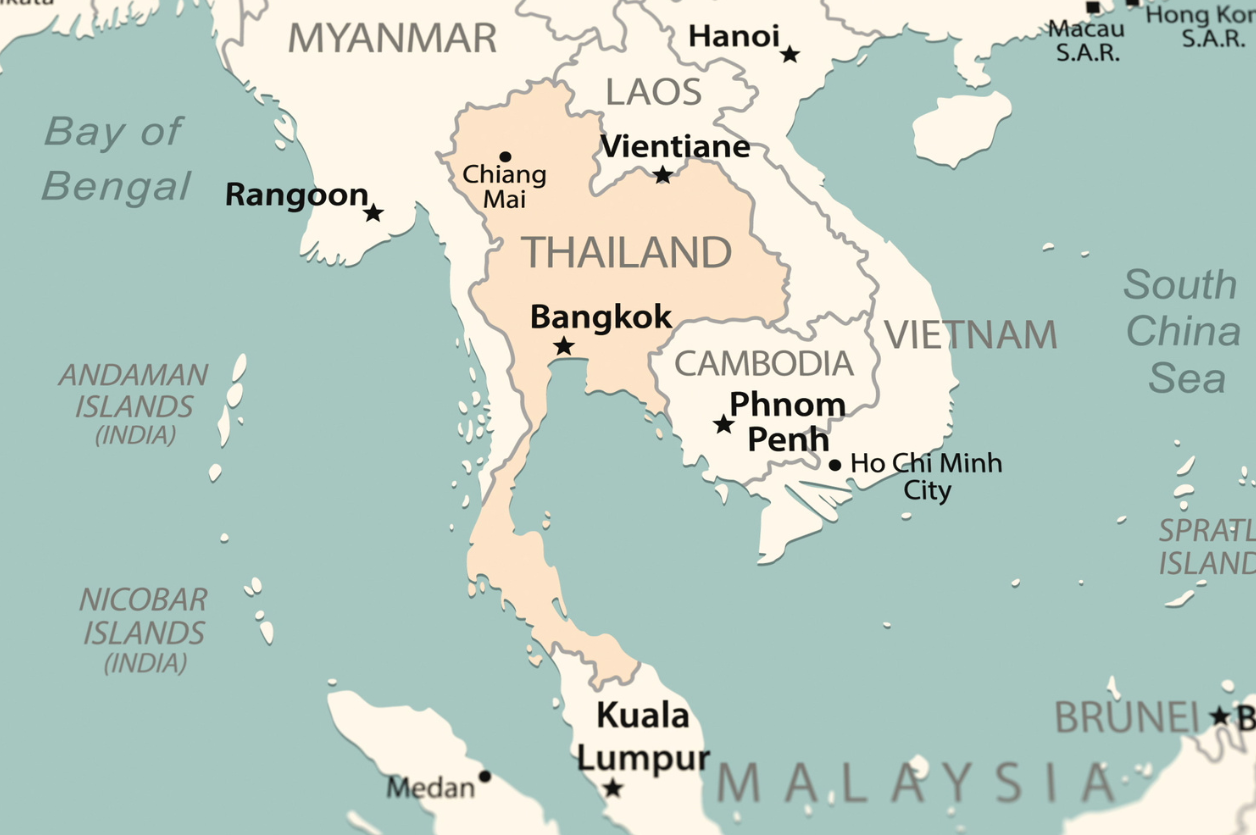
The early days of December 2025 have been marked by intensified fighting between Thailand and Cambodia. The recent conflict is the most serious escalation along their shared border since the July clashes that killed dozens and displaced hundreds of thousands. The renewed hostilities began on December 8 after a Thai soldier was killed in a skirmish, prompting both sides to accuse each other of initiating the violence. By December 10, at least 10 people had been reported as killed, including Thai soldiers and Cambodian civilians, and more than 500,000 people had fled their homes across both countries.
Thailand’s Ministry of Defence reported that more than 400,000 people were evacuated from seven provinces, while Cambodia’s Ministry of National Defence said over 100,000 civilians had been moved to shelters in five provinces. Thai officials stated that rockets fired from Cambodia landed near Phanom Dong Rak Hospital in Surin Province, forcing patients and staff to take cover. Cambodian officials accused Thailand of indiscriminate shelling of civilian areas, while Thai authorities claimed Cambodian rockets and artillery targeted twelve front-line areas in four Thai provinces.
The Royal Thai Air Force deployed F-16 fighter jets to strike at least one Cambodian military target, while Cambodia reportedly used drones in retaliation. Cambodian Senate President Hun Sen, who remains a powerful political figure despite stepping down as prime minister in 2023, claimed the actions against advancing Thai forces were acts of retaliation. Thai Prime Minister Anutin Charnvirakul declared that Thailand would defend its sovereignty and take all necessary measures to protect its citizens.
The clashes spread across multiple provinces, including Thailand’s Surin, Buri Ram, Sa Kaeo, and Trat, and Cambodia’s Banteay Meanchey and Pursat. Cambodian authorities reported seven civilian deaths and twenty injuries, while Thai officials confirmed three soldiers killed, including one by a grenade launcher. The violence also prompted Cambodia to withdraw from the Southeast Asian Games hosted in Thailand, citing concern for its athletes.
The United States called for an immediate cessation of hostilities, with Secretary of State Marco Rubio urging both sides to adhere to the October peace accord brokered by U.S. President Donald Trump. This was followed by Trump affirming that he would personally intervene to stop the fighting. The United Nations Secretary-General António Guterres also appealed for restraint, citing significant civilian casualties and infrastructure damage from previous fighting.
The conflict stems from a century-old border dispute dating back to French colonial demarcations and competing claims over historic temples such as Preah Vihear. The July 2025 clashes had ended with a ceasefire mediated by Malaysia and supported by the United States and China. However, the agreement quickly unraveled amid mutual accusations of landmine use and ceasefire violations. Thailand suspended de-escalation measures in November after a Thai soldier was maimed by a landmine allegedly newly planted by Cambodia.