Trump Pauses Strikes as Iran Talks Resume

Aug 4 / Steven A. Smith, PhD
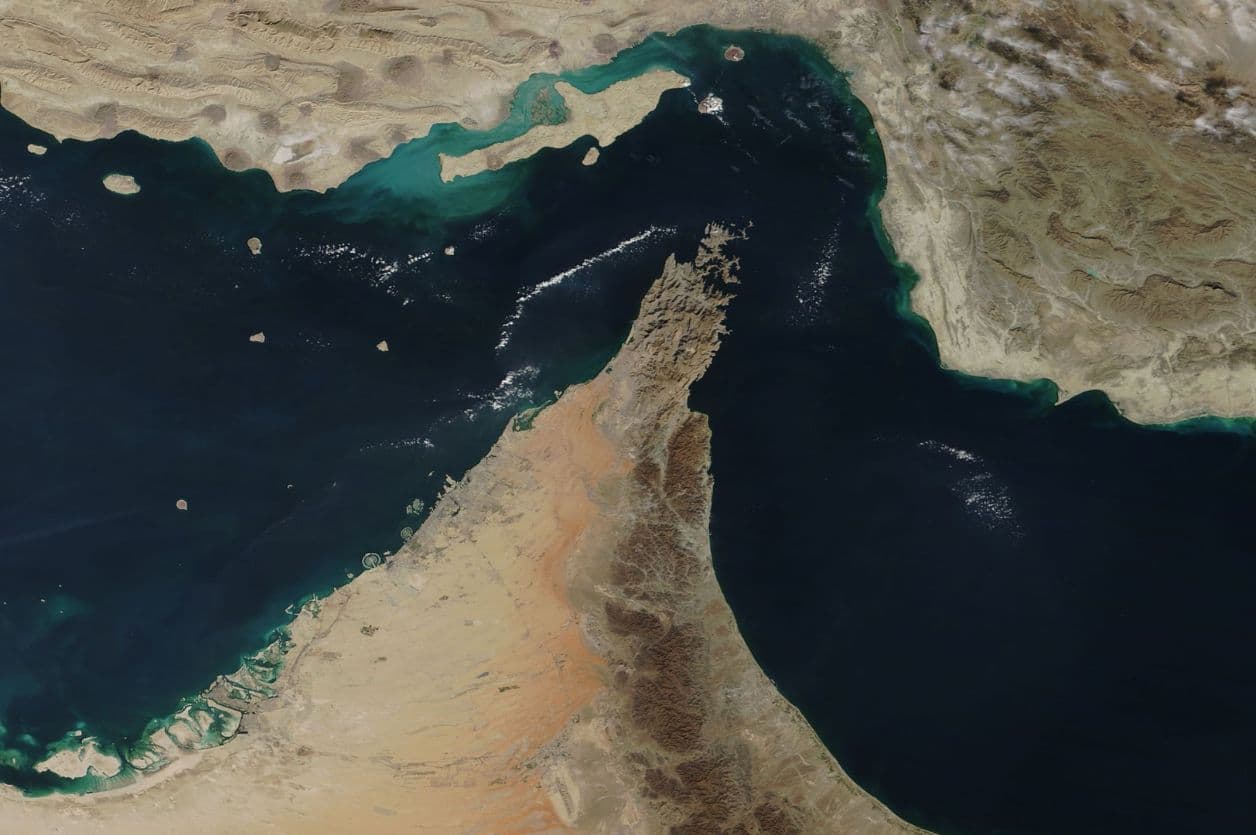
Strait of Hormuz. Photo credit: MODIS Land Rapid Response Team, NASA GSFC

Intelligence Summary

President Donald Trump said on August 3 that new negotiations with Iran would begin the following day and that an agreement was imminent, after canceling planned large-scale strikes. He linked a prospective deal to fully reopening the Strait of Hormuz and ending Iran’s nuclear threat. Trump said Qatar, Saudi Arabia, the United Arab Emirates, and unnamed Iranian officials had urged Washington to pause. Iran’s Foreign Ministry denied direct talks with Washington, saying Tehran was pursuing discussions with Oman and other states to reduce tensions. Direct U.S.-Iran negotiations therefore remained unconfirmed.


Tehran’s stated priority is a new navigation route negotiated bilaterally with Oman, rather than a U.S.-brokered settlement. Foreign Minister Abbas Araghchi said the Oman talks were approaching finalization. Foreign Ministry spokesman Esmail Baghaei said the proposed route would differ from the existing northern and southern corridors while respecting Iranian sovereignty and security interests. A June memorandum of understanding temporarily reopened Hormuz, but collapsed after Washington and Tehran disputed passage arrangements. Iran then attacked or turned back ships using the Oman-approved southern route, the strait closed again, and the United States resumed a naval blockade of Iranian ports.


Commercial traffic through Hormuz remains severely constrained. Ship-tracking firm Kpler recorded eight transits on Sunday and 11 on Saturday, compared with more than 100 daily before the war. Roughly one-fifth of global oil and liquefied natural gas trade normally passed through the waterway. The Red Sea has not provided a reliable substitute because Houthi attacks on Saudi-linked shipping have increased risk around Bab al-Mandab. Existing Saudi and Emirati bypass pipelines can carry about nine million barrels daily, well below the approximately 20 million barrels usually moving through Hormuz.


Saudi Crown Prince Mohammed bin Salman urged Trump to prioritize dialogue and reduce escalation before the U.S. decision to halt strikes. Saudi officials emphasized the risk that a major attack could widen conflict across Gulf energy infrastructure. Oil prices responded immediately to the pause: Brent crude fell $4.08, or 4.64 percent, to $83.85 per barrel, while West Texas Intermediate fell $4.01, or 4.74 percent. Washington nevertheless maintained that it could resume major attacks and would continue its blockade until a deal is reached.

Why it Matters

The diplomacy appears focused on operational de-escalation in Hormuz rather than a comprehensive settlement of the U.S.-Iran conflict. Trump publicly frames an agreement as covering both navigation and Iran’s nuclear program, while Tehran describes its active channel as an Oman-mediated discussion over a new route. This mismatch could make even a limited maritime arrangement difficult to implement. A deal can stabilize shipping only if both sides agree on passage rules, enforcement authority, and the relationship between transit access and the U.S. naval blockade. The principal uncertainty is whether Oman can bridge the competing U.S. and Iranian interpretations of who controls navigation through the strait.


Hormuz has become Iran’s most consequential source of leverage in the confrontation. Traffic has fallen from more than 100 daily transits before the war to single-digit levels on some recent days, affecting a waterway that normally carries about one-fifth of global oil and LNG trade. That disruption gives Tehran bargaining power but also raises the economic cost of prolonged confrontation for energy importers and Gulf producers. For governments and firms, vessel movements and insurer willingness to support Gulf transits are more immediate measures of de-escalation than political claims that a deal is imminent.


Alternative export routes cannot quickly offset a sustained Hormuz closure. Saudi and Emirati bypass pipelines have a combined capacity of roughly nine million barrels per day, less than half the usual 20 million barrels transiting the strait. The Red Sea alternative is also exposed because Houthi attacks have threatened Saudi-linked shipping near Bab al-Mandab. This means a shift away from Hormuz could transfer risk rather than remove it. Energy planners should therefore treat any partial reopening as operationally fragile until traffic volumes recover and shipping routes remain secure across both chokepoints.


Gulf mediation has gained immediate influence because regional states bear substantial exposure to escalation and disrupted energy flows. Saudi Arabia, Qatar, and the United Arab Emirates reportedly pressed Trump to halt further strikes, while Saudi leaders stressed the risk to Gulf stability and energy infrastructure. However, U.S. threats to maintain a blockade and resume military action leave the negotiations under coercive pressure. The key indicator is whether an Iran-Oman route agreement produces actual, sustained transits without Iranian interdictions or renewed U.S. strikes. If not, the current pause may become another short-lived interruption in a cycle of military pressure and failed implementation.

Stay Informed. Stay Ahead.

The global landscape changes daily, don't get left behind.
Thank you!